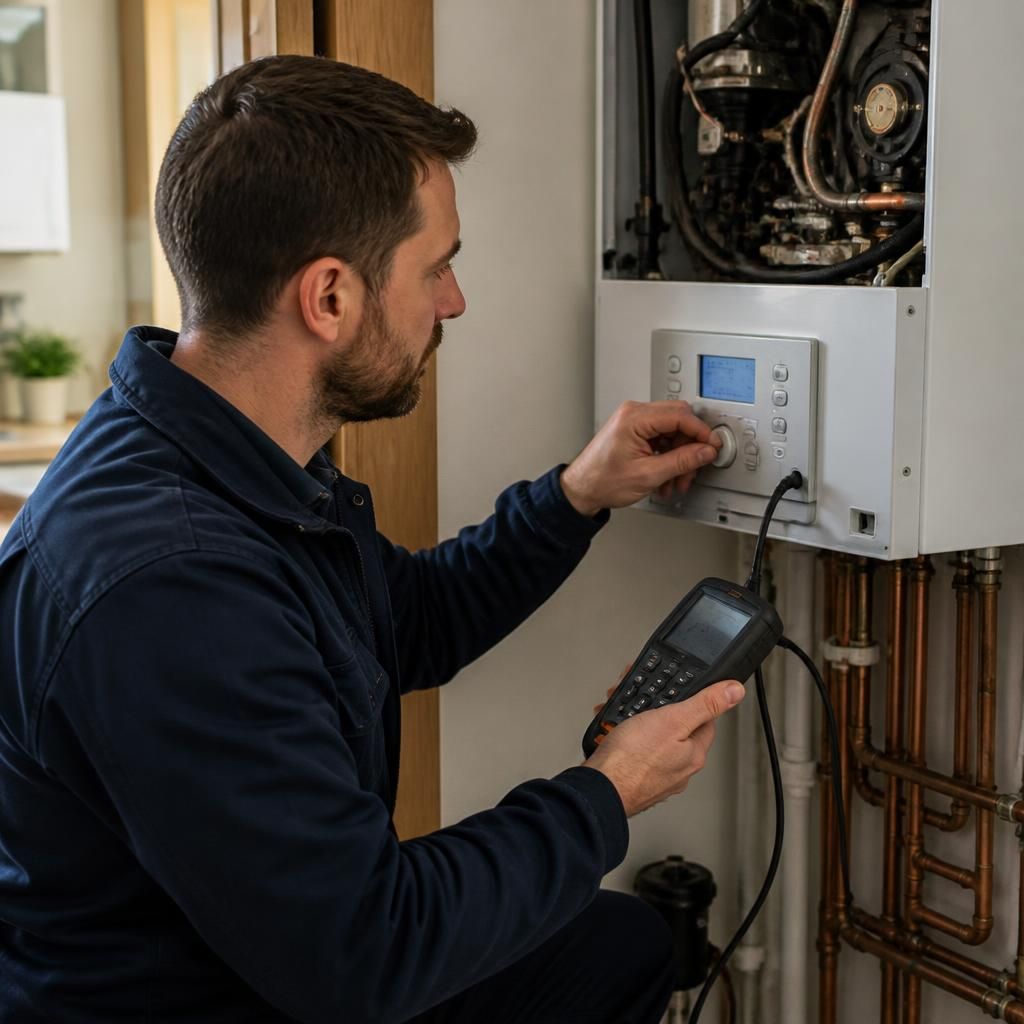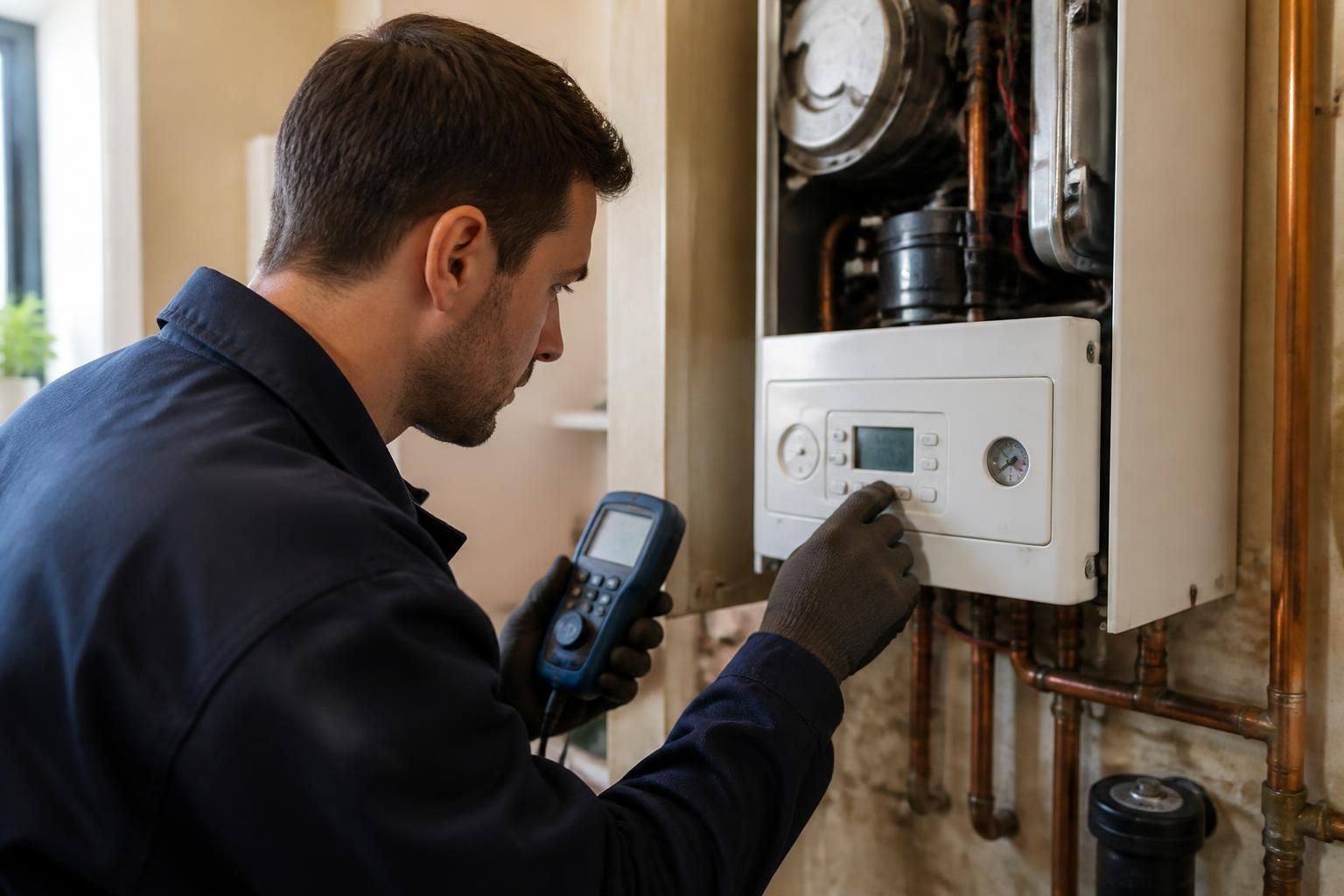
A brand-specific boiler repair is normally a contained job, with most disruption limited to access around the appliance, diagnostic checks and the repair itself. The time involved depends on the fault, the boiler’s condition, the accessibility of its components and whether the correct replacement part is available.
What happens during the repair?
- Initial assessment: The engineer will ask about the symptoms, inspect the boiler and review any fault information shown on the display. They may also check connected controls, pipework and other parts of the heating system, as a boiler fault is not always caused by the component that first appears to be malfunctioning.
- Diagnosis and preparation: Before removing covers or components, the appliance is made safe for inspection. The engineer may need clear access to the front, underside or internal parts of the boiler. Cupboards, stored items or other obstructions can therefore add to the practical disruption.
- Repair: Straightforward faults may be resolved during the same visit when the required part and suitable tools are available. A more involved repair can require additional dismantling, electrical or system checks, or further investigation before the cause is confirmed.
- Testing: After the work, the boiler and relevant controls are checked to confirm that they operate correctly. The engineer may also inspect for leaks, unusual noises, pressure problems or other signs that could affect safe operation.
How long can a brand-specific repair take?
There is no fixed duration for every repair. A simple adjustment or replacement of an accessible component may take considerably less time than a repair involving several linked faults, difficult access or extensive testing. The engineer should be able to give a more useful indication once the appliance has been assessed.
Parts availability can have a significant effect on the overall disruption. If a suitable component is held locally, the repair may be completed without a separate parts-arrangement stage. If it needs to be sourced, the boiler may remain unavailable until the correct part is obtained and fitted. Using the right component matters because an unsuitable substitute can create further faults or compromise safe operation.
What areas of the home are affected?
The main working area is usually around the boiler and any controls, radiators or pipework that need testing. An engineer may need access to a cupboard, loft space, airing cupboard or other part of the property depending on how the system is installed. Moving fragile items and clearing storage before the appointment can make the work more efficient.
Noise and dust are generally associated with removing panels, using tools or accessing pipework rather than with the boiler running normally. Covering nearby surfaces and keeping children and pets away from the work area can help minimise inconvenience. Do not attempt to remove the boiler casing or investigate internal components yourself.
When can disruption be greater?
- The fault is intermittent and cannot be reproduced immediately.
- The boiler is installed in a confined or difficult-to-reach location.
- Several components show signs of wear rather than one clearly identifiable fault.
- Pipework, controls or the wider heating system also require investigation.
- The required brand-specific component is not available for the initial repair.
- Further safety checks are needed before the appliance can be put back into normal use.
If the boiler stops working repeatedly, makes unusual noises, smells of gas or shows signs of leaking, switch it off where it is safe to do so and seek qualified professional advice. A repair should address the underlying fault rather than simply reset the appliance, particularly when the same problem returns.
For homeowners, landlords and tenants, keeping the boiler model information, fault code and details of when the problem occurs can help the engineer begin the diagnosis with better information. A qualified plumber or heating engineer can then assess the appliance, explain the proposed work and identify whether the repair can be completed during the initial visit or will require a further stage.