
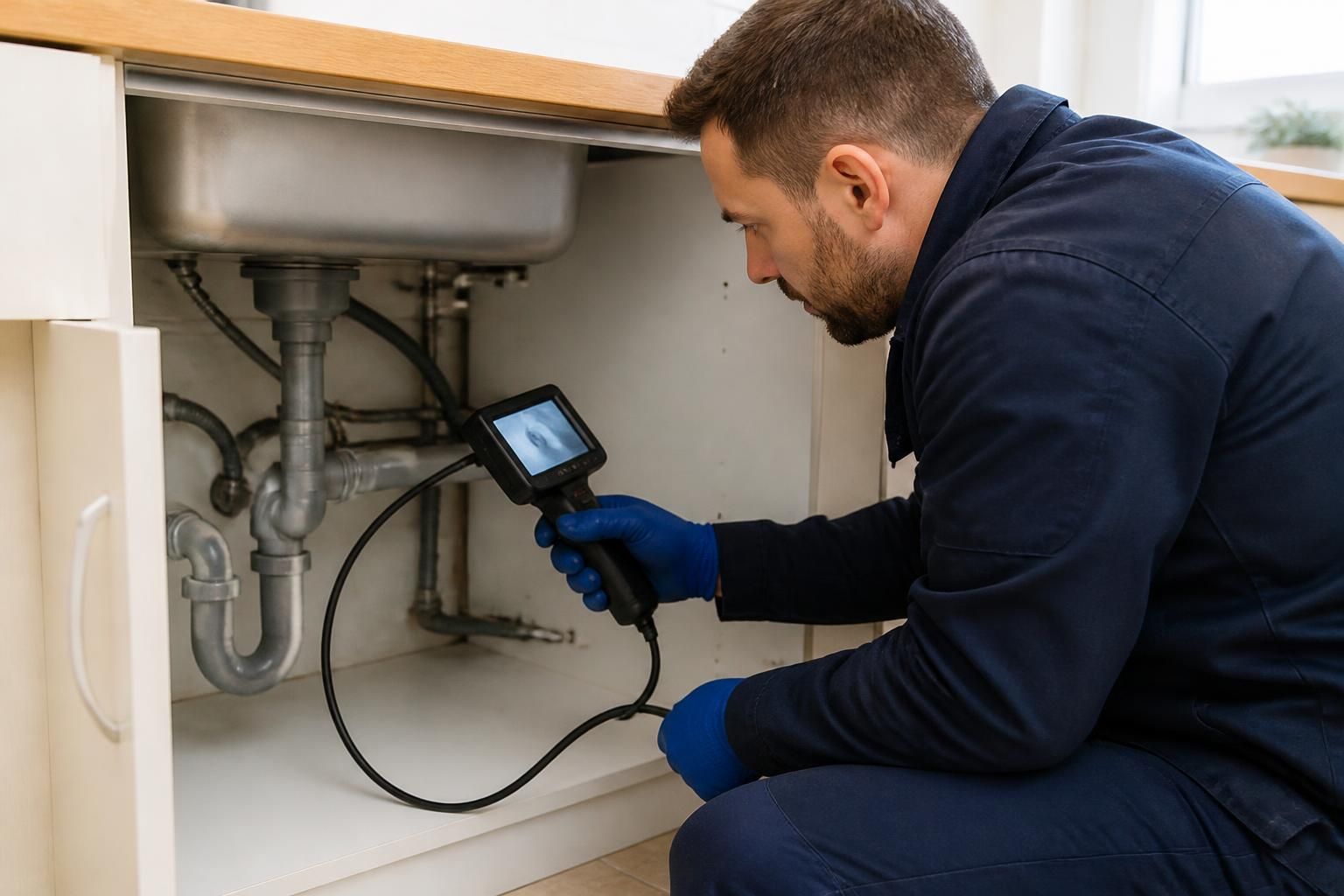
Plumbing
Emergency Plumbing Services
Ideal Plumbing Services provides emergency plumbing services for suspected water leaks, using expert leak detection to identify sources and arrange suitable repairs for homes across Birmingham and the West Midlands. Contact Ideal Plumbing Services about your suspected leak today.
Practical Water Leak Detection for Hidden and Visible Leaks
Water leak detection is a structured inspection to locate escaping water from pipework, tanks, toilets, taps or heating systems. Ideal Plumbing Services investigates visible leaks, damp patches, unexplained moisture and suspected concealed leaks, identifying the source and suitable repair work.
Professional tracing avoids guesswork because water may appear away from its source, helping clarify the underlying fault before repairs.
Finds the True Leak Source
Professional tracing distinguishes the point where water appears from the underlying source, reducing the risk of repairing the wrong area.
Visible Water Leaks
Investigations can cover dripping taps, leaking toilets, exposed pipework and other faults where escaping water is clearly visible.
Concealed Pipework
Suspected leaks behind walls, beneath floors or in other hidden areas can be assessed when there is unexplained moisture or dampness.
Damp Patches and Moisture
Damp marks, staining and unexplained moisture can indicate a leak even when no damaged pipe or fitting is immediately visible.
Heating System Leaks
The inspection can include suspected leaks affecting heating system pipework or components, helping establish where attention is needed.
Clear Repair Planning
Once the likely source is identified, the findings help determine the appropriate plumbing repair rather than relying on trial and error.
Act Promptly
Prompt action limits leak damage, mould, disruption and rising repair costs; 24/7 support helps address urgent plumbing emergencies when needed.
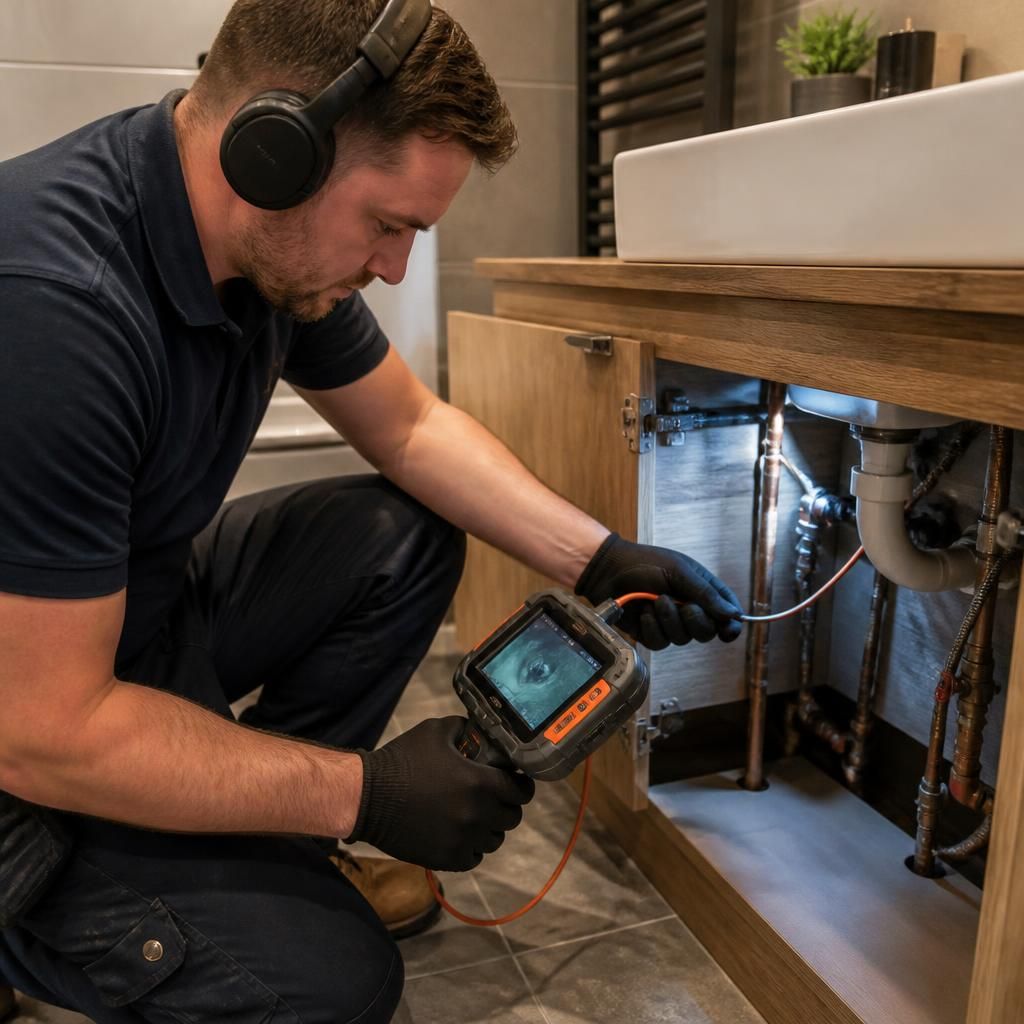
Professional Leak Tracing Without Unnecessary Disruption
Professional leak tracing is a structured process for locating the point where water escapes, rather than assuming the nearest visible damp area is the fault. An experienced plumber begins with a visual assessment of exposed pipework, fittings, valves, toilets, taps and heating components, then uses suitable detection equipment to investigate less accessible sections.
The inspection findings help narrow the search area and distinguish an active leak from residual moisture or condensation. Checks are carried out in a logical sequence, with each observation guiding the next stage. This method gives a clearer basis for identifying the failed component and recommending a proportionate repair.
The result is a clear basis for the appropriate repair.
Emergency Plumbing Services: Common Questions
Will emergency leak detection damage walls or flooring?
Emergency plumbing services are suitable for homeowners, landlords and tenants facing active leaks, burst pipes, overflowing toilets, failed heating components or other faults requiring professional assessment and repair at home.
Read the full answerWhat happens after a leak is located?
Once located, the plumber assesses the failed component, explains the necessary repair, and identifies practical steps to limit further water damage. You can then approve the recommended work with confidence.
Read the full answerWhat signs suggest you may have a hidden water leak?
Common signs include unexplained increases in water use, damp smells, peeling paint, warped flooring, stained ceilings, mould growth, low pressure, or sounds of running water when fixtures are switched off.
Read the full answerWhen should I call an emergency plumber for a suspected leak?
Call an emergency plumber when water is actively escaping, isolation is unsuccessful, or leakage threatens electrics, ceilings or flooring. If safe, close the stopcock and contact Ideal Plumbing Services directly.
Read the full answerWhat information should I provide when booking emergency plumbing services?
Provide the property address, your contact details, the suspected leak’s location, visible symptoms, access arrangements, and any steps already taken, including whether the stopcock or electricity has been safely isolated.
Read the full answerWhat to Expect from Your Emergency Plumbing Visit
An emergency plumbing service visit assesses the immediate plumbing fault, explains the available repair options and identifies any work needed to make the affected system safe and functional. The plumber will discuss the findings in clear terms, so you can understand the recommended next step before authorising work.
You will receive a straightforward explanation of the proposed repair and its pricing, with no hidden charges. If further work is advisable, this will be discussed before it proceeds, giving you a clear choice about how to move forward.
How to Prepare for the Visit
Before the plumber attends, note when the problem started, where water or dampness has appeared and whether the issue changes when taps, toilets or heating are used.
How to Prepare for the Visit
Before the plumber attends, note when the problem started, where water or dampness has appeared and whether the issue changes when taps, toilets or heating are used.
Useful Information and Safe Access
If it is safe to do so, isolate the affected water supply and move belongings away from the affected area. Make sure the plumber can reach relevant cupboards, appliances, pipework and service valves, and share any previous repair information that may help identify the fault.
What Happens During the Assessment
The assessment begins by discussing the symptoms and inspecting the accessible plumbing around the affected area. The plumber then uses the findings to decide which checks are appropriate.
What Happens During the Assessment
The assessment begins by discussing the symptoms and inspecting the accessible plumbing around the affected area. The plumber then uses the findings to decide which checks are appropriate.
A Clear Inspection Process
Questions about moisture, water pressure, appliance use and changes in the problem can help distinguish a supply pipe leak from an issue with a fitting, appliance or heating component. The inspection is carried out in stages, and the plumber will explain relevant observations in plain language as the assessment progresses.
If the Source Is Not Immediately Visible
Water can travel through floors, walls and other building materials, so the visible damp area may not be close to the failed component. Further investigation may be recommended when the source cannot be confirmed from accessible pipework alone.
If the Source Is Not Immediately Visible
Water can travel through floors, walls and other building materials, so the visible damp area may not be close to the failed component. Further investigation may be recommended when the source cannot be confirmed from accessible pipework alone.
Explaining Further Investigation
Where additional tracing is needed, the plumber will explain what area requires investigation and why it may help confirm the source. This gives you the information needed to decide whether to proceed with further diagnostic work before any additional chargeable work is undertaken.
Understanding the Repair Recommendation
Once the likely fault has been assessed, the plumber will explain the repair options that relate to the condition of the plumbing system. The recommendation will distinguish between work needed to address the immediate problem and any additional work that may be advisable.
Options, Scope and Pricing
You can ask what the proposed repair involves, which component is affected and whether the work is intended as a repair, replacement or temporary measure. The cost and scope will be explained before you decide whether to authorise the work, so there is a clear understanding of what is included.
Checks After the Repair
After an approved repair, the affected plumbing should be checked to confirm that the repaired section is operating as expected. The plumber can also explain any observations that remain relevant after the work.
Checks After the Repair
After an approved repair, the affected plumbing should be checked to confirm that the repaired section is operating as expected. The plumber can also explain any observations that remain relevant after the work.
Completing the Visit
The final discussion covers the work carried out, any areas that may need monitoring and practical steps for reporting a recurrence or separate plumbing fault. If the inspection identifies related work that is not part of the approved repair, it will be explained separately rather than assumed to be included.
To arrange an emergency plumbing assessment, contact Ideal Plumbing Services and explain what you have noticed, where it is happening and whether water is still escaping. You do not need to diagnose the fault before making contact.
The inspection gives you the information needed to decide how to proceed, with the recommended repair explained before you commit to the work.
Contact Ideal Plumbing Services About Your Emergency Plumbing Need
For professional water leak detection in Birmingham and the West Midlands, contact Ideal Plumbing Services with the details of the issue. A clear enquiry helps establish the appropriate next step before damage escalates.