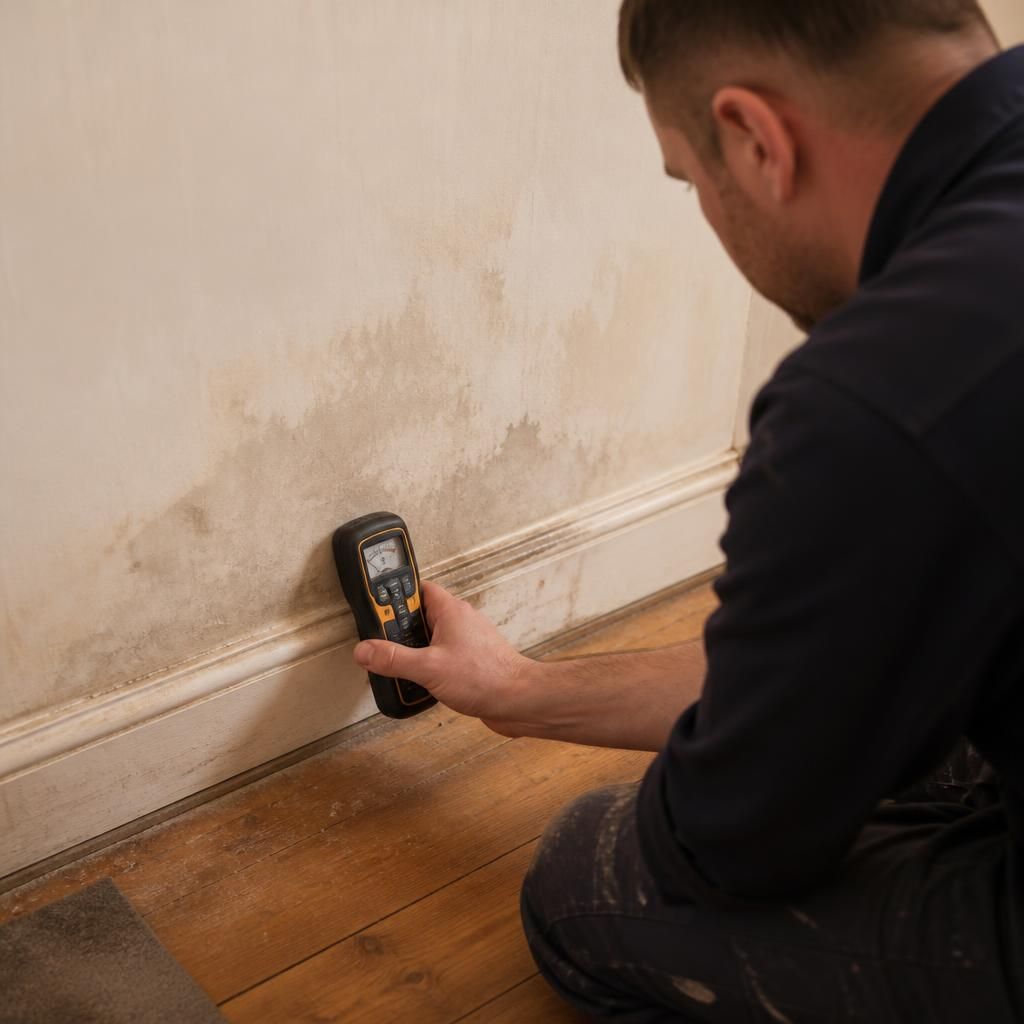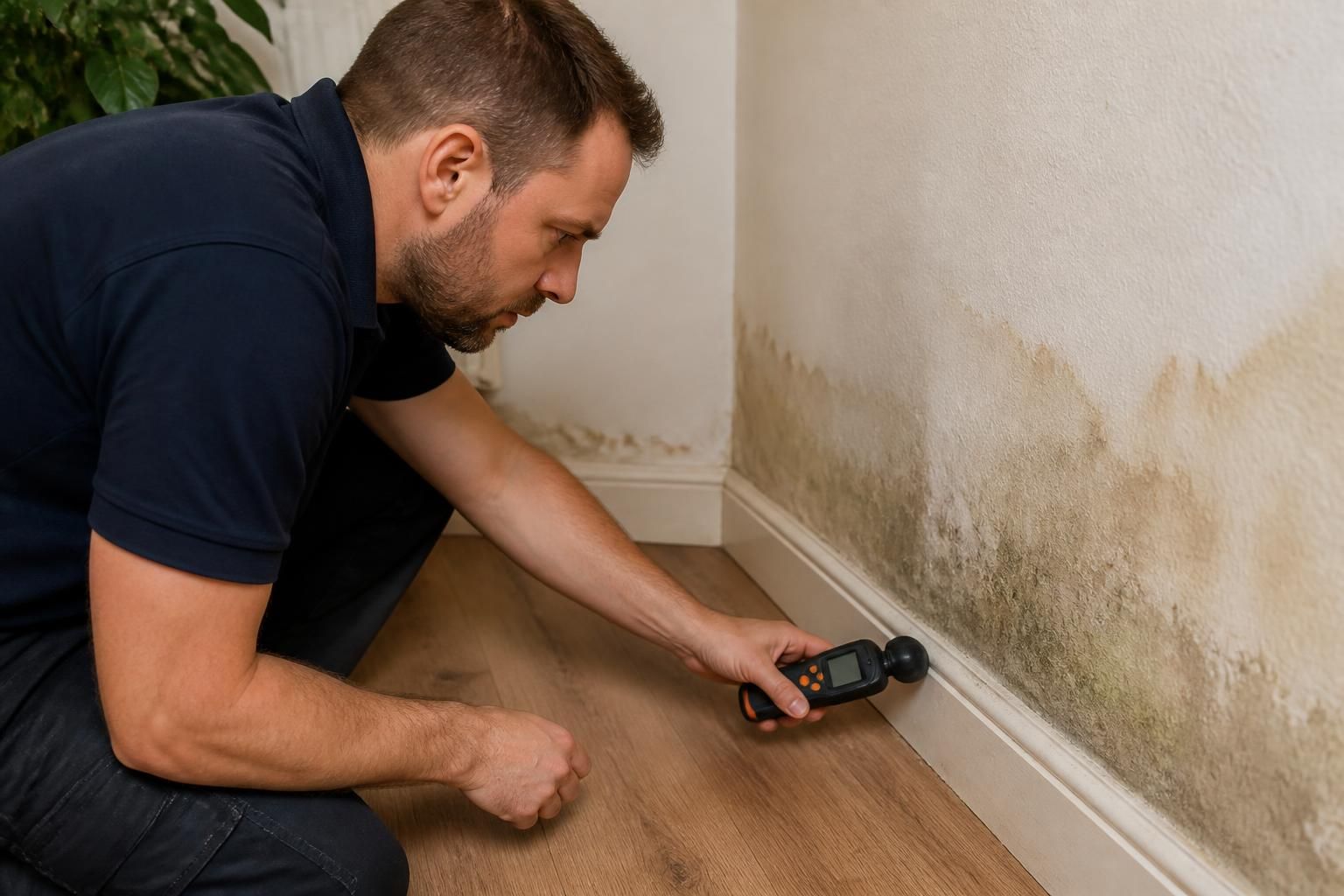
A hidden water leak is a loss of water from a concealed pipe, fitting, appliance or heating system that is not immediately visible. The most useful clues are often changes in how part of the property behaves, such as a toilet that repeatedly refills, a cupboard base that begins to swell, flooring that lifts at an edge, or paint and plaster that blister without an obvious cause.
Look for changes around plumbing fixtures. Check beneath sinks, behind toilets and around washing machines for softened cabinet panels, swollen timber, corrosion, or a persistent feeling of moisture. Water can travel along pipework, behind units or beneath flooring, so the first visible mark may be some distance from the leak itself. A dry-looking surface does not always rule out a concealed problem if materials have already absorbed the water.
Pay attention to repeated patterns. If moisture appears after using a particular tap, shower, toilet or appliance, the leak may be connected to that fixture or its waste pipe. If it occurs after the heating has been running, a heating circuit, radiator connection or concealed pipe may need investigation. A problem that returns after the area has been dried is more significant than a one-off spill and should not be covered up with fresh sealant or paint before the source is identified.
Changes in the plumbing system can provide another clue. A toilet cistern that refills without being used may be losing water through its internal valve or flush mechanism. A heating system that repeatedly loses pressure may have a leak, although pressure can also fall because of an expansion vessel, safety valve or other fault. These symptoms cannot identify the exact source on their own, but they help a plumber narrow the investigation.
Check for damage in less obvious places. Look at the underside of floors where accessible, the back of removable panels, the base of kitchen units and the areas around pipe penetrations. Peeling wallpaper, cracked or lifting floor finishes, rust on fixings and timber that feels soft under light pressure can all indicate prolonged moisture. Do not probe deeply into plasterboard, flooring or electrical areas, as this can worsen damage or create a safety risk.
A water meter test may help confirm a suspected supply leak. Turn off taps and appliances that use water, make sure toilets are not refilling, and note the meter reading. Leave the property’s internal stop tap in its normal position and check the meter again after a period without water use. Movement suggests that water is still being drawn, but it does not show where the leak is. Some properties do not have an accessible meter, and shared or unusual plumbing arrangements can make the result difficult to interpret.
It is also important to distinguish a leak from condensation, a spill or rainwater penetration. Condensation is usually linked to humid air and cold surfaces, while rain-related damp may worsen after wet weather. A plumbing leak is more likely when the affected area follows a pipe route, changes when a fixture is used, or continues despite dry conditions. A professional assessment is appropriate where the cause remains uncertain.
Take sensible steps if you suspect an active leak. Stop using the nearest fixture or appliance, move belongings away from the affected area and turn off the internal stop tap if water is continuing to escape. If water is near sockets, lights or electrical equipment, avoid contact with the area and arrange appropriate electrical assistance before attempting to clean it. A bulging ceiling, rapidly spreading water or significant flow requires urgent attention because the risk includes structural damage as well as damage to fittings and furnishings.
Leak detection may involve tracing pipe routes, checking accessible connections and using moisture-detection equipment to assess affected materials. The aim is to identify the source before unnecessary flooring, plaster or cabinetry is removed. Ideal Plumbing Services provides leak detection and plumbing repairs for homeowners, landlords and tenants in Birmingham and the wider West Midlands, helping establish whether the signs indicate a supply pipe, waste connection, heating fault or another source of moisture.