Call an emergency plumber when a suspected leak presents a realistic risk of injury, structural damage, electrical danger or significant water loss. If the source is uncertain but moisture is continuing, returning or spreading, professional assessment is safer than waiting for the problem to become more obvious.
A suspected leak needs urgent attention when:
- There is a sudden drop in water pressure or an unexplained increase in water use.
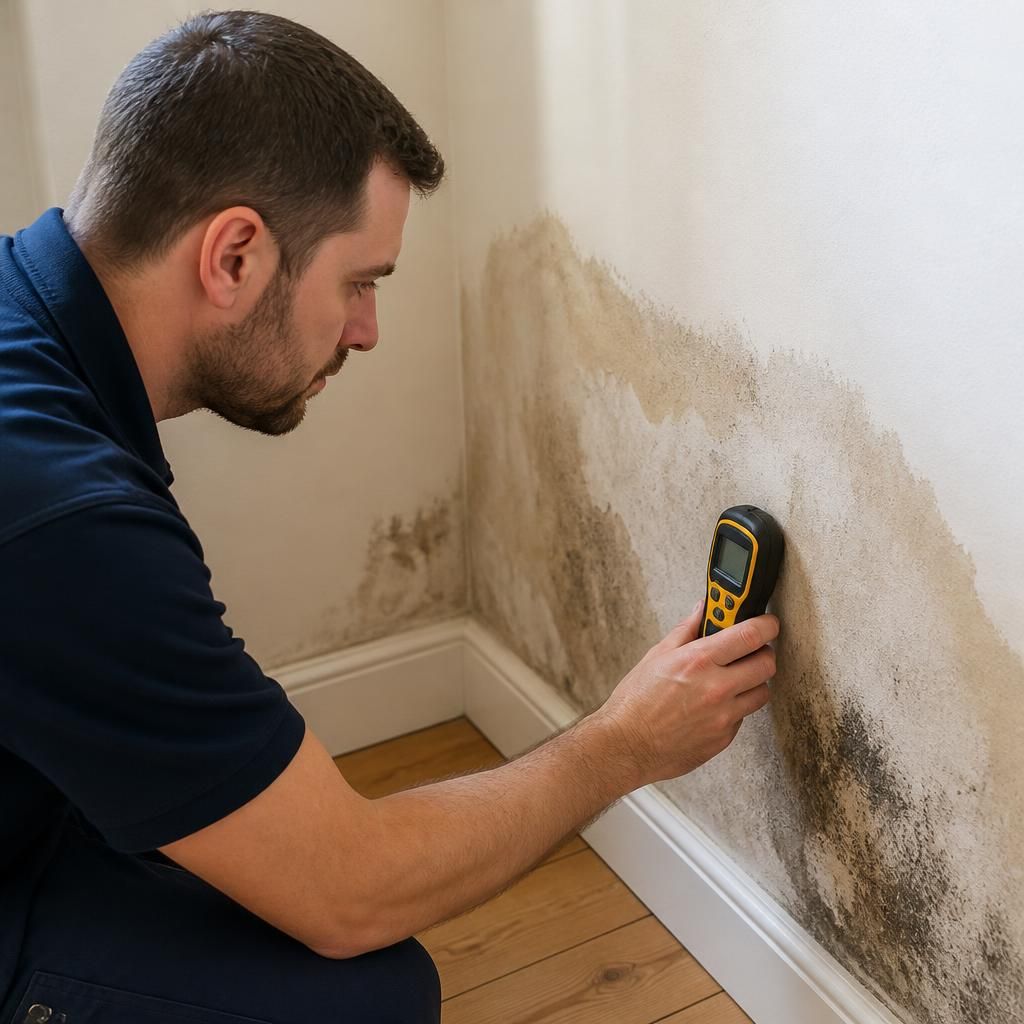
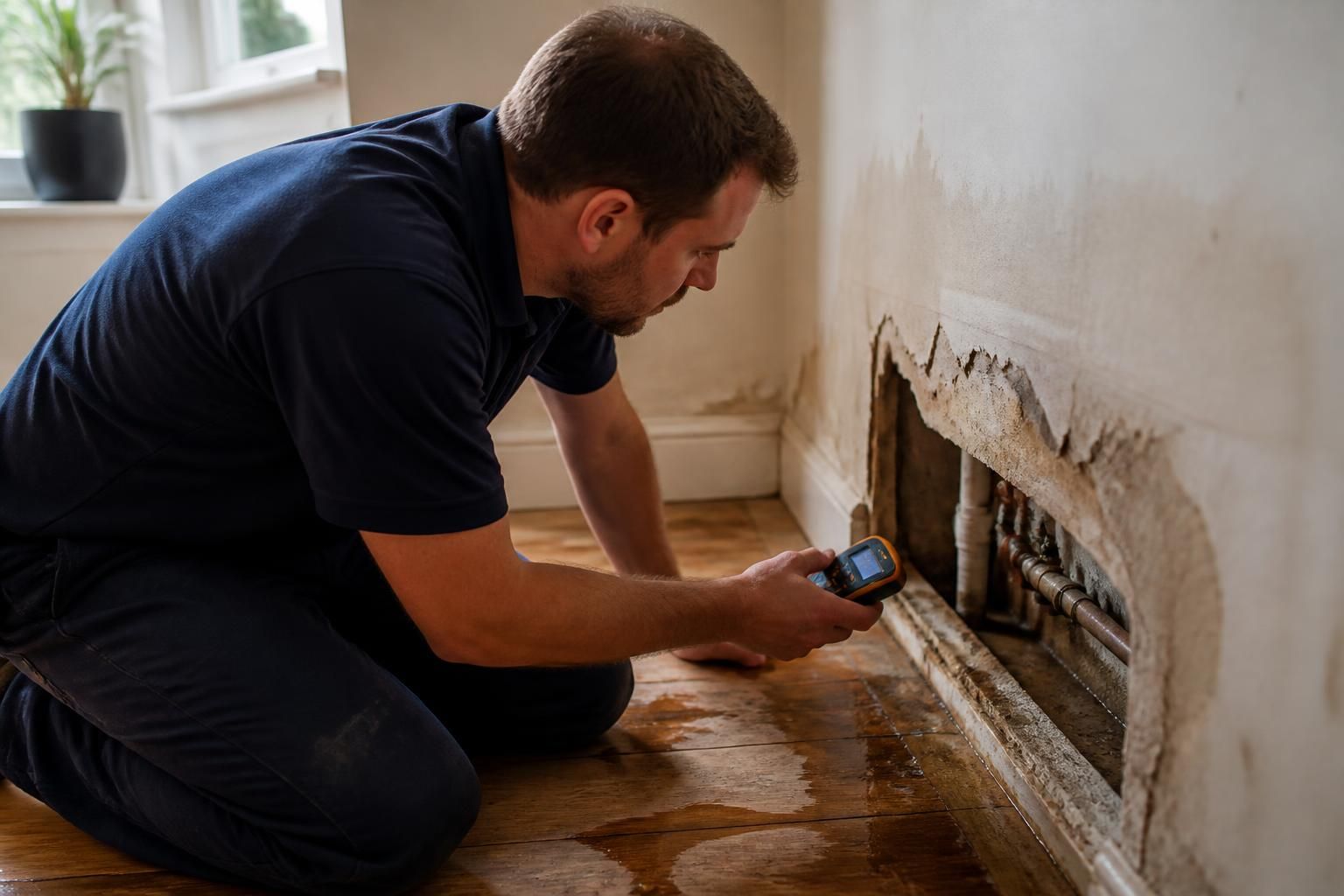
- Damp patches, bubbling paint, lifted flooring or staining are getting worse.
- Water is appearing beneath kitchen units, around a boiler, near a bathroom or below a neighbouring property’s plumbing.
- A ceiling is sagging, plaster is becoming soft or flooring is swelling.
- You can hear running water when all taps and water-using appliances are turned off.
- The leak may be within a wall, floor, ceiling or under a concrete surface and cannot be inspected safely.
- A tenant, landlord or homeowner cannot identify whether the water comes from a supply pipe, waste pipe, heating system or appliance connection.
The key issue is not only the amount of water visible at the time. A small concealed leak can continue behind a surface and affect plaster, timber, insulation, flooring and furnishings. It may also encourage mould growth if damp materials are left untreated. Water from a damaged supply pipe can be particularly difficult to assess because it may remain under pressure even when the visible flow seems minor.
Do not wait for an emergency call-out if the signs are intermittent. A leak that appears to stop may simply be linked to water use elsewhere in the property, pressure changes or a pipe that only releases water when it warms, cools or moves. Repeatedly drying the area without finding the source can make the damage harder to trace and may allow the underlying fault to continue.
There is also a clear safety reason to seek professional help. Water near sockets, wiring, light fittings, consumer units or electrical appliances should be treated as a potential electrical hazard. Avoid touching electrical equipment in the affected area and do not enter a flooded space if there is any doubt about electrical safety. Similarly, avoid standing on wet flooring that may be unstable or removing plaster, flooring or fittings to search for the leak.
Before the plumber arrives, record where the first sign was noticed, whether it changes when taps or appliances are used, and which rooms or surfaces are affected. Photographs can help document the spread of staining or damp. If the property is rented, notify the landlord or managing agent as well as arranging appropriate assistance, particularly where neighbouring properties may also be affected.
An emergency plumber will normally begin by assessing the visible symptoms, tracing the likely route of the water and distinguishing between a pressurised supply leak, a waste-water fault, a heating leak or an appliance connection. Specialist leak detection can help locate concealed water without relying solely on guesswork. Once the source is identified, the immediate priority is to control the leak and determine whether a repair, replacement section or further investigation is required.
A routine plumbing appointment may be suitable for a dry, isolated mark that is not changing and has a confirmed source, such as an accessible dripping tap or a worn seal. It is not appropriate to treat the issue as routine when the cause is unknown, the affected area is expanding or there is a risk to the building or its occupants. Professional leak detection and repair services are available from Ideal Plumbing Services for residential properties across Birmingham and the wider West Midlands.