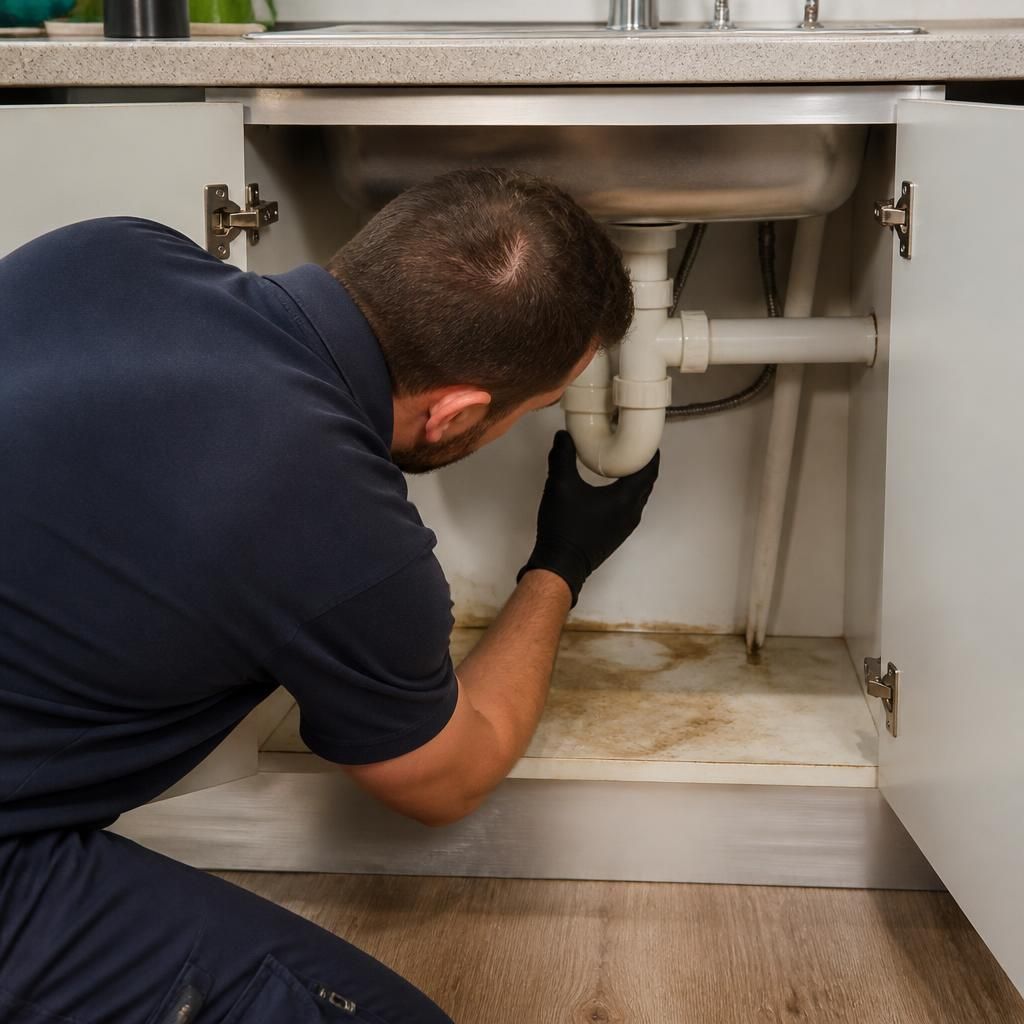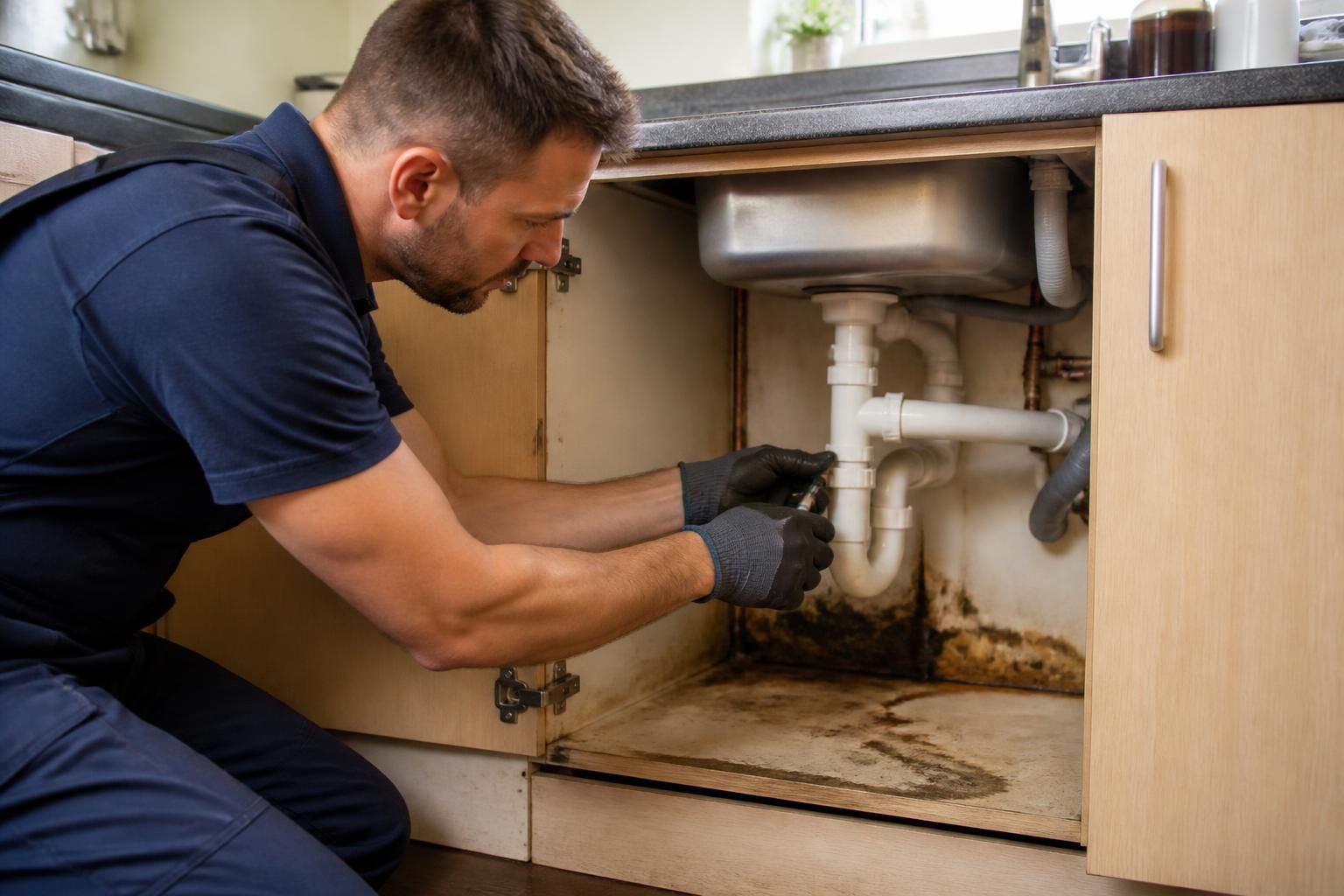
The main vulnerability is the cabinet beneath the sink: its base, joints and edge seals can be affected by escaping water, forceful equipment or unsuitable drain chemicals. Damage is more likely when a blockage is treated without first identifying whether the restriction is in the plughole, trap, waste pipe or a deeper section of pipework.
Removing the trap, sometimes called the U-bend, is a common way to inspect and clear a kitchen sink. Water left inside the trap should be collected in a container before the connections are loosened. If the sealing washers are misplaced, incorrectly seated or tightened unevenly when the trap is refitted, a slow drip may develop inside the cupboard. This may not be obvious immediately, but can gradually stain or weaken the cabinet base.
Typical signs of water-related cupboard damage include:
- swelling, bubbling or lifting on the cabinet base;
- dark marks, soft sections or a musty smell;
- water collecting around the trap or waste connection;
- dampness along the back or side panels; and
- doors becoming difficult to close because the cabinet has distorted.
Laminate-faced chipboard is particularly vulnerable because water can enter through exposed cut edges and screw holes. Once the core has expanded, drying the surface may stop further dampness but will not restore its original shape. A small leak from the waste fitting can therefore cause more lasting damage than the original blockage if it is left unnoticed.
Excessive force can create a different problem. Pushing a rigid tool too far may dislodge a compression joint, damage a plastic waste fitting or put strain on pipework fixed to the wall. Aggressive plunging can also force dirty water through a weak connection. If a dishwasher or washing machine waste hose joins the sink waste, that connection should be protected from being pulled loose during work.
Drain chemicals need particular caution. They may fail to clear a solid obstruction and can remain in the trap or pipework. If the trap then has to be opened, the liquid can injure skin and eyes or damage cupboard surfaces. Mixing different products can also create a hazardous reaction. A person who has used a chemical cleaner should tell the plumber before any dismantling takes place.
A safer approach is to remove stored items first, place an absorbent cloth and a suitable container beneath the trap, and check every joint after the pipework has been reassembled. The tap should then be run gradually while the connections are watched, rather than allowing a large volume of water into a system that may still be restricted. Any water on the cabinet base should be dried promptly, with the contents kept out until the area is confirmed to be dry.
A professional assessment is advisable where the cabinet is already swollen, the blockage returns, several fixtures drain slowly, or a joint continues to seep after tightening. These signs can indicate that the obstruction is further along the waste system or that a fitting needs replacing rather than simply clearing. Ideal Plumbing Services provides kitchen sink unblocking and plumbing repairs for homeowners, landlords and tenants in Birmingham and the West Midlands, with the work selected according to the condition of the sink, waste pipework and surrounding cupboard.