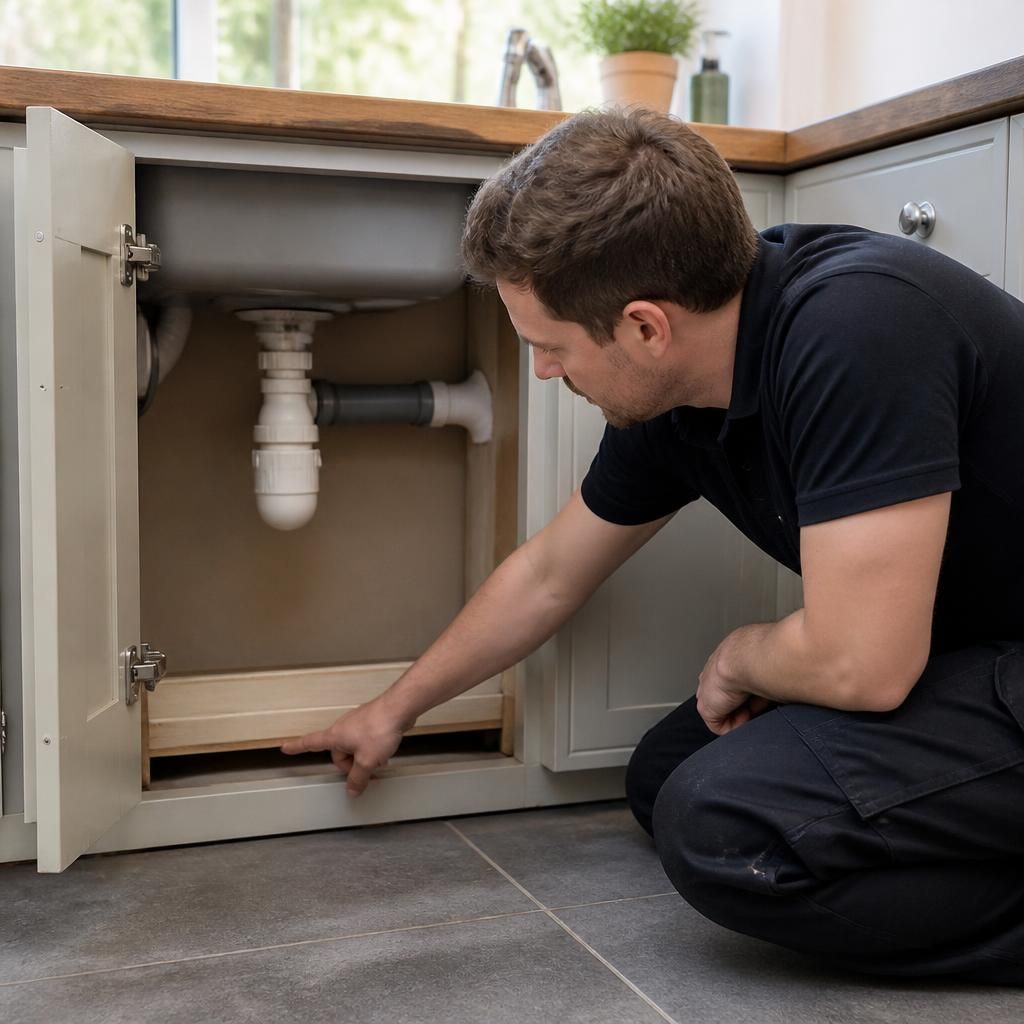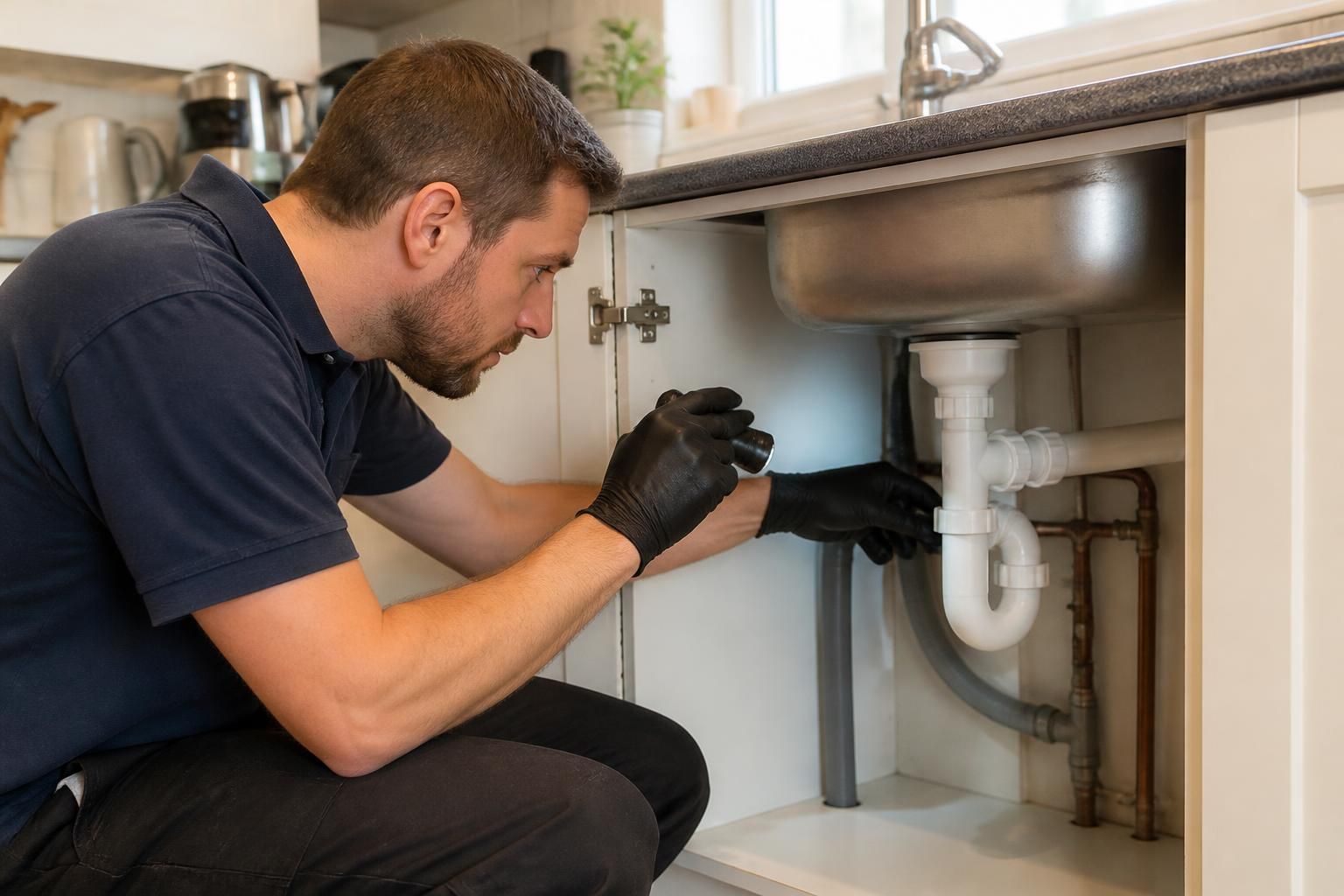
Preparing for a kitchen sink unblocking appointment mainly involves stopping further use, making the sink and connected appliances ready for inspection, and providing useful information about the waste system. Good preparation helps the plumber assess whether the obstruction is in the trap, waste pipe or a deeper section of the drainage run.
- Stop using the sink before the appointment. Avoid adding more water, food residue or household products, as this can increase the standing water and make the blockage harder to assess.
- Do not dismantle the waste fittings immediately beforehand. Removing the trap or forcing a blockage further into the pipe can alter the condition the plumber needs to diagnose. It may also create a leak if a seal or connection is not refitted correctly.
- Empty the sink basin and remove washing-up items. This gives the plumber a clean working area and prevents dishes, utensils or loose objects from getting in the way.
- Check which fixtures connect to the same waste pipe. Make a note of whether a dishwasher, washing machine or other appliance drains through the sink waste. This can help identify whether the problem is limited to the sink or affects a shared section of pipework.
- Take a photograph of the visible plumbing if appropriate. A clear image of the trap, waste outlet and any unusual pipework can help the plumber understand the installation before arriving, particularly where access is restricted.
- Keep children and pets away from the work area. Standing waste water, cleaning products and plumbing tools can present avoidable hazards while the blockage is being investigated.
- Protect nearby surfaces and flooring. Although the plumber will use suitable equipment, placing an old towel or waterproof covering near the cabinet and floor can help protect against drips when the waste fittings are opened.
If the sink is connected to an appliance, avoid running that appliance until the waste route has been checked. A dishwasher or washing machine may discharge more water than the sink can currently carry away, causing an overflow or spreading water beneath the cabinet.
For a rental property, confirm whether the landlord or managing agent needs to approve the appointment or receive the plumber’s findings. It is also useful to have any previous repair records or details of recurring drainage issues available, especially if the sink has blocked before after apparently successful clearing.
Tell the plumber about any signs of a wider plumbing problem when arranging the visit, such as water escaping from a joint, damage to the cabinet base, an unusual smell or more than one nearby fixture being affected. If water is close to electrical sockets or appliances, keep clear of the area and avoid using the affected equipment until it has been made safe.
Before work begins, ask what inspection and unblocking method is suitable for the installation and whether any further repair would be separate from clearing the obstruction. Ideal Plumbing Services can assess the accessible waste pipework, explain the recommended work and carry out the repair with clear charges and no hidden costs.