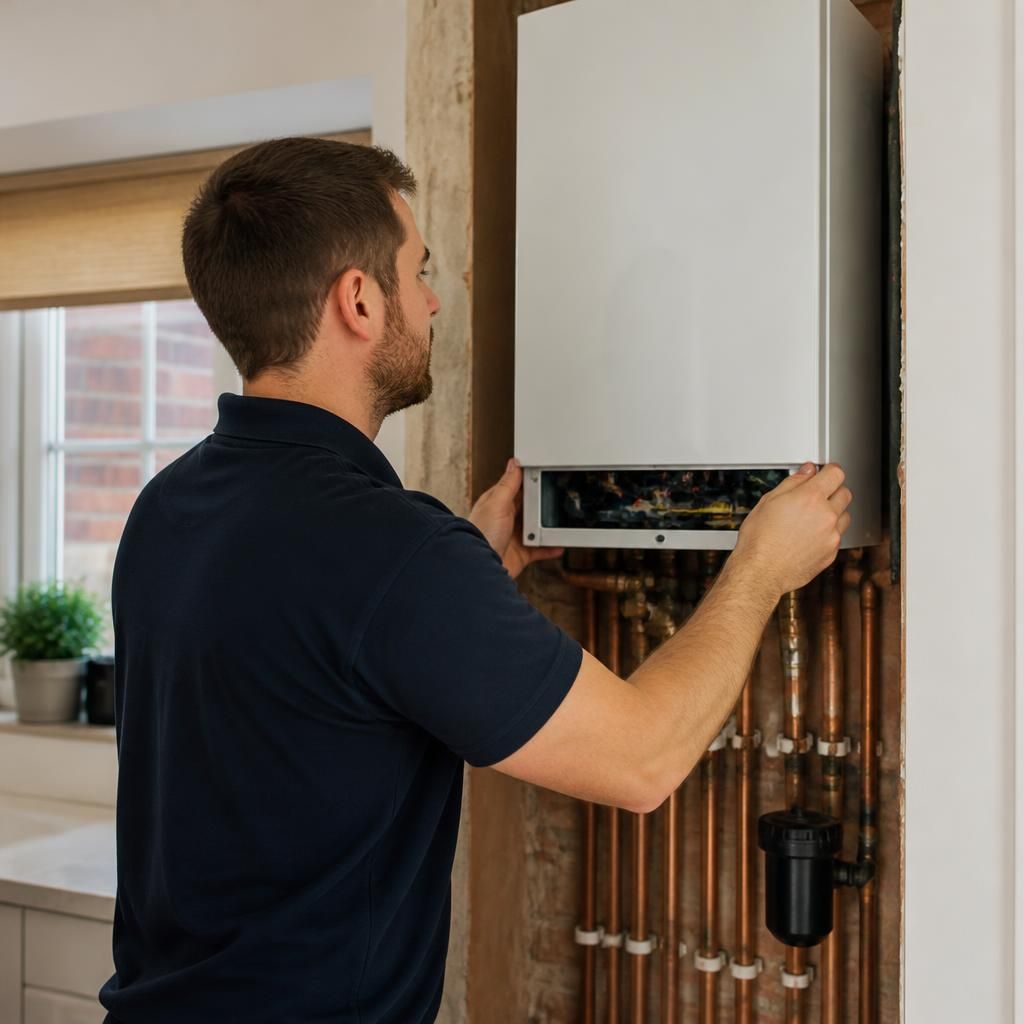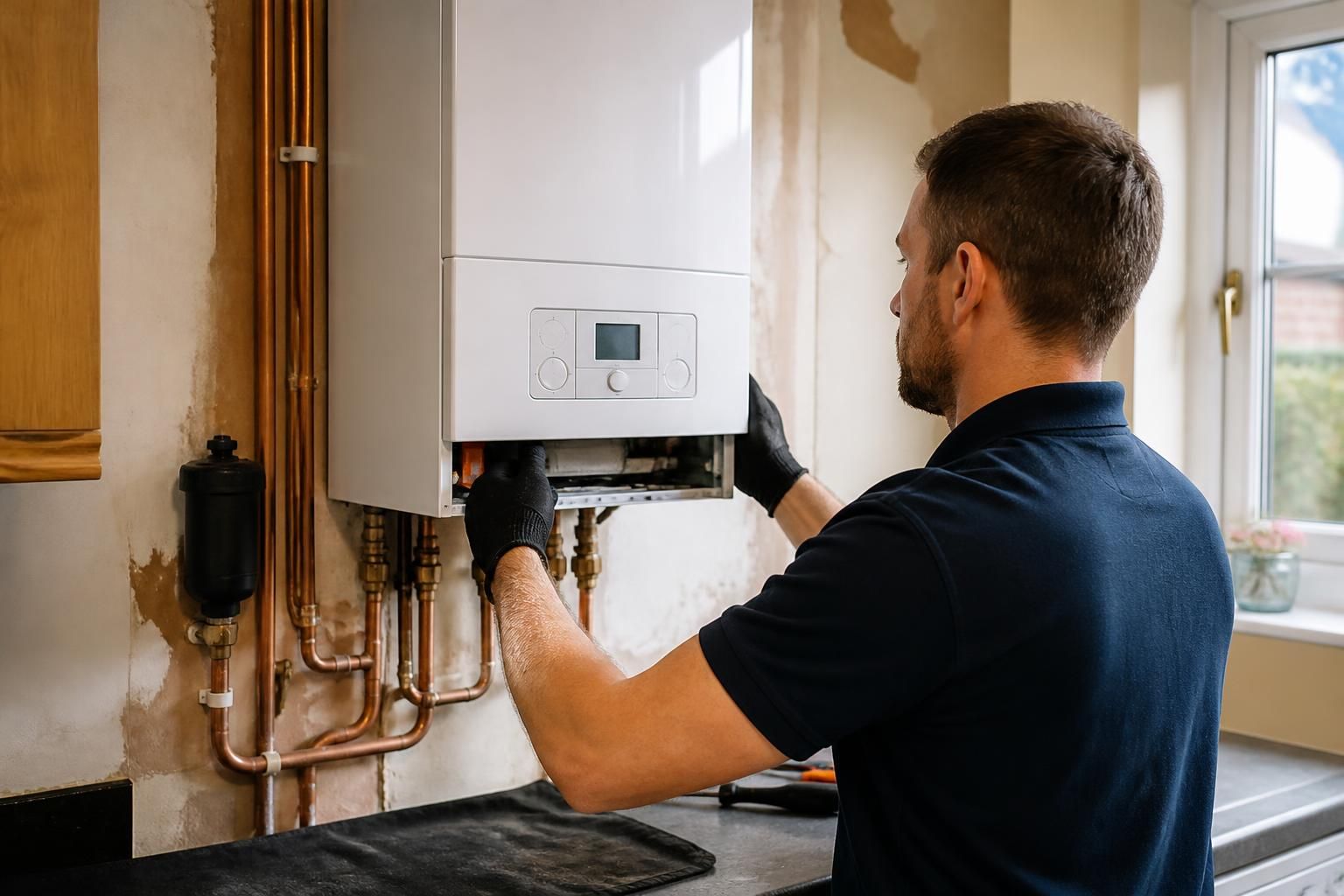
A new boiler installation is generally a controlled household disruption rather than a major building project. The main inconvenience is the temporary loss of heating and hot water, while the engineer removes the existing appliance, connects the replacement and tests the system. The work becomes more involved if the boiler is being relocated, the flue route must change or existing pipework needs repair or alteration.
Before the installation, the engineer should assess the proposed boiler position, access to the property, the condition of the pipework and the route for the flue and condensate connection. This assessment helps identify whether additional work is needed and reduces the risk of unexpected changes during the installation. If the replacement is staying in the same position and the existing connections are suitable, there is usually less work inside the home.
Preparation can make the installation more straightforward. Clear access to the boiler, nearby pipework and the route between the boiler and the outside wall. Remove items stored around the appliance and protect or move furniture where necessary. If cupboards or boxing conceal the boiler, ask in advance whether they need to be opened or altered. It is also sensible to plan for a temporary interruption to heating and hot water and to keep vulnerable occupants, pets and valuable items away from the work area.
The installation itself usually involves:
- isolating the existing gas, water and electrical connections where applicable;
- draining part of the heating system so the old boiler can be disconnected;
- removing the old appliance and preparing the mounting surface;
- fitting the new boiler and connecting the heating, hot water, gas, electrical and condensate services;
- installing or adapting the flue where the design requires it;
- checking system pressure, controls, safety devices and combustion performance; and
- explaining the controls and confirming that the system operates correctly.
Most of the work is concentrated around the boiler and associated pipework, but an installation can affect other areas if new pipe routes are needed. Moving a boiler may involve lifting flooring, opening sections of boxing or making good around the old and new positions. Changes to radiators, thermostats, hot-water cylinders or heating controls can also add work. These requirements should be discussed before the installation so the expected level of disruption is clear.
Noise, dust and occasional drilling are normal during removal and fitting. A professional installer should protect work surfaces, keep the work area orderly and remove installation waste. Some minor making-good may be required after pipework or the flue has been altered; however, extensive decorating or structural repairs are not normally part of a standard boiler replacement unless agreed separately.
The most disruptive point is usually the period when the old boiler is disconnected and the new system is being commissioned. Do not use the heating system or hot-water outlets if the engineer has isolated them. Once testing is complete, the installer should show you how to operate the controls, explain any new settings and identify any follow-up work that remains outstanding.
When comparing installation arrangements, ask what is included in the quoted work. Important points include removal of the old boiler, changes to pipework, flue alterations, condensate drainage, system cleaning, controls, waste disposal, testing and any making-good. A clear written scope helps distinguish the expected installation disruption from additional work that may only become apparent after inspection.
For a homeowner, landlord or tenant, the practical impact is usually manageable when the installation scope is agreed beforehand and access is prepared properly. The key factors are not simply the boiler itself but its position, the condition and layout of the heating system, and whether the replacement can use the existing connections without significant alteration.