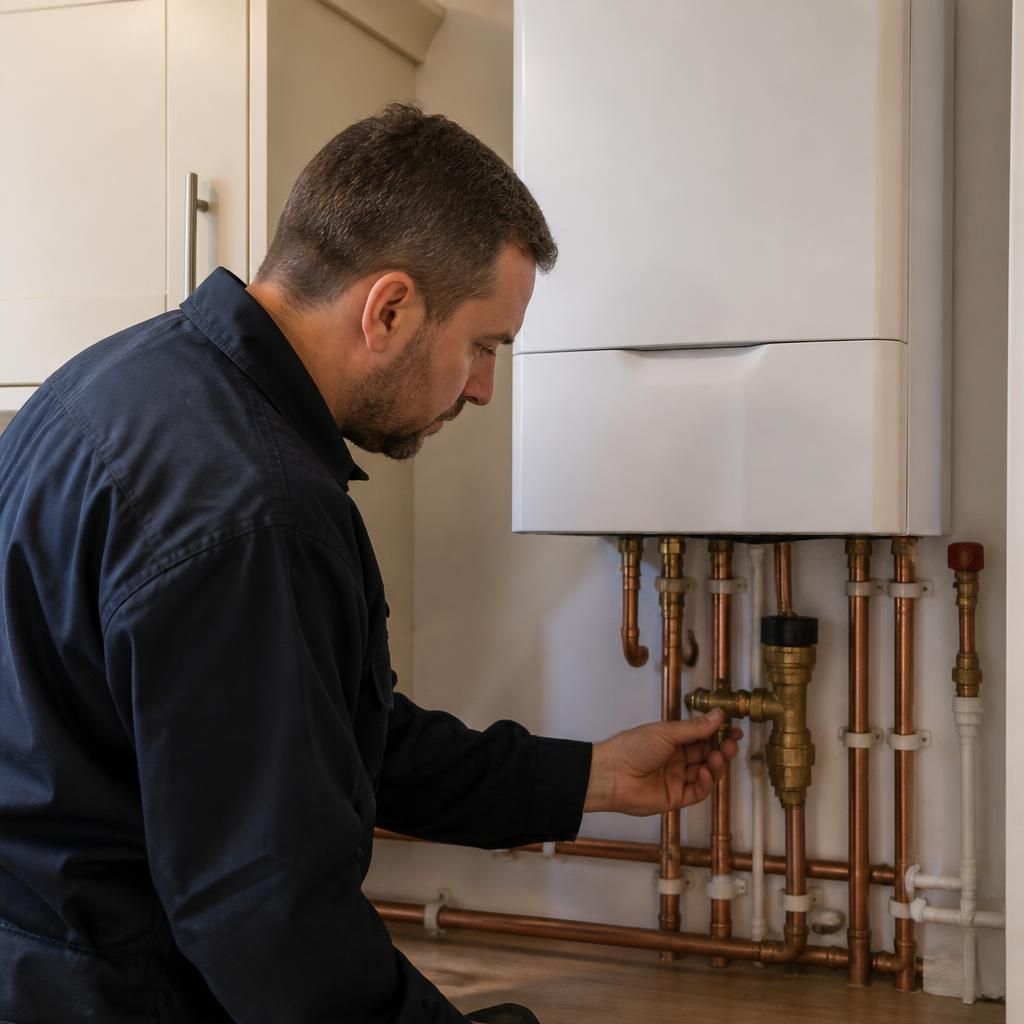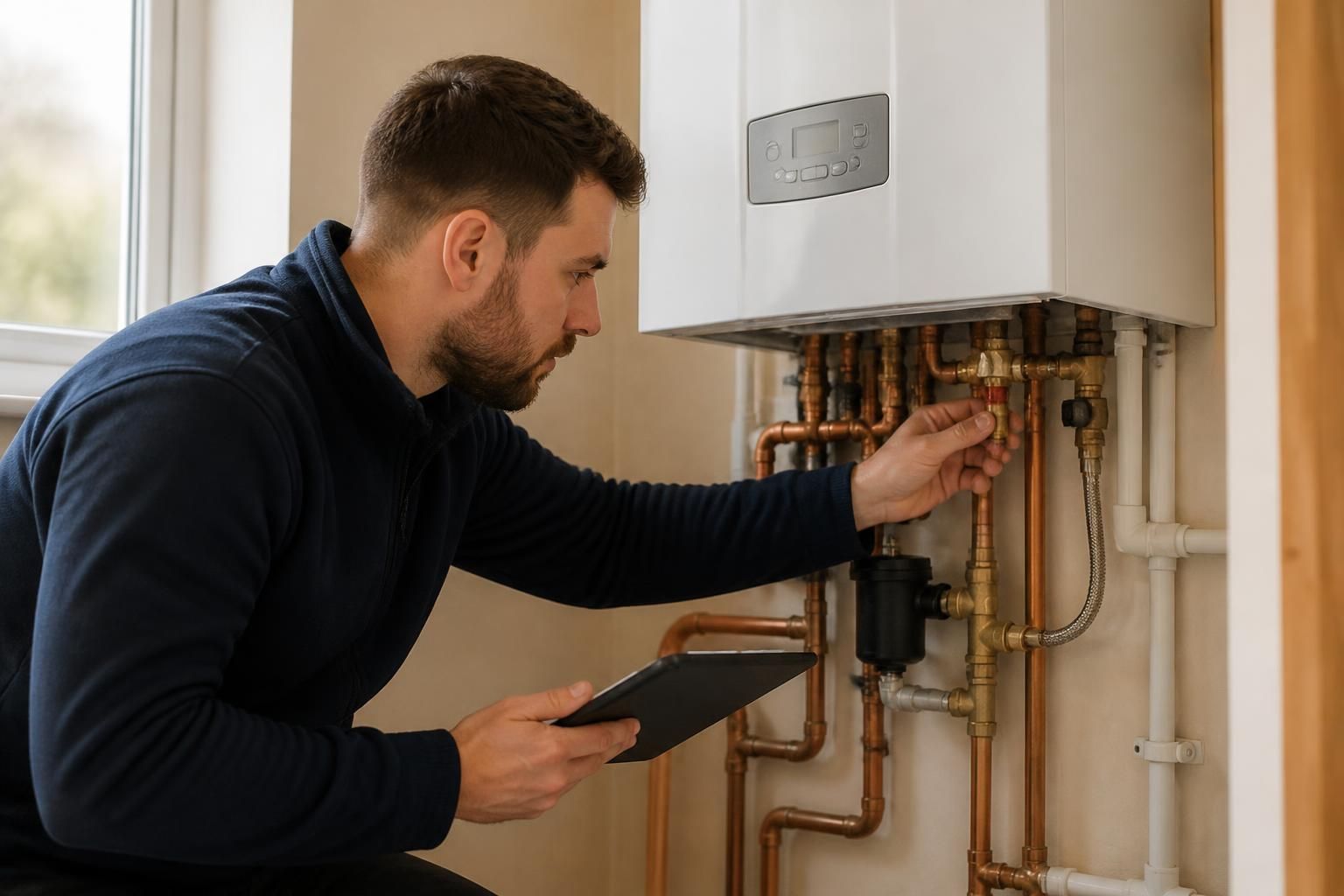
Choosing a boiler installation company involves checking more than the advertised boiler. The installer should assess your property, specify a suitably sized system, explain the proposed design and complete the work in accordance with current safety and building requirements.
Before requesting quotations, gather basic information about your home, including the existing boiler type, available fuel supply, hot-water requirements and any recurring heating problems. This helps each company assess the same requirements and makes it easier to compare proposals accurately.
- Ask whether a full property assessment is included. A proper assessment should consider the number of rooms, insulation, radiators, hot-water demand, pipework and the available location for the boiler and associated components. Boiler size should be based on the property’s heat requirements rather than selected solely by its output or headline specification.
- Check that the proposed system suits your household. A combi boiler, system boiler and regular boiler work with different layouts and hot-water arrangements. The installer should explain why a particular option is suitable, including its effect on hot-water storage, water pressure, heating controls and the space required for cylinders or tanks.
- Request a written scope of work. This should identify what will be removed, supplied, installed, tested and disposed of. It should also clarify whether pipework alterations, flue work, condensate connections, system cleaning, filters, thermostats, controls and making good around the installation are included.
- Ask how the heating system will be commissioned. Commissioning involves checking the boiler and controls, testing safety functions, confirming operating settings and recording relevant information. It is different from simply switching the boiler on after installation.
- Confirm which documents you will receive. A completed installation should be accompanied by the relevant manufacturer documentation, operating instructions and compliance records. Ask how any required building-control notification or registration will be handled and when the paperwork will be provided.
- Discuss controls and future operation. The installer should explain how to use the thermostat, programmer and heating zones, where fitted. Clear instructions can help prevent incorrect settings and make it easier to identify whether a problem relates to the boiler, controls or wider heating system.
- Establish who will deal with defects or follow-up questions. Ask what happens if an installation issue is identified after completion, who should be contacted and what information will be needed. Keep the quotation, installation records, manuals and commissioning documents together for future servicing or repairs.
Pay attention to how clearly the company explains limitations and optional work. A professional proposal should distinguish essential installation tasks from improvements such as upgraded controls, altered radiators or additional system protection, rather than presenting every recommendation as compulsory.
Be cautious if the installer recommends a boiler without inspecting the property, cannot explain the sizing method, avoids providing a detailed scope or is unwilling to discuss compliance documents. Vague descriptions can make it difficult to establish what has been agreed and whether the completed work matches the original proposal.
For a comparison that is useful, give each company the same information and assess the technical proposal, installation scope, documentation and aftercare arrangements together. The most suitable boiler installation company is the one that can demonstrate a sound understanding of your property and set out a clear, appropriate installation plan.