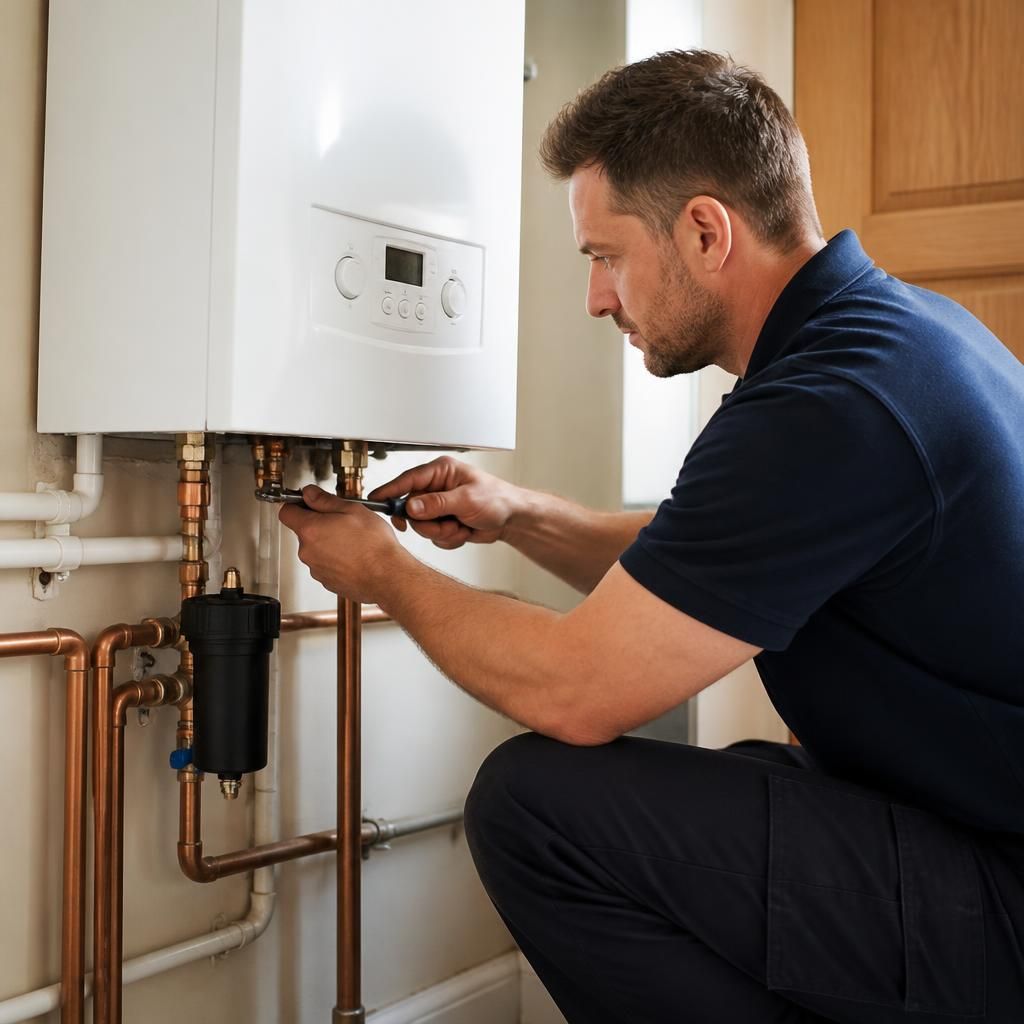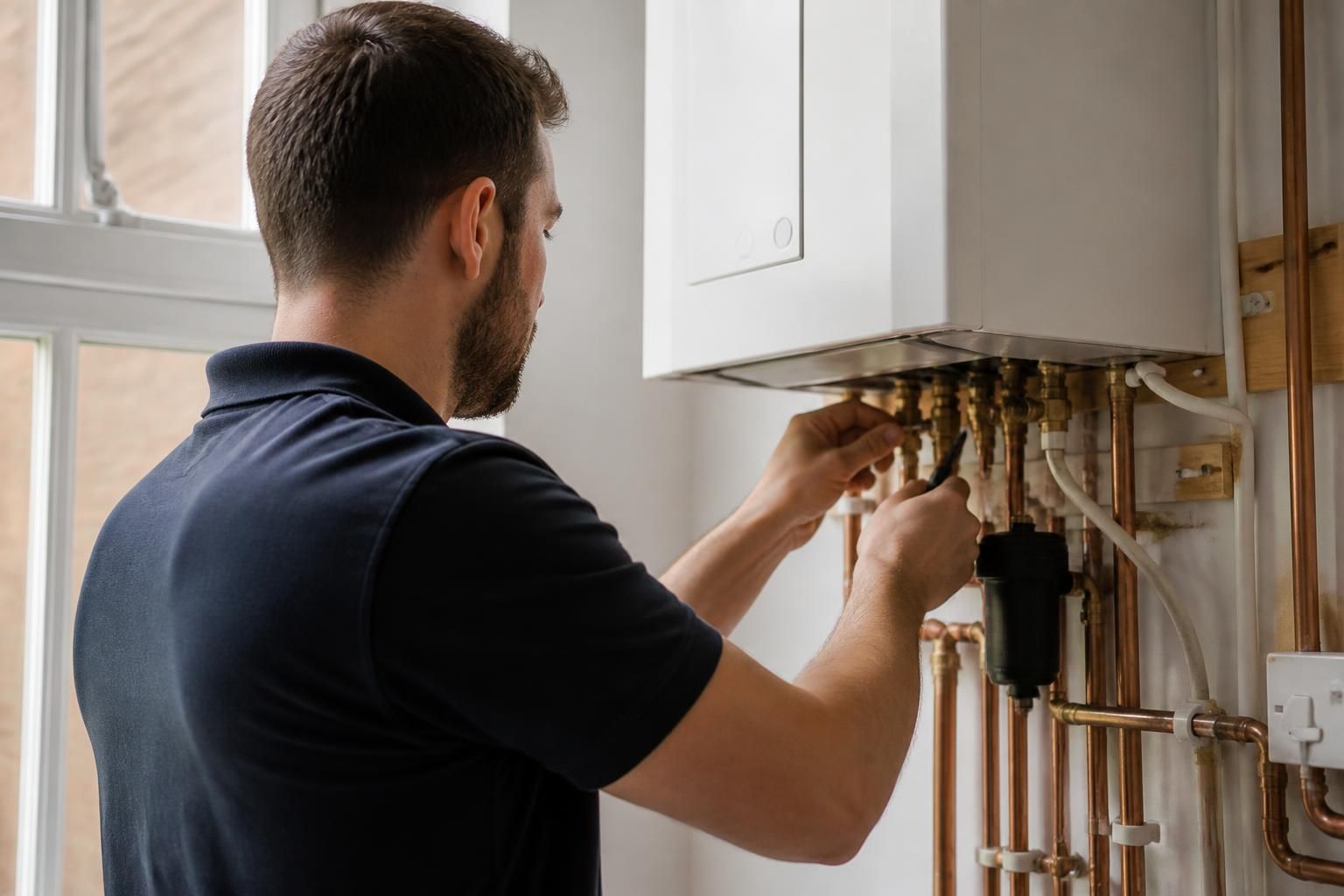
A boiler installation service covers more than placing a new appliance on the wall. It should include the technical design, preparation of the installation site, compliance checks and clear confirmation of which heating-system components, materials and finishing work are included in the quoted price.
Initial survey and system design
The installer should assess the property and existing system in enough detail to determine whether the proposed boiler is suitable. This can include reviewing the number and size of radiators, hot-water demand, pipework routes, available ventilation, flue position, condensate drainage and the location of the controls. The installer may also identify whether the system needs upgrades to operate safely and effectively.
For a replacement, the condition and layout of the existing pipework matter. A like-for-like change may be relatively straightforward, while changing from one boiler type to another can require additional pipework, valves, cylinder work or alterations to the airing cupboard and utility connections. These differences should be explained before work starts.
Preparation of the installation area
Preparation can involve isolating the relevant water, gas and electrical supplies, protecting nearby surfaces and making sure the wall or floor can support the equipment. Where an old appliance is being replaced, the installer should identify how redundant pipework, brackets, tanks or other components will be dealt with. Any required alteration to cupboards, access panels or the flue route should be agreed in advance.
The quotation should distinguish between standard installation work and possible additional work. Examples include upgrading undersized gas pipework, adapting the flue, improving condensate drainage, replacing unsuitable isolation valves or correcting defects discovered in the existing system. This helps prevent uncertainty about the final scope.
Safety and legal compliance
Gas boiler work must be carried out by an appropriately registered gas engineer. The installation should comply with applicable building, gas-safety and electrical requirements, including safe flue termination, combustion air where relevant, pressure relief arrangements and discharge pipework. Electrical connections and controls must also be installed safely and in accordance with the relevant requirements.
For certain installations, the position of the flue terminal, condensate pipe and pressure relief discharge is particularly important. They must not create a risk to occupants, neighbouring properties or the fabric of the building. If the proposed location is unsuitable, a competent installer should explain the necessary alternative rather than proceeding with an unsafe arrangement.
System components and optional improvements
The service may include parts needed to make the boiler operate correctly with the existing heating system. Depending on the survey, this could include new valves, a system filter, a pump, expansion equipment, controls or modifications to the heating and hot-water pipework. These are not automatically included in every installation, so the written quotation should state what is supplied.
Some properties may benefit from improvements such as upgraded heating controls, zoning, thermostatic radiator valves, pipework insulation or a cleaner system circuit. These can be discussed as separate options where appropriate. They should not be presented as essential unless the installer has identified a specific safety, compatibility or performance reason.
Flushing and water treatment
When a new boiler is connected to an older heating system, the condition of the system water should be considered. Sludge and corrosion deposits can restrict circulation and affect components. Depending on the system’s condition, installation work may include cleaning or flushing, adding suitable water treatment and recording the treatment carried out. The method required should reflect the condition of the pipework and radiators rather than being assumed to be identical for every property.
Commissioning and handover information
Once the physical work is complete, the engineer should commission the boiler in line with the manufacturer’s instructions. This involves checking combustion, operating pressure, safety devices, controls, heating and hot-water functions, and the system for leaks. The engineer should also confirm that radiators and thermostatic controls operate as expected.
Handover information should normally include the appliance instructions, commissioning details, relevant compliance documentation and information about any warranty or service requirements. Keep these records, as they provide useful evidence of how the system was installed and help future engineers understand the equipment.
What may not be included automatically
Items outside the standard installation can include making good plaster or brickwork, decorating, replacing radiators, relocating the boiler, upgrading long sections of pipework, altering electrical circuits, removing storage tanks or changing the hot-water cylinder. Waste removal and disposal of the old appliance should also be confirmed rather than assumed.
A detailed boiler installation quote should therefore set out the appliance and controls supplied, the work included, any exclusions, the treatment of existing components, the paperwork provided and how unexpected issues will be handled. Comparing quotes on this basis gives a more accurate picture than comparing the boiler price alone.