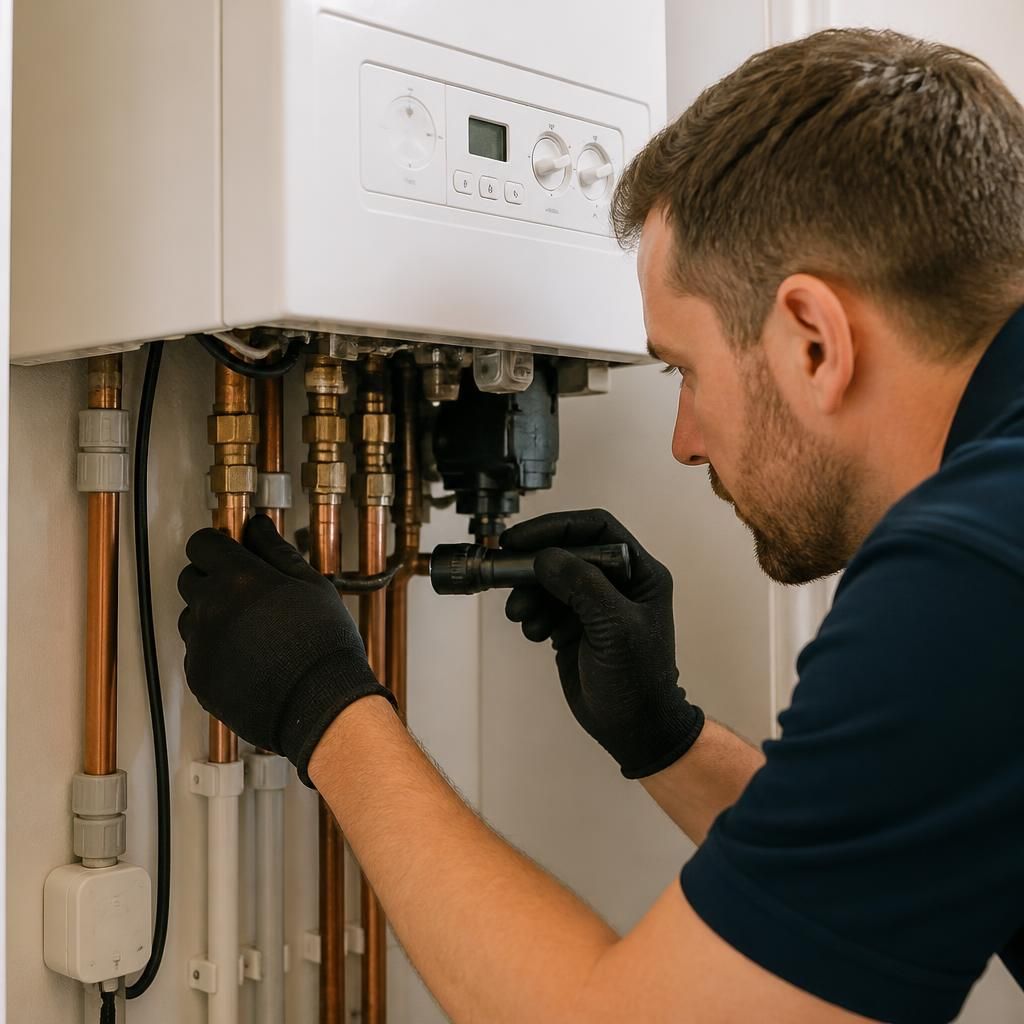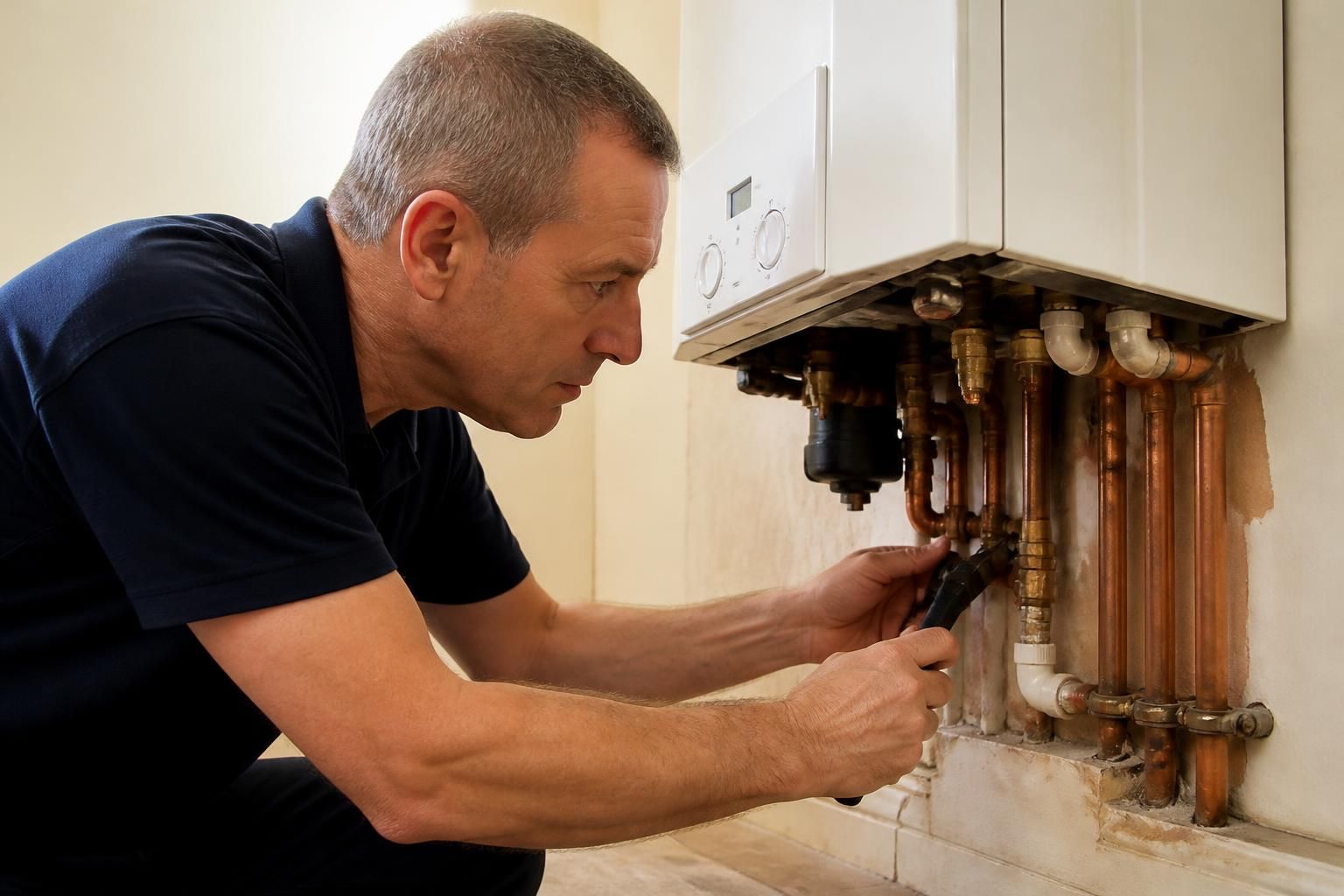
Once a domestic boiler leak has been identified, the next stage is to establish exactly which component has failed, control any remaining risk and agree the appropriate repair. The plumber should explain the cause, the work required and whether any connected parts or surrounding pipework also need attention before the boiler is used normally again.
The immediate priorities are:
- Keep people away from pooled water and protect nearby flooring, cupboards and electrical equipment where it is safe to do so.
- Do not remove the boiler casing or attempt to tighten internal fittings. Boilers contain electrical and gas components that require appropriate competence to work on safely.
- If water is close to electrical equipment, avoid touching the equipment and seek qualified assistance. If there is a smell of gas, do not operate electrical switches or create a flame; leave the area and follow the relevant gas emergency guidance.
- Note when the leak occurs and where the water appears. A leak that only happens while the heating is running can indicate a different fault from one that continues when the boiler is off.
The plumber then traces the failure. Water can travel along the underside of a boiler or nearby pipework, so the visible drip is not always the point where it started. The inspection may consider connections, seals, valves, the pressure relief arrangement, the condensate route, the expansion vessel and internal boiler components. Signs of corrosion, scale, previous repairs or unusually high system pressure can help explain both the immediate leak and the likelihood of it returning.
After the cause is confirmed, the repair options depend on the failed part and the boiler’s condition. A minor fault may involve renewing a seal, connection or serviceable valve. A more substantial fault may require replacement of a specific boiler component. If corrosion or damage affects several connected parts, the plumber should distinguish between the essential repair and any recommended preventative work, rather than treating every nearby item as part of the original fault.
Before work begins, ask for a clear explanation of:
- the component or area believed to be leaking;
- whether the repair is temporary or intended as a lasting component replacement;
- which parts and labour are included;
- whether access panels, cupboards or flooring need to be moved; and
- what signs would indicate that further investigation is needed.
This is also the point to mention any previous pressure loss, repeated topping-up, unusual noises, heating problems or earlier boiler repairs. Those details can reveal a wider system issue that may not be obvious from a single visible leak.
Once the repair has been completed, the plumber should carry out appropriate checks on the repaired area and the boiler’s operation. This includes looking for renewed seepage, confirming that relevant connections remain secure and checking that the system behaves normally under operating conditions. Any water that has reached surrounding materials should be dried and assessed, because prolonged damp can damage flooring, cabinets, plasterwork and insulation even after the boiler fault itself has been corrected.
After the boiler is put back into use, monitor the pressure display and the area around the appliance for any return of moisture. Repeated pressure drops, fresh staining, dripping, unusual noises or a need to add water again are reasons to stop relying on the repair and arrange further investigation. Keep any paperwork describing the fault and work completed, particularly if the property is rented or an insurance claim may be relevant.
For homeowners, landlords and tenants, a domestic boiler leak is therefore not finished simply because the visible water has stopped. The underlying fault, any related damage and the boiler’s ongoing condition all need to be considered. Ideal Plumbing Services provides domestic boiler repair and leak-related plumbing support for residential customers in Birmingham and across the West Midlands, with clear advice on the work identified and no hidden charges.