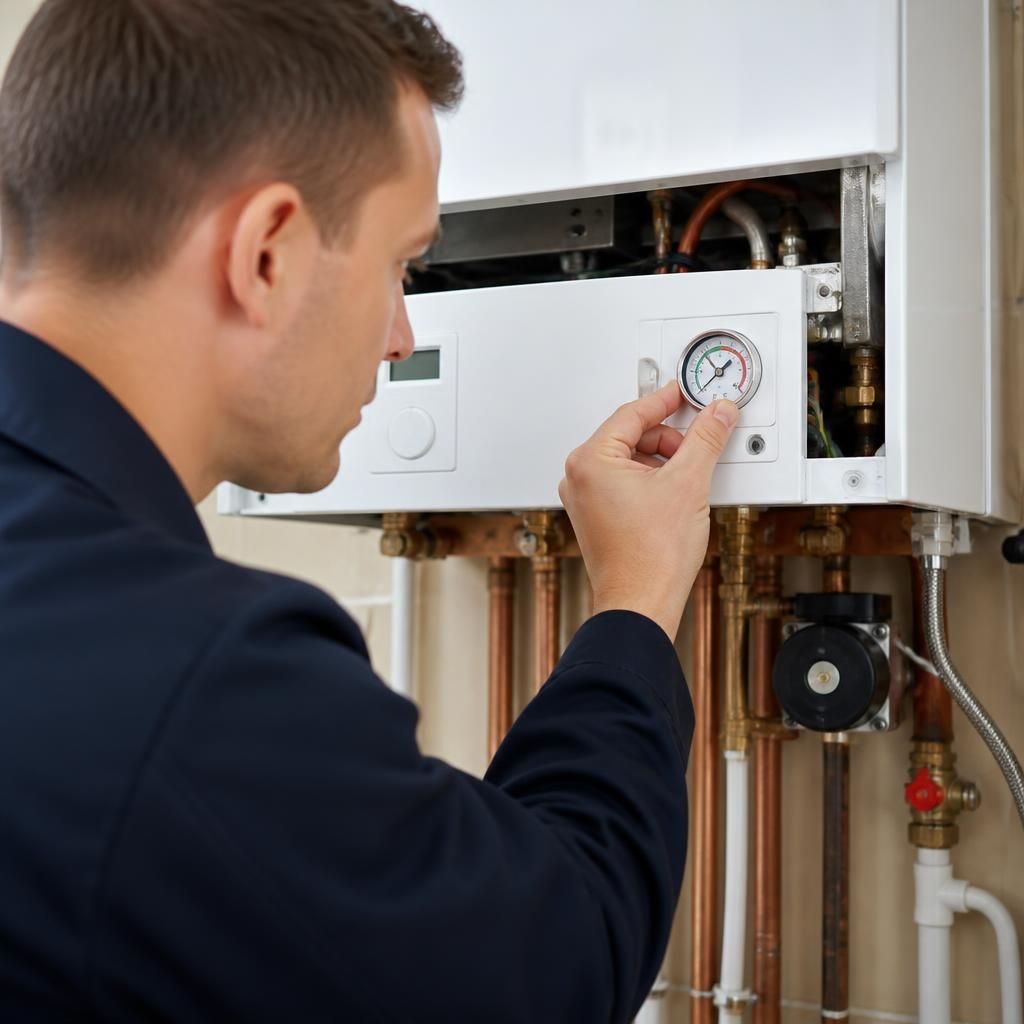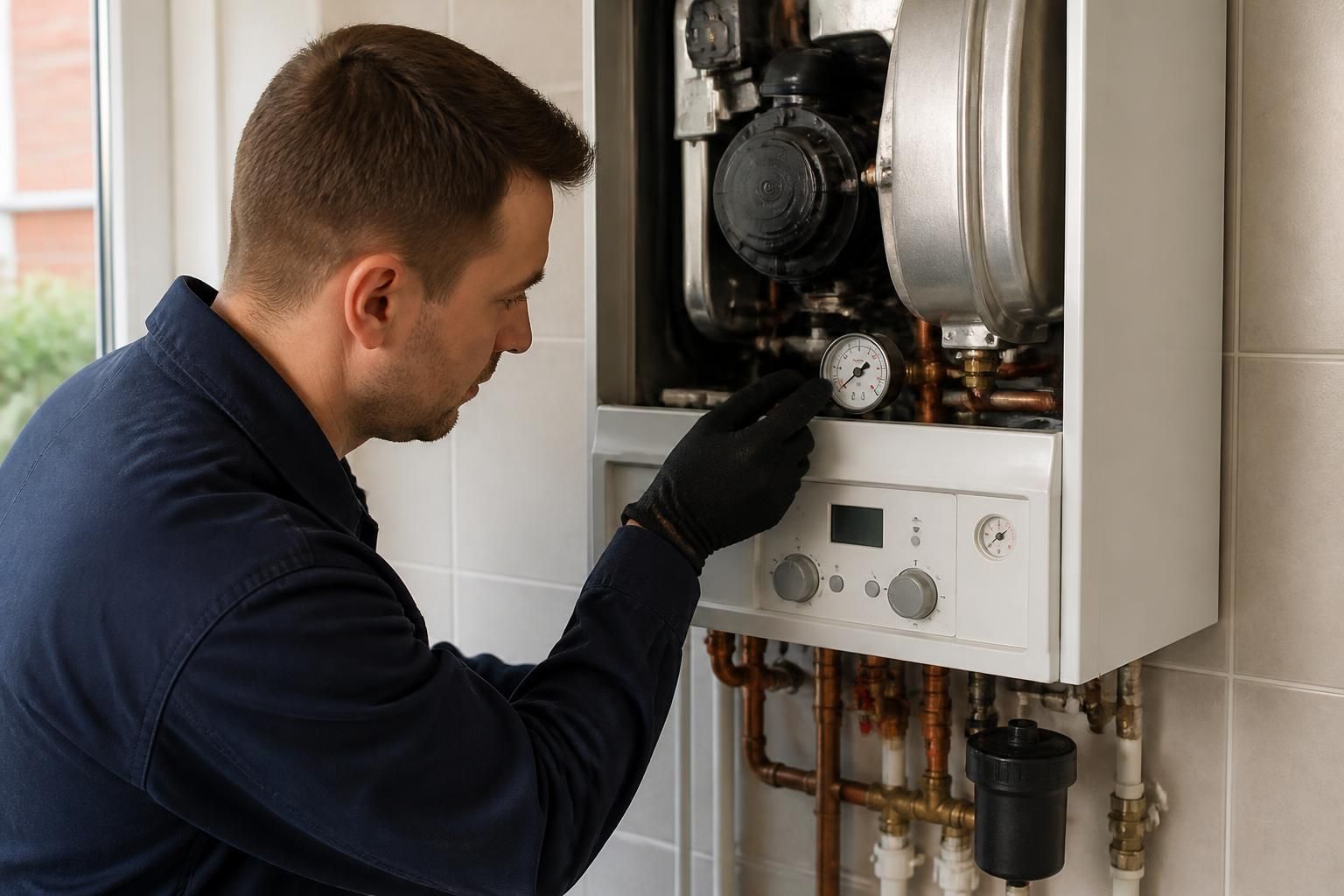
A domestic boiler needs professional repair when it shows a safety warning, develops a new operating fault or behaves differently from its normal pattern. Some problems are caused by controls or the wider heating system rather than the boiler itself, so the safest approach is to record what has changed and arrange an inspection rather than repeatedly resetting the appliance.
Pay attention to safety-related indicators. A carbon monoxide alarm sounding, a yellow or orange flame instead of a steady blue flame, soot marks, or an unusual gas smell should be treated as potentially serious. Do not use the boiler if you suspect a gas or combustion problem. Avoid operating electrical switches or creating a flame, leave the property if necessary, and contact the appropriate emergency gas service. A qualified, registered heating engineer should investigate before the appliance is used again.
Some faults appear around the boiler rather than on its display. Look for staining beneath the appliance, corrosion on visible pipework, damp around the condensate connection, or water collecting near valves and joints. Even a small amount of moisture can damage components or indicate a seal, connection or internal part is failing. Do not remove the boiler casing to find the source, as internal components and combustion areas require specialist handling.
Changes in the controls can also indicate a fault. If the thermostat, programmer or heating zones no longer respond consistently, the cause may be a control issue, wiring problem, sensor fault or communication failure between components. Check that the controls have power and are set correctly, but avoid repeatedly changing settings to compensate for a fault. An engineer can test the controls separately from the boiler and establish whether the appliance itself needs repair.
Watch for symptoms that are easy to dismiss. These can include:
- the boiler starting and stopping more often than its usual operating pattern;
- a delay between requesting heat and the appliance responding;
- radiators needing bleeding repeatedly or failing to warm evenly despite correct settings;
- the condensate pipe discharging unusually or freezing in cold conditions; and
- the boiler requiring repeated manual resets before it operates.
These symptoms do not identify one fault on their own. They may relate to circulation, a sensor, a pump, the condensate system or the heating controls. Repeated resets are particularly unhelpful because they can conceal a recurring fault and place further strain on the appliance.
Stop and seek advice rather than attempting a DIY repair. Boiler repairs can involve gas, electricity, combustion and pressurised water. Do not dismantle the casing, alter gas settings, bypass safety devices or replace internal components yourself. Basic observations, such as noting when the issue occurs and photographing an external warning or display, can help the engineer, but internal investigation should be left to a suitably qualified professional.
Repair or replacement depends on the diagnosis. An engineer will normally assess the appliance, controls, pipework and flue, then explain the identified fault and the available options. A repair may be suitable where a specific component has failed and the rest of the system is in sound condition. Replacement may need consideration where faults are recurring, essential parts are no longer practical to source, or the appliance is unsafe or uneconomical to maintain. The decision should be based on safety, condition and the likely reliability of the proposed work, not on one symptom alone.
Keep the boiler's service and repair records available, including any previous fault codes or parts replaced. This information helps establish whether the latest issue is isolated or part of a wider pattern. A professional domestic boiler repair assessment can then distinguish a control problem from an appliance fault and identify the safest next step.