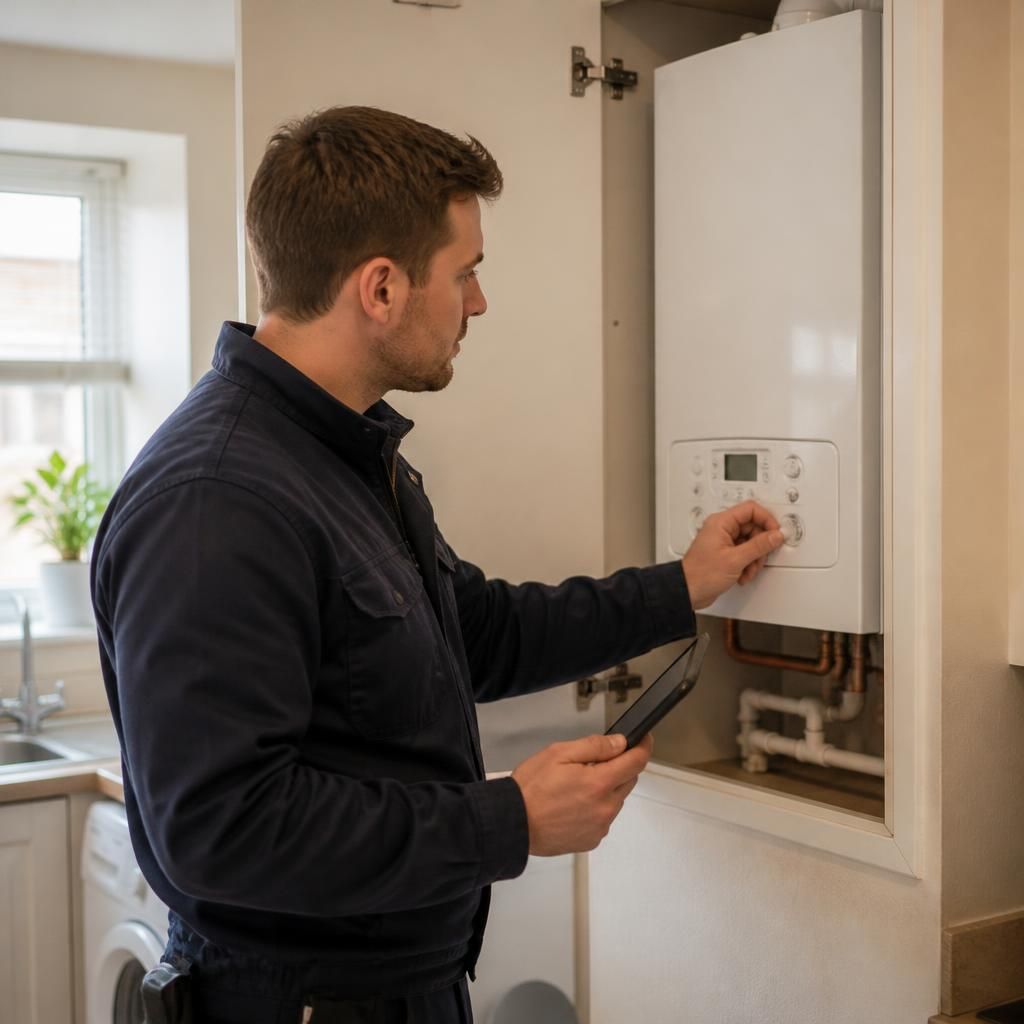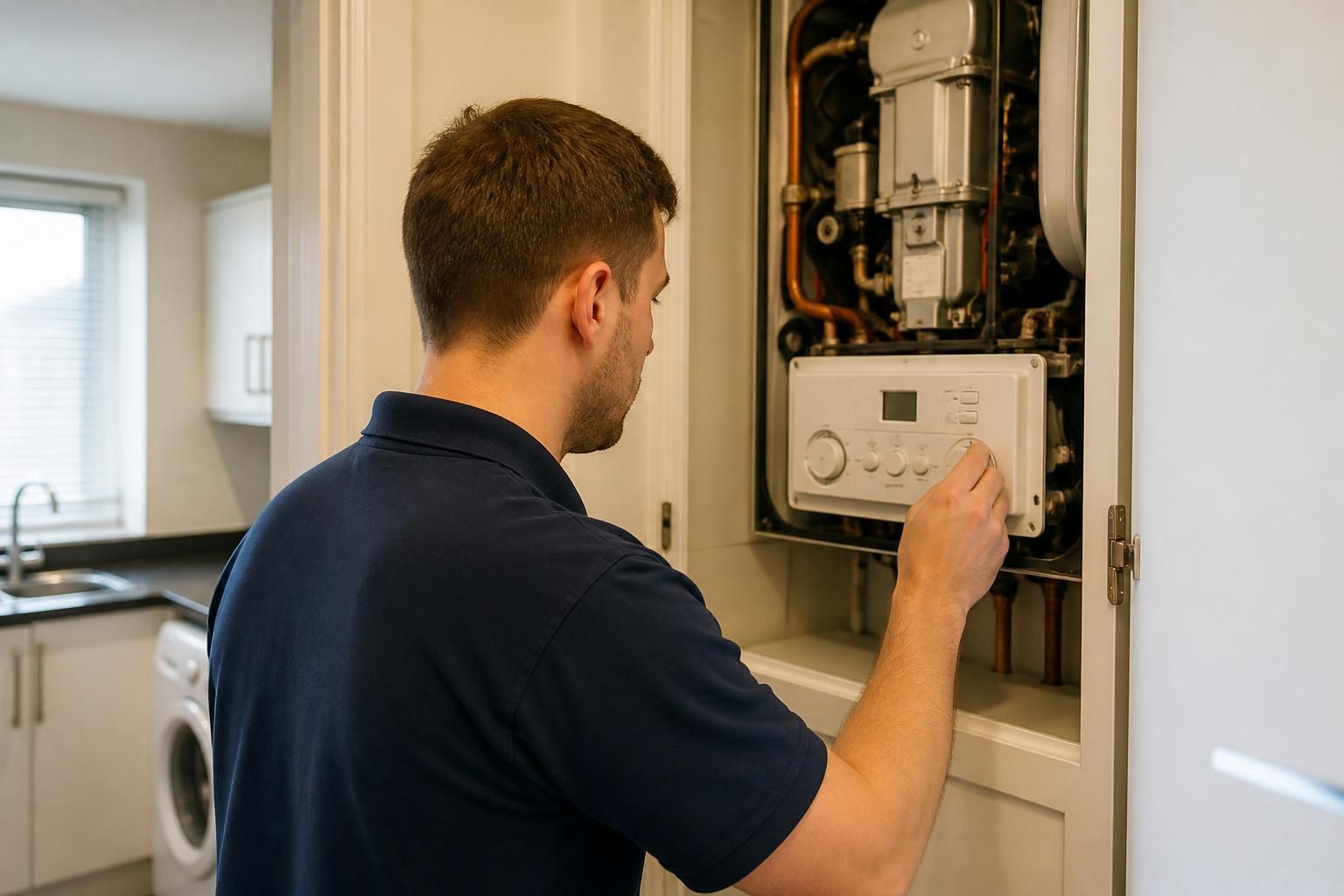
Domestic boiler servicing is suitable for flats and rental properties where the home has its own accessible boiler and associated controls. The arrangement is different when a flat is supplied by a communal boiler, district heating system or heat interface unit, because the building owner or managing agent may be responsible for the central plant and its maintenance.
For a self-contained boiler, the service normally focuses on safe operation, condition and performance. Depending on the appliance and the manufacturer’s instructions, the engineer may:
- Inspect the boiler casing, connections, seals and visible pipework.
- Check the flue, ventilation arrangements and the route to the terminal where these are accessible.
- Assess combustion and the operation of safety controls.
- Examine the condensate pipework on a condensing boiler.
- Check system pressure, temperature controls and signs of water or gas-related faults.
- Clean relevant internal components where this forms part of the service procedure.
- Record defects or safety concerns that require further attention.
Flats can present access issues that are less common in detached or semi-detached homes. A flue may pass through a communal shaft, terminate at roof level or be positioned in an area controlled by the freeholder or managing agent. The boiler service can still be carried out, but access to inspection points may need to be arranged in advance. If an important part of the installation cannot be inspected, the engineer should explain the limitation rather than treating the appliance as fully assessed.
In a rental property, responsibility is usually split between the landlord and tenant. The landlord or property manager normally arranges maintenance and keeps the relevant service and safety records. The tenant should report unusual noises, pressure loss, leaks, ignition problems or changes in heating performance, and should provide access for agreed work. A tenant should not assume that a routine service report replaces any separate gas safety documentation required for rented accommodation.
A boiler service and a gas safety check are related but not identical. A service examines the appliance and its operation in detail, while a gas safety check addresses the safety of relevant gas appliances, pipework and flues within the scope of that check. Landlords should confirm that the documentation they hold covers the specific legal and management requirements for the property, rather than relying on the word “serviced” alone.
Where a flat has communal heating, the first step is to establish who owns and maintains the equipment. The building manager may arrange servicing of the central boiler, pumps, distribution system or heat interface units. An engineer attending an individual flat can usually investigate the controls, radiators or visible connections within the property, but this does not automatically constitute a service of the communal plant.
Before arranging a service, provide the property manager or engineer with the boiler location, appliance details if known, access restrictions and any recent fault information. For rented accommodation, check whether permission is needed before work is booked and whether the landlord requires a particular report format. It is also useful to clarify whether cleaning, minor adjustments or remedial repairs are included, as these may be separate from the standard service.
Ideal Plumbing Services provides domestic plumbing and heating support for homeowners, landlords and tenants in Birmingham and the wider West Midlands. For a flat or rental property, the engineer can establish whether the appliance is individually maintained or part of a shared system, identify any access limitations and explain what the service record does and does not cover.