The correct time to service a domestic boiler is determined primarily by the manufacturer’s servicing schedule, the boiler’s warranty conditions and the date of its previous service. Keeping to the recommended interval helps identify wear, combustion problems and safety issues before they affect heating or hot water.
Follow the manufacturer’s instructions first
Boiler manufacturers specify how often each model should be inspected and maintained. The relevant guidance may be in the installation documents, warranty paperwork or user manual. If the boiler is still covered by a warranty, missing a required service can affect the validity of that cover, so the manufacturer’s requirements should take priority over general advice.
Where paperwork is unavailable, a qualified heating professional can usually establish the boiler’s details from its identification plate and installation records. Keeping a written record of each service makes the next due date easier to track and provides useful information if the property changes ownership or tenancy.
Consider the boiler’s age and condition
Older boilers may need closer attention because components can deteriorate gradually even when the system continues to operate. A service may be appropriate sooner than the usual scheduled date if the boiler has a history of breakdowns, has recently had parts replaced or has been affected by poor water quality, corrosion or problems with the flue.
A newly installed boiler should also be serviced in line with its warranty and manufacturer requirements. The first service is an opportunity to confirm that the appliance is operating correctly, that the flue and ventilation arrangements remain suitable, and that the installation records are complete.
Book a service if performance changes
A service should not be delayed until the next planned date when there are indications that the appliance may not be operating correctly. Relevant warning signs include:
- the boiler repeatedly losing pressure or switching itself off;
- radiators taking longer than usual to heat;
- hot water temperature becoming inconsistent;
- visible corrosion, staining or water around the appliance;
- the pilot light or other operating indicator behaving unexpectedly; or
- a carbon monoxide alarm sounding.
A carbon monoxide alarm sounding requires immediate attention: follow the alarm manufacturer’s safety instructions, leave the property if advised and contact the appropriate emergency service. Do not attempt to dismantle or repair a gas appliance yourself.
What happens during a boiler service?
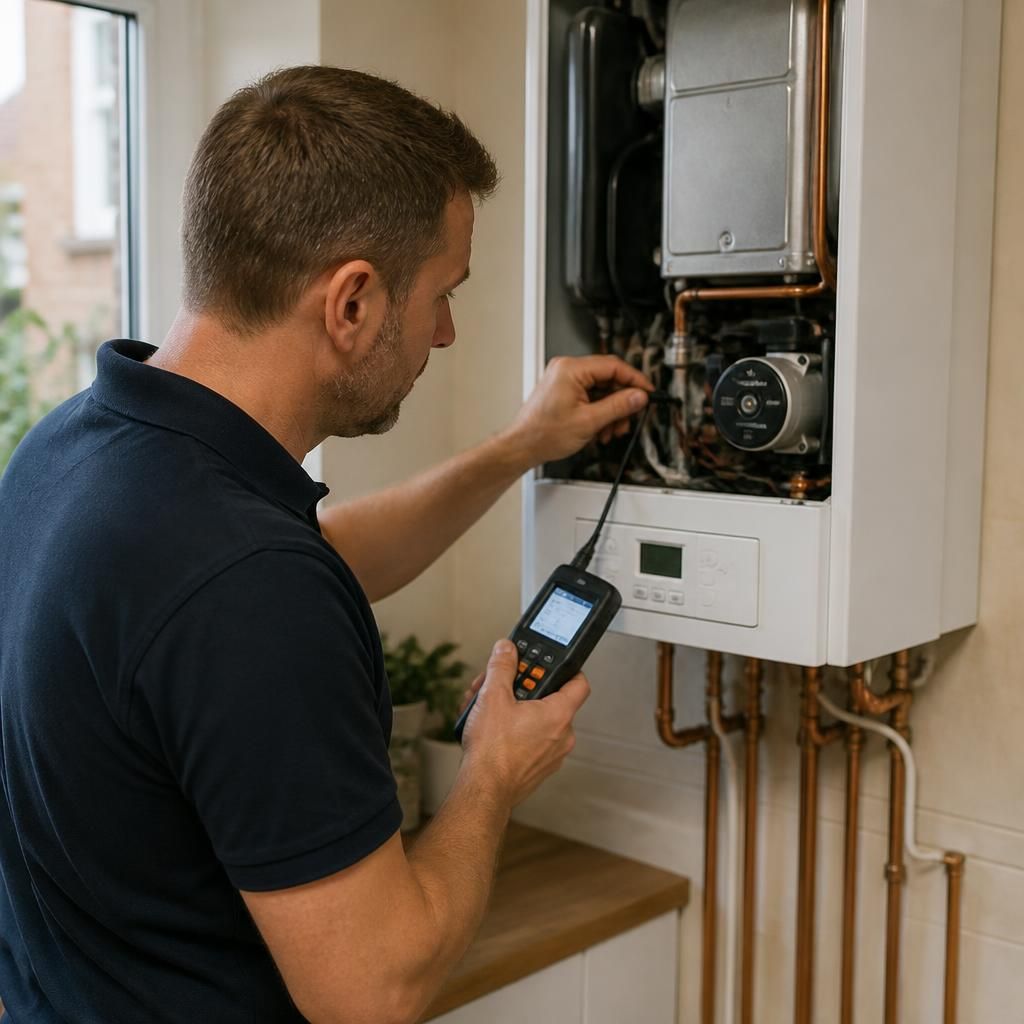
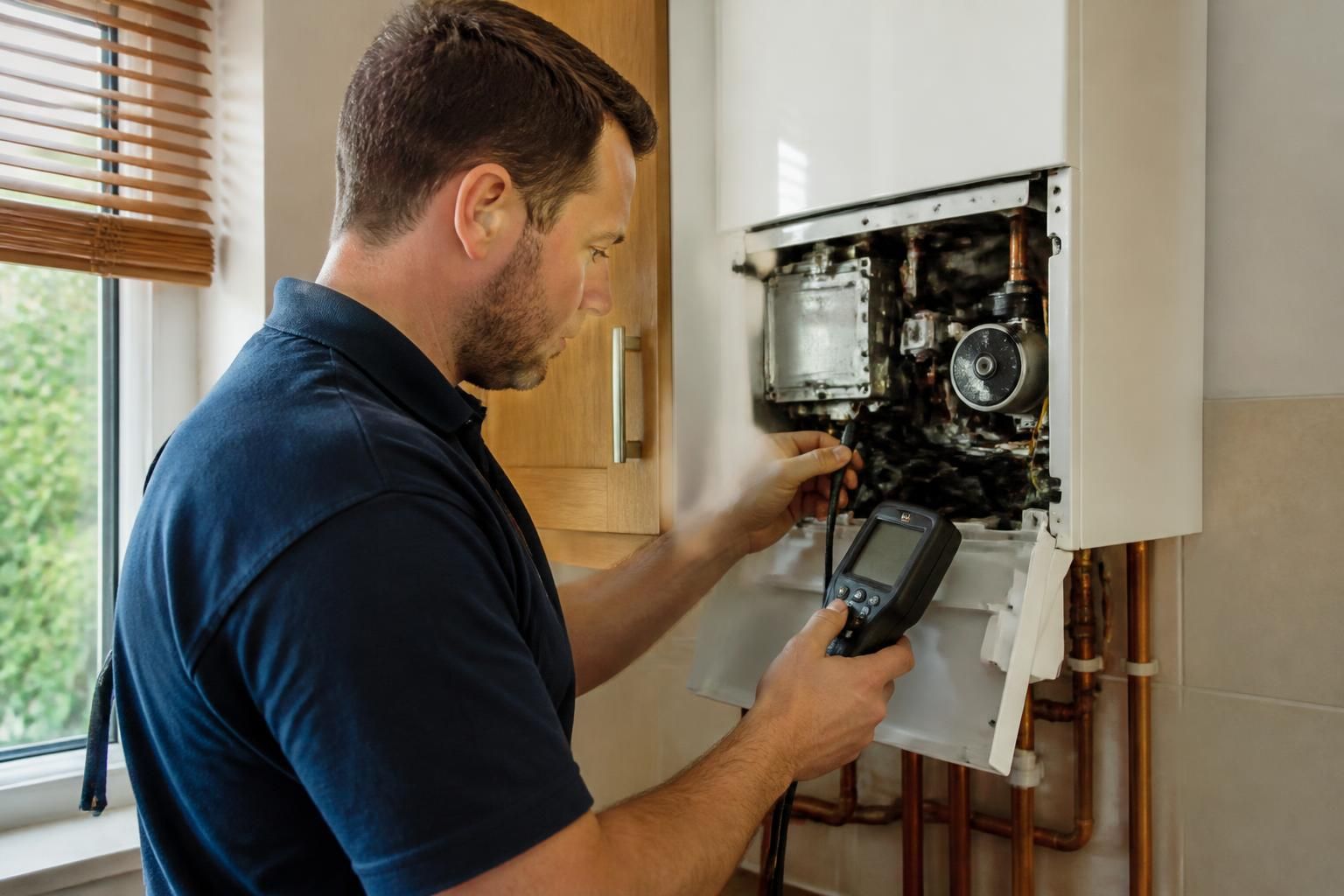
The exact procedure varies by appliance, but a competent engineer will normally assess the boiler’s general condition, inspect accessible components, check the flue and ventilation arrangements, examine seals and connections, and test the appliance while operating. For a gas boiler, combustion and safety checks are important because an appliance can appear to work normally while still requiring adjustment or repair.
Servicing is different from a repair. A service is a planned inspection and maintenance visit, whereas a repair addresses a known fault. It is also different from bleeding radiators, topping up system pressure or carrying out general heating maintenance. These tasks may be discussed during a service, but they do not replace a proper boiler inspection.
Rental properties and legal checks
Landlords should distinguish between a boiler service and the legally required gas safety responsibilities that apply to rented accommodation. A gas safety check produces the relevant record for the property, while a service is a more detailed maintenance activity intended to assess the boiler’s condition and operation. The two may be arranged together where suitable, but one should not automatically be assumed to replace the other.
For any domestic property, use a suitably qualified professional for work on a gas boiler. Keep the service documentation, note any recommended repairs and check whether follow-up work is needed. This provides a clear maintenance history and helps ensure that the boiler continues to be operated safely and in accordance with its manufacturer’s instructions.