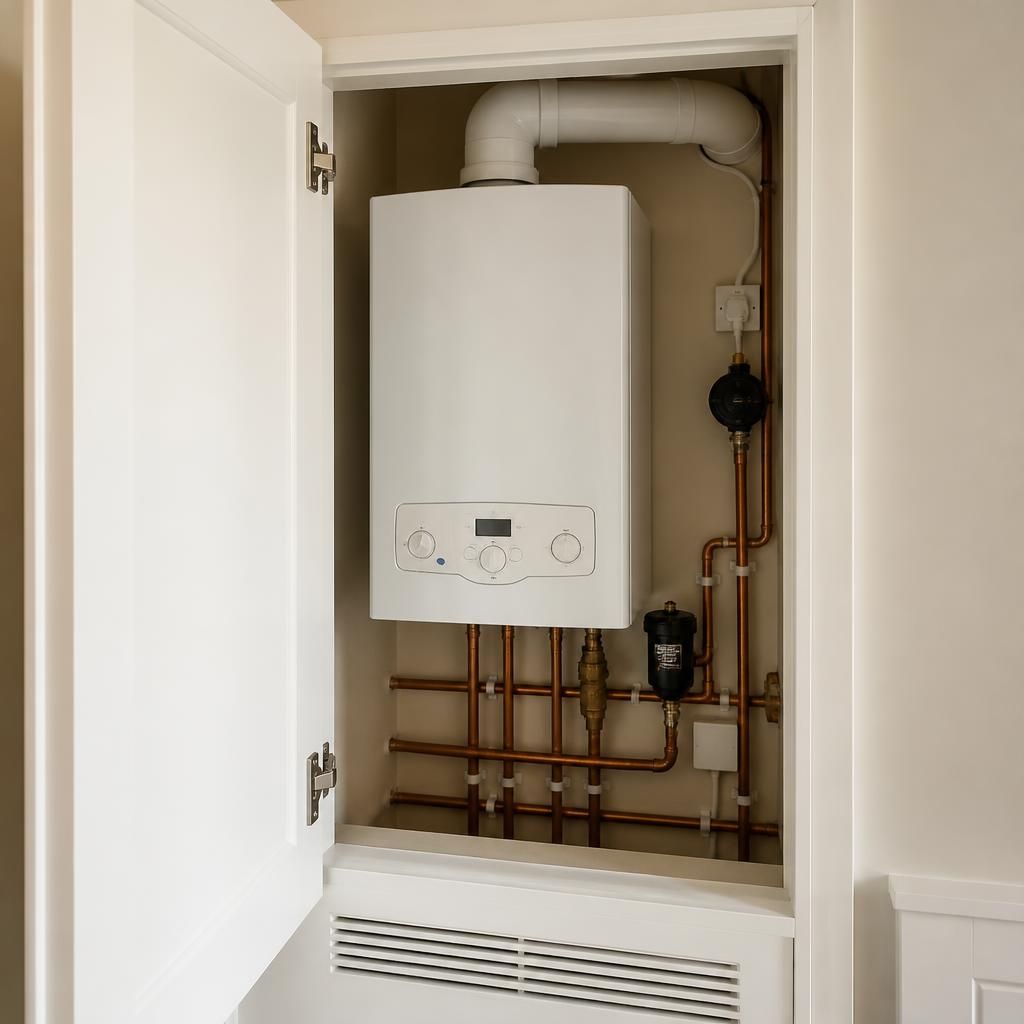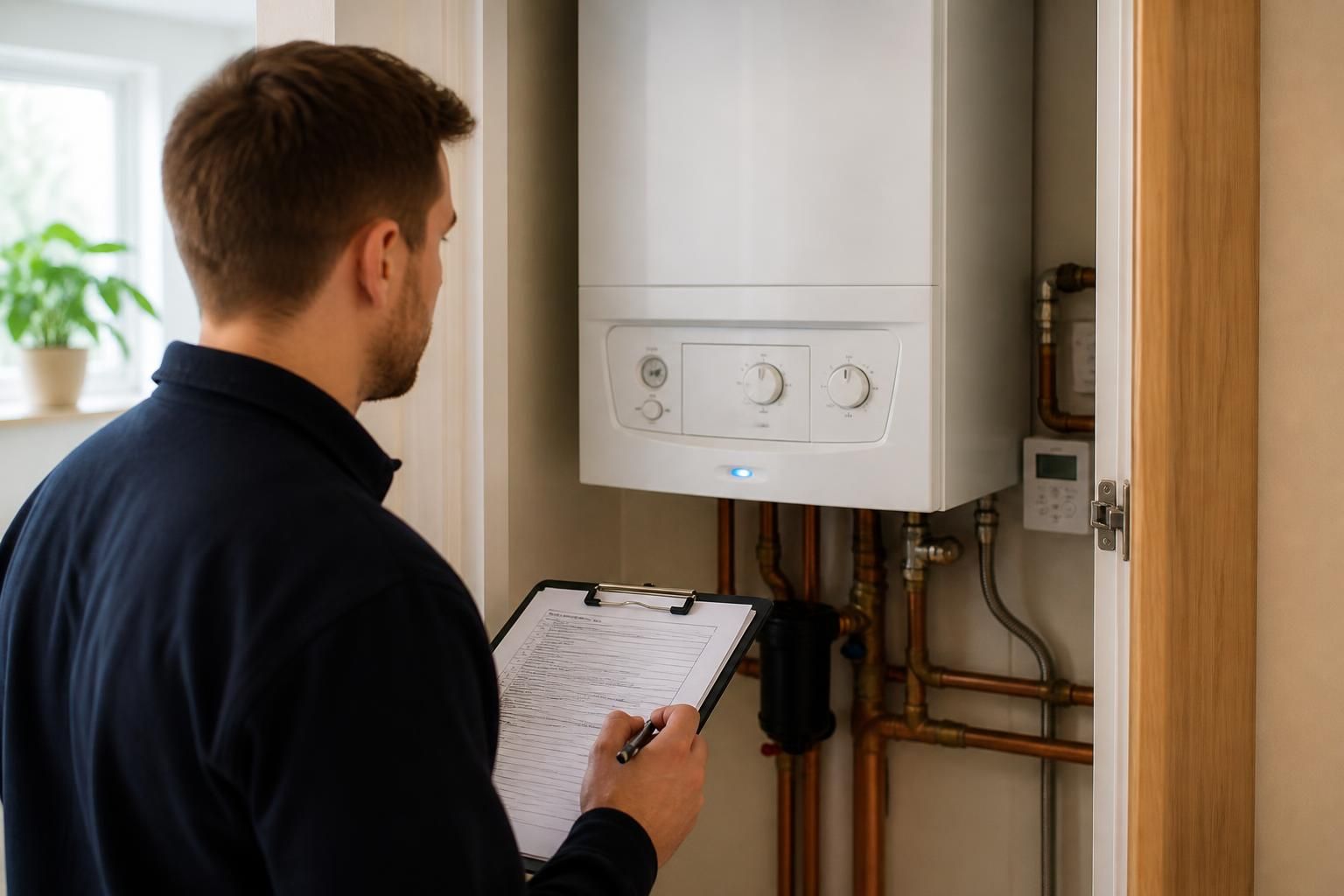
The best preparation for domestic boiler servicing is to make the full heating system accessible, keep the relevant utilities available and provide any information that may affect the inspection. This allows the engineer to carry out safety checks, examine connected components and explain any findings without unnecessary disruption.
Make the wider system accessible
- Ensure the room thermostat, programmer or heating controls can be reached and operated if needed.
- Provide access to other components linked to the boiler, such as a hot water cylinder, expansion vessel, condensate route or heating pump where these are located separately.
- If the boiler or its flue passes through a loft, cupboard or external area, make sure the route can be reached safely. Remove fragile items or obstacles from any access route.
- Tell the engineer about any areas that cannot be accessed, including locked cupboards, shared spaces or restricted external locations.
Do not remove the boiler casing, alter internal components or attempt to test gas or electrical connections yourself. The casing and safety controls should be handled by a suitably qualified engineer.
Keep the property safe and suitable for the inspection
- Keep children and pets away from the work area while checks are being completed.
- Move delicate or valuable belongings away from nearby work areas where practical.
- Make sure floors, stairs and access routes are free from trip hazards.
- Improve lighting in cupboards, lofts or utility areas if these form part of the boiler installation.
A boiler service can involve operating the appliance and examining nearby components, so normal household activity may need to pause temporarily around the work area. If the boiler is in a room used for storage, avoid placing additional items back in the area until the inspection is complete.
Check the utilities before the appointment
Unless there is a safety reason for leaving the appliance isolated, avoid switching off the electrical supply, gas supply or water supply serving the heating system before the engineer arrives. If the boiler has already been turned off because of a fault, leak or concern about its safety, leave it off and explain what happened. Do not relight or reset an appliance that appears unsafe.
Where a condensate pipe discharges outside or into a drain, keep the surrounding area visible and accessible. This helps the engineer inspect the route and identify signs of damage, obstruction or poor drainage. Any visible water leak, staining or corrosion should be reported rather than cleaned up in a way that hides its source.
Prepare useful information
It can help to have the following details available:
- The approximate age of the boiler and heating system, if known.
- Whether the property uses radiators, underfloor heating, a hot water cylinder or additional heating controls.
- Any recent repair, replacement or installation work affecting the heating system.
- Whether a landlord, managing agent or other property owner needs to receive the service record.
- Any questions about operating the controls, maintaining the system or planning future repairs.
If you rent the property, check whether the landlord or managing agent needs to approve the appointment or be present. Landlords may also require a copy of the service documentation for their records.
Plan for the service outcome
Have a suitable place available for the engineer to explain the results and record any recommendations. A service may identify issues that do not require immediate repair but should be monitored or addressed later. Ask whether a recommendation concerns safety, performance, compliance or general maintenance, and request clarification before agreeing to additional work.
If the engineer identifies a dangerous fault, follow the advice given and do not use the boiler until it has been made safe. A service is not a substitute for ignoring warning signs between appointments: unusual smells, visible leaks, repeated loss of pressure or signs of carbon monoxide should be treated as reasons to seek professional advice promptly.
These preparations are generally enough for a domestic boiler service. The engineer will carry out the technical inspection and will advise if further access, testing or repair is needed.