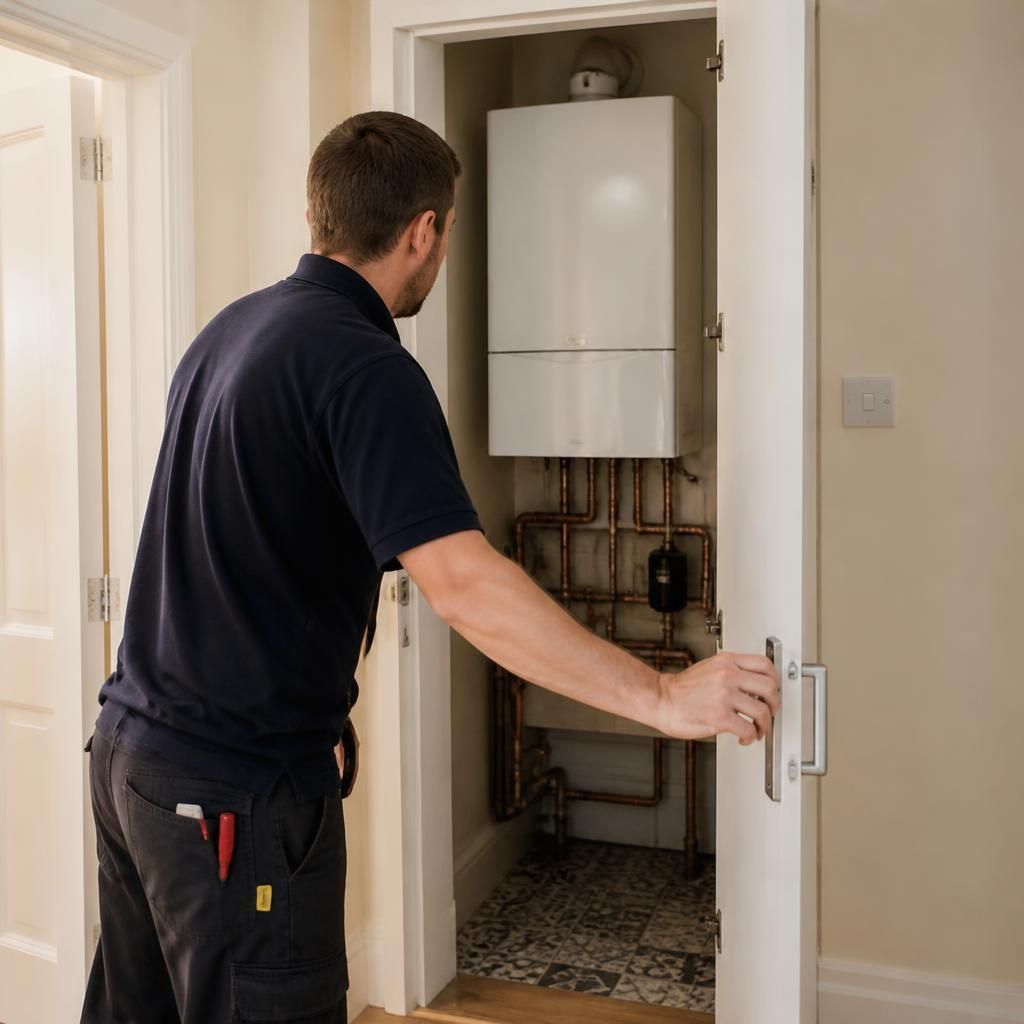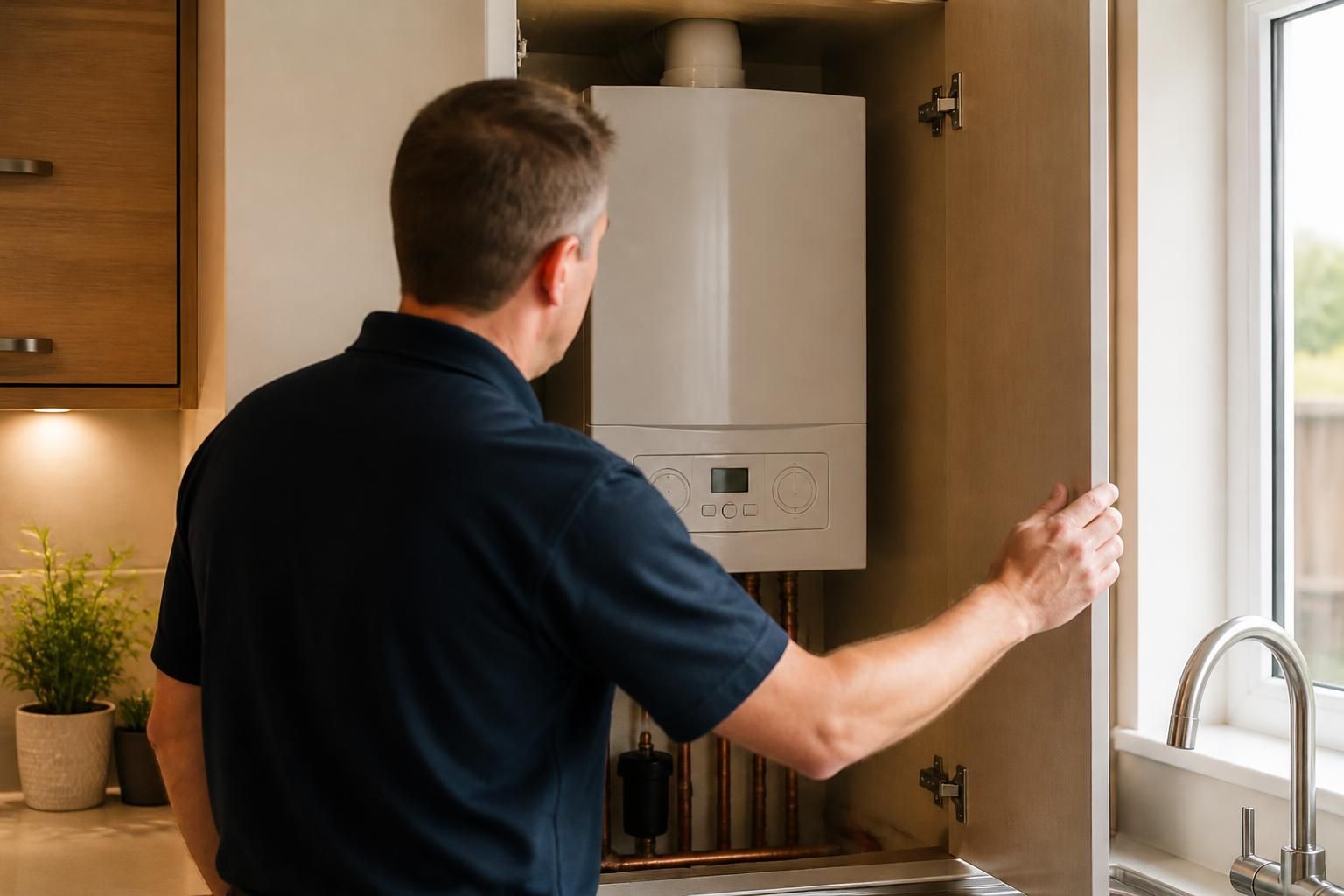
For a gas or electric boiler service, the engineer needs unobstructed access to the appliance, its service panels and the components used for safety testing. They may also need to examine connected pipework, the flue or ventilation arrangements, electrical controls and relevant isolation equipment, depending on the type of boiler and its installation.
Access for a gas boiler service
A gas boiler service normally involves inspecting the appliance casing, burner, heat exchanger, seals and combustion components. The engineer must be able to remove the appropriate service panels safely and connect testing equipment to the boiler. Access may also be needed to the gas meter or nearby gas supply components if additional safety checks are required.
The flue route and terminal may need examination, particularly where part of the installation is concealed or passes through an adjoining room, cupboard or loft space. If the terminal is outside or at height, the engineer will assess whether it can be inspected safely from the available access point. They will not normally dismantle fixed building work or fitted furniture to reach concealed sections.
Access for an electric boiler service
An electric boiler service requires access to the boiler casing, heating controls and electrical components. The engineer may need to test the supply, inspect wiring and check protective devices, so the relevant consumer unit, fused connection unit or control equipment should be reachable where these are separate from the boiler.
Electric boilers can be connected to external thermostats, programmers, pumps or other heating controls. Having these controls available allows the engineer to check that the boiler responds correctly and that the heating system operates as intended. Do not remove electrical covers or attempt to expose wiring yourself; internal electrical work should be carried out only by a suitably qualified professional.
Installations inside cupboards or enclosed spaces
A boiler installed in a kitchen cupboard, airing cupboard or utility unit must have enough practical room for the engineer to work without damaging the surrounding fittings. Cupboard doors may need to be opened fully, and removable access panels may need to be taken off if they are designed for servicing. Permanent joinery, boxing-in or wall finishes should not be dismantled by the household as part of routine preparation.
Where the boiler is in a loft, garage or other less frequently used area, the route to it should be safe and usable. A stable access route and adequate lighting help the engineer assess the installation properly. If the appliance is difficult to reach, tell the service provider when booking so the access requirements can be considered before the visit.
Access for tenants and landlords
Tenants should check whether their tenancy agreement or landlord requires permission before arranging work. The person responsible for the property should provide any information about previous repairs, unusual controls or restrictions on accessing cupboards and plant areas. Landlords may also need to make sure the engineer can access all parts of the installation covered by their servicing arrangements.
Keep children and pets away from the working area while the appliance is being examined. The boiler should be available in its normal installed condition, with no temporary coverings or household items placed against it. Manuals, previous service records and details of known faults can also be useful, although they are not normally essential for a standard service.
If essential parts of the installation cannot be reached safely, the engineer may be unable to complete every inspection or test. They should explain what additional access is needed and whether the appliance requires alterations before a complete service can be carried out.