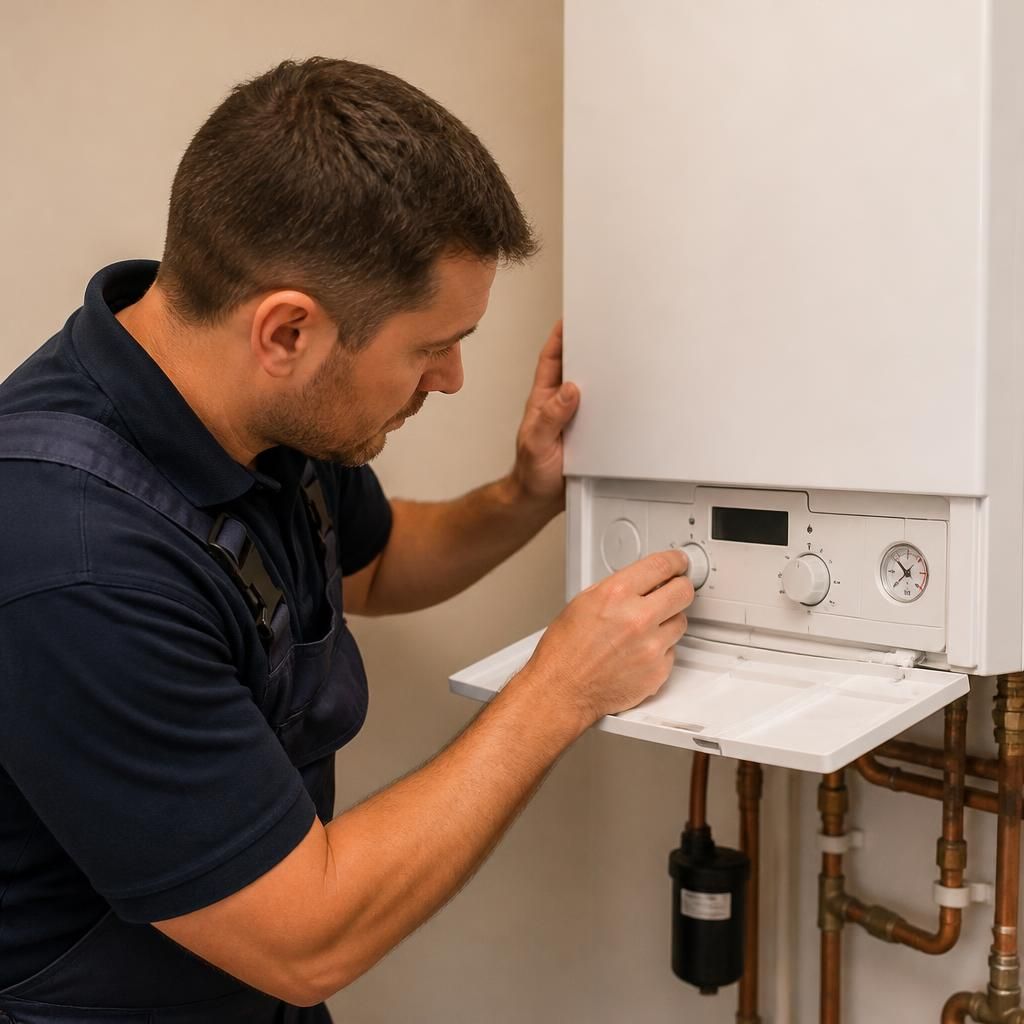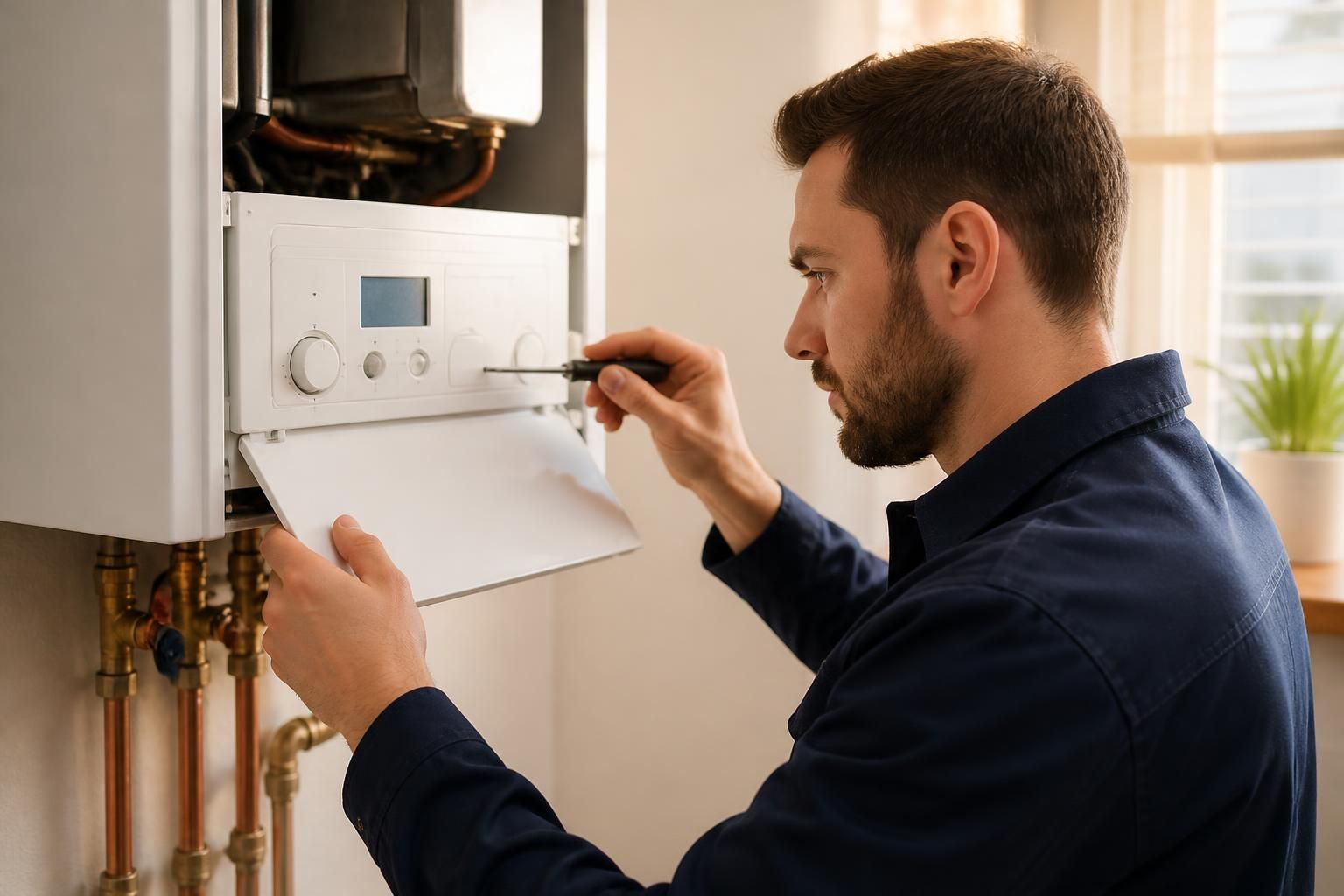
Boiler servicing is designed to keep the interruption to heating and hot water as limited as possible. The appliance is isolated for the inspection and service, then returned to operation after the engineer has completed the required checks. The exact length of the interruption depends on the boiler type, its condition and whether any safety issue or fault is identified.
What happens during a gas boiler service?
A gas boiler service includes checks of the appliance, burner, heat exchanger, flue, ventilation and relevant safety controls. The engineer may need to operate the boiler during testing, but the heating and hot water cannot be used while the appliance is isolated or being worked on. Once the checks are complete, the boiler is reassembled, recommissioned and tested to confirm that it is operating safely.
If testing identifies a problem, the service may take longer because the engineer will need to explain the issue and discuss any recommended repair. Where a fault creates a safety risk, the boiler may need to remain switched off until the issue has been dealt with. This is different from ordinary servicing and should not be treated as a routine interruption.
What happens during an electric boiler service?
An electric boiler service involves isolating the electrical supply before inspecting the boiler, wiring, connections, controls and safety components. Heating and hot water will not be available while the appliance is isolated. The engineer then restores the supply and checks that the boiler, thermostat, programmer and associated system controls respond correctly.
Electric boilers do not have a gas burner or flue, so the checks differ from those on a gas appliance. However, electrical isolation is still necessary for safe inspection, and an issue with a connection, control or safety component may require further investigation before the boiler can be returned to normal use.
Can servicing affect the rest of the heating system?
Routine servicing is focused on the boiler, but the engineer may also check connected controls and basic system operation. Radiators, thermostatic controls, pumps and valves are not usually the main focus of a boiler service unless their operation is relevant to diagnosing a reported problem. If a separate fault becomes apparent, it should be assessed as additional work rather than assumed to be included in the service.
After the boiler has been restarted, allow time for the system to respond normally. Check that the heating and hot water controls are set as expected and tell the engineer if the appliance does not restart, displays a fault message or produces unusual noises. Do not repeatedly reset a boiler that has shut down for a safety-related reason.
How to minimise inconvenience
- Arrange the service at a time when a short interruption to heating and hot water is manageable.
- Explain any recent fault codes, pressure changes, unusual sounds or inconsistent heating before the inspection begins.
- Make sure the boiler controls are available to the engineer so operation can be checked after servicing.
- If the property is rented, agree any follow-up repair with the responsible landlord or managing agent before additional work is carried out.
For most routine services, the interruption ends when the appliance has been inspected, tested and confirmed safe to use. The main reason for a longer disruption is usually a fault, failed safety check or repair that cannot be completed as part of the planned service.