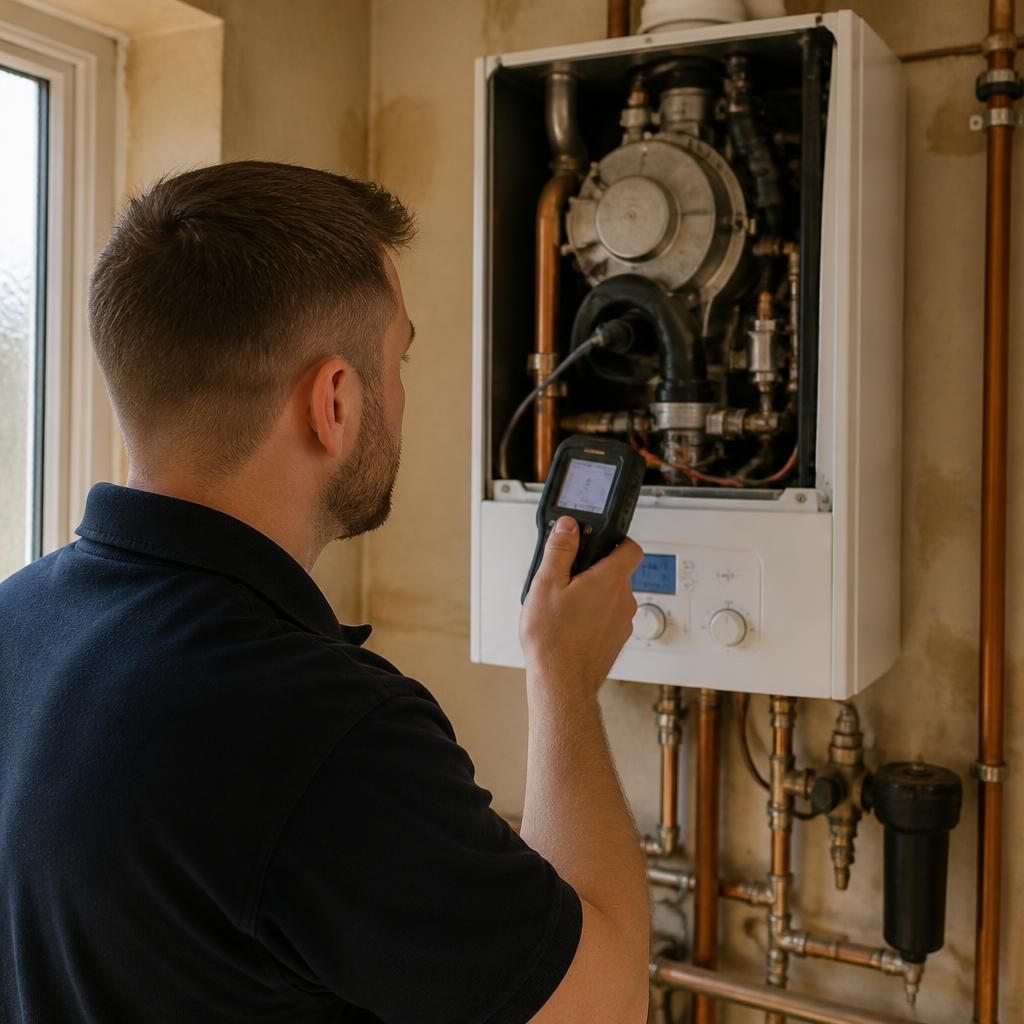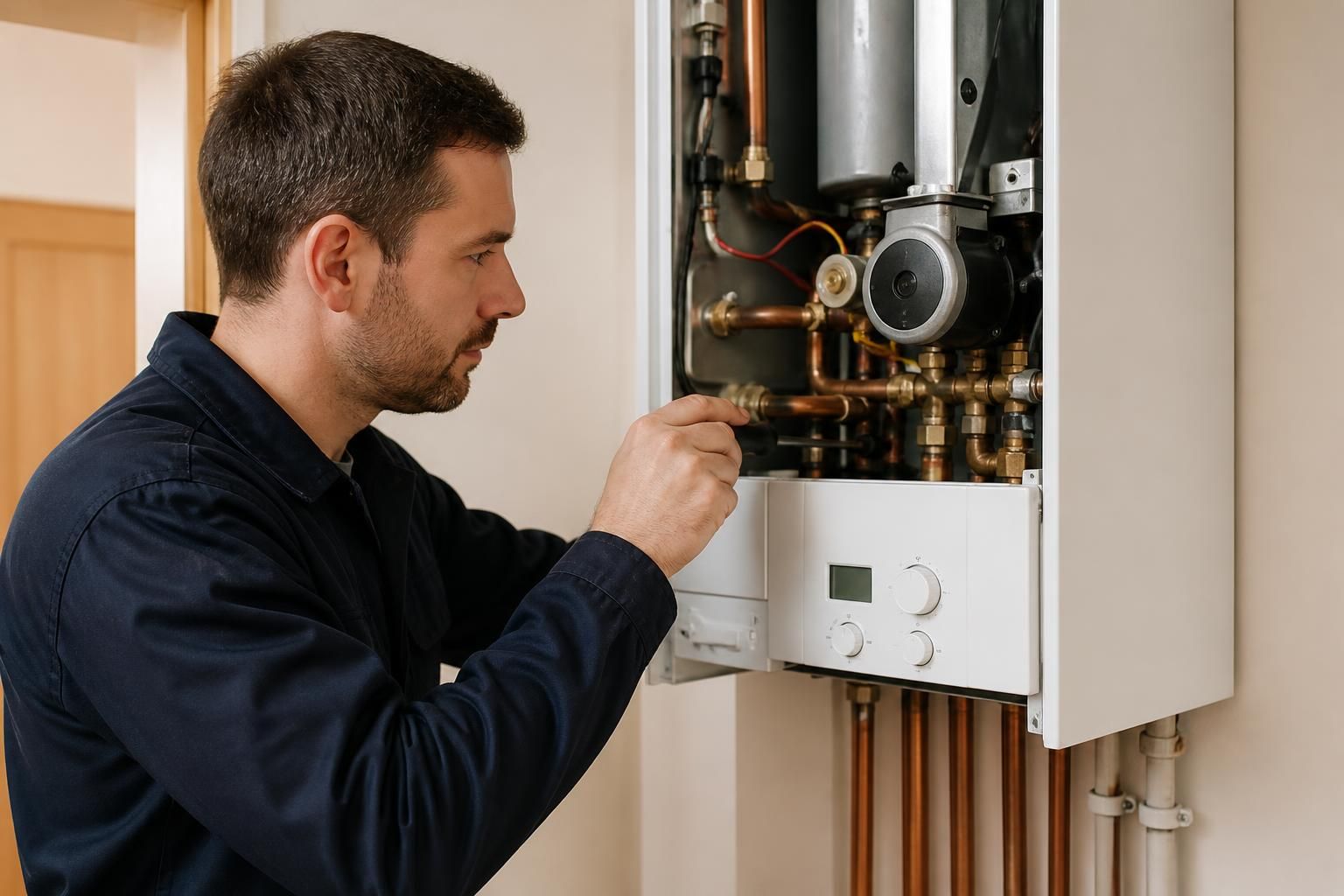
Central heating maintenance has no fixed duration because the work required varies between systems. A straightforward inspection and service may be completed during one visit, while restricted access, heavy deposits, difficult-to-reach components or faults identified during testing can make the appointment longer. The engineer should be able to give a more accurate estimate after assessing the system and understanding the work requested.
A typical maintenance visit may include:
- checking the boiler, pipework, radiators and visible connections;
- testing operating pressure, temperature controls and heating performance;
- inspecting accessible safety components and the flue arrangement;
- looking for signs of corrosion, leaks, unusual noise or poor circulation;
- reviewing the system’s controls and identifying inefficient settings; and
- recording any findings and explaining whether further work is advisable.
The type and age of the heating system are important factors. A modern, accessible boiler may be simpler to assess than an older installation with separate controls, a hot water cylinder, storage tanks or several heating zones. Larger systems contain more components to inspect, so the engineer may need additional time to test them properly rather than limiting the visit to the boiler itself.
Access can also affect the appointment. Cupboards filled with stored items, concealed pipework, restricted loft access or radiators behind furniture can make inspection and testing less straightforward. Clearing the area around the boiler, controls and other relevant equipment beforehand can help the engineer work methodically and reduce avoidable delays.
Maintenance is different from repair. Routine servicing involves inspection, testing, cleaning where appropriate and checks intended to identify developing problems. If a fault is found, the engineer may need to explain the cause, discuss remedial options and allow time for repair work. Replacement parts, system flushing, sludge removal, difficult access or a suspected leak are examples of issues that can turn a standard maintenance visit into a more involved job. Any additional work should be explained before it is carried out.
It is useful to have the boiler or heating system details available, including previous service records, known faults and any error codes. Tell the engineer about symptoms such as radiators failing to heat evenly, pressure repeatedly dropping, unusual noises or heating controls not responding. This information helps focus the inspection and may make it easier to identify the cause of a problem.
For landlords, maintenance records should be kept with other property documents, including notes about defects and recommended follow-up work. Homeowners can also benefit from retaining service information, particularly where a recurring fault or older system needs monitoring.
Before work starts, confirm what the maintenance visit includes and whether cleaning, testing or repairs are priced separately. A clear explanation of the findings afterwards should distinguish between immediate safety concerns, recommended improvements and issues that can reasonably be monitored. This makes the time required easier to understand and helps prevent an inspection from being confused with an automatic repair appointment.
A qualified plumbing and heating professional can assess the installation, explain the likely scope of maintenance and identify when further investigation is needed. Ideal Plumbing Services provides residential heating maintenance and related plumbing support for homeowners, landlords and tenants in Birmingham and the wider West Midlands.