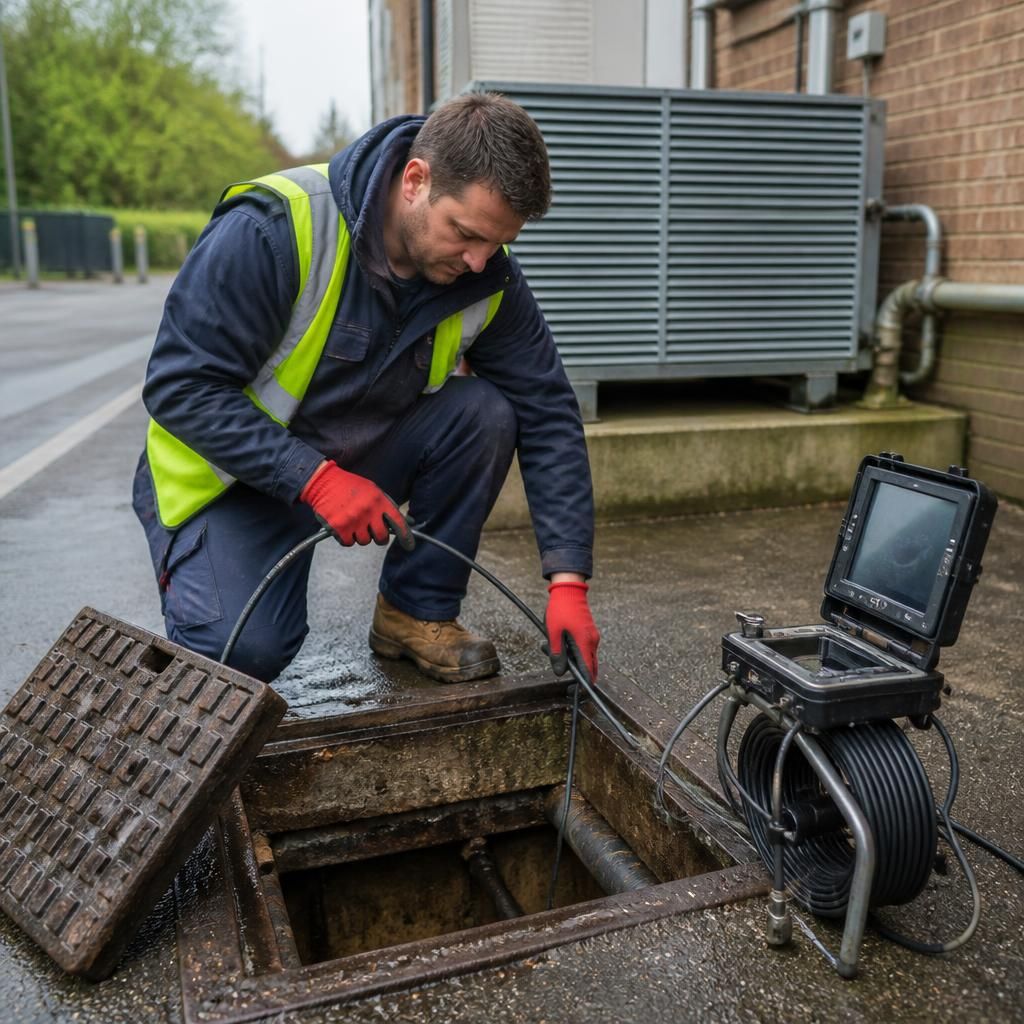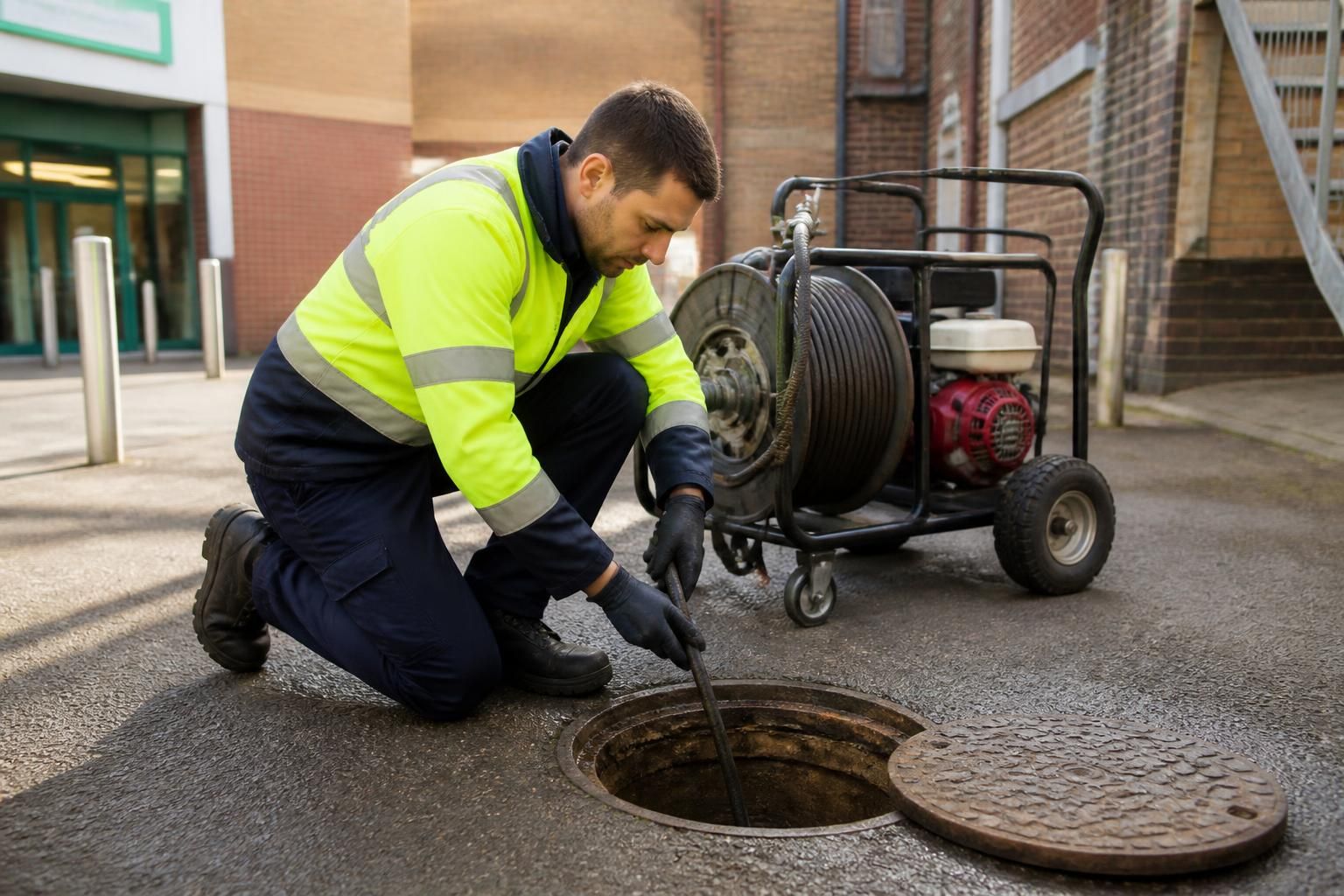
Commercial drain unblocking can minimise disruption when the work is planned around the operation of the premises, rather than treated as an isolated plumbing task. A structured approach limits the time that drainage areas, toilets, kitchens, washrooms or other affected facilities need to be restricted, while reducing the risk of wastewater damage, hygiene concerns and interruption to staff or customers.
The main ways it reduces operational impact include:
- Establishing the affected area: The location of slow drainage, standing water, unpleasant odours or backflow helps determine which section of the system may be obstructed. This prevents unnecessary access restrictions elsewhere in the building.
- Choosing an appropriate clearance method: Rodding, mechanical equipment, high-pressure water jetting or other specialist techniques may be suitable depending on the pipework, the obstruction and the available access. Using the wrong method can worsen a blockage or damage vulnerable drainage components.
- Controlling access: Commercial premises often have customers, employees, deliveries, food preparation areas or sensitive equipment nearby. Protecting work areas, using suitable coverings and keeping equipment contained helps the business continue operating around the affected location where practical.
- Reducing repeated attendance: A blockage caused by grease, foreign objects, tree roots, damaged pipework or silt may require more than a basic clearance. Checking why the obstruction formed helps distinguish a temporary restriction from a recurring drainage defect.
The extent of disruption depends on the drainage layout and the type of business. A blocked internal toilet may require local isolation, whereas a restriction in a shared underground line can affect several facilities. Food businesses, rented premises, offices, retail units and managed buildings may also have different hygiene, access and reporting requirements. The impact is usually greater where wastewater has reached occupied areas, electrical installations, stock, furnishings or food-contact surfaces.
Good preparation makes the work more efficient. The person arranging the visit should provide details of the symptoms, when they began, which fixtures are affected and whether previous attempts have been made to clear the line. Information about inspection covers, access routes, restricted areas and building management procedures can also help the drainage engineer work without avoidable delays. If the premises has a site contact, that person should be available to identify the relevant facilities and approve access.
Before the drainage work begins, the business should protect stock and equipment near the affected area, prevent staff or customers from using unsafe facilities and follow any internal hygiene procedure. Staff should not continue using connected sinks, toilets or appliances if doing so causes wastewater to rise or discharge. Chemical drain cleaners should also be avoided before specialist attendance, as they may create a hazard for anyone working on the pipework and can complicate diagnosis.
A suitable commercial service should include more than forcing water through the obstruction. The engineer may assess the condition of the pipe, identify the likely source of the restriction and check whether the flow has been restored. Where the blockage returns, a CCTV survey can help reveal defects such as displaced joints, fractures, root ingress or accumulated deposits. This information allows the business to consider a targeted repair or maintenance plan instead of repeatedly dealing with the same operational interruption.
Documentation can also reduce future disruption. A record of the affected line, the cause of the blockage, the method used and any recommended follow-up work gives property managers and landlords useful information for later maintenance. It can help identify recurring patterns, coordinate access and arrange remedial work during a more suitable period for the business.
Drain unblocking does not remove every possible source of interruption. Severe pipe damage, contaminated flooding, inaccessible chambers or a blockage within shared infrastructure may require additional investigation or repair. However, early reporting, accurate information and work carried out with the premises’ operations in mind give the business a better basis for controlling access, protecting people and property, and returning affected facilities to normal use.
Ideal Plumbing Services provides commercial drainage support alongside residential plumbing services. Its experienced team can assess the immediate obstruction and explain whether further investigation or planned maintenance is appropriate, giving the responsible person practical information before deciding on additional work.