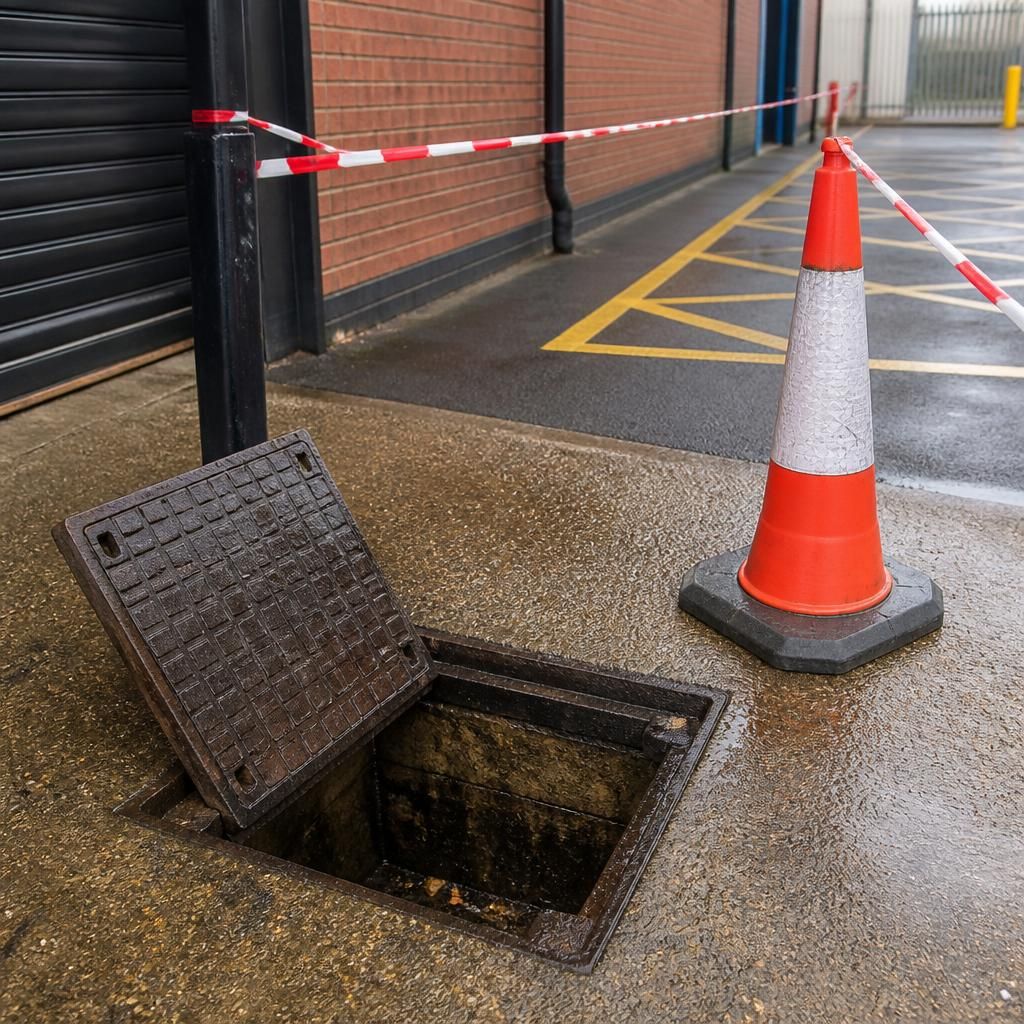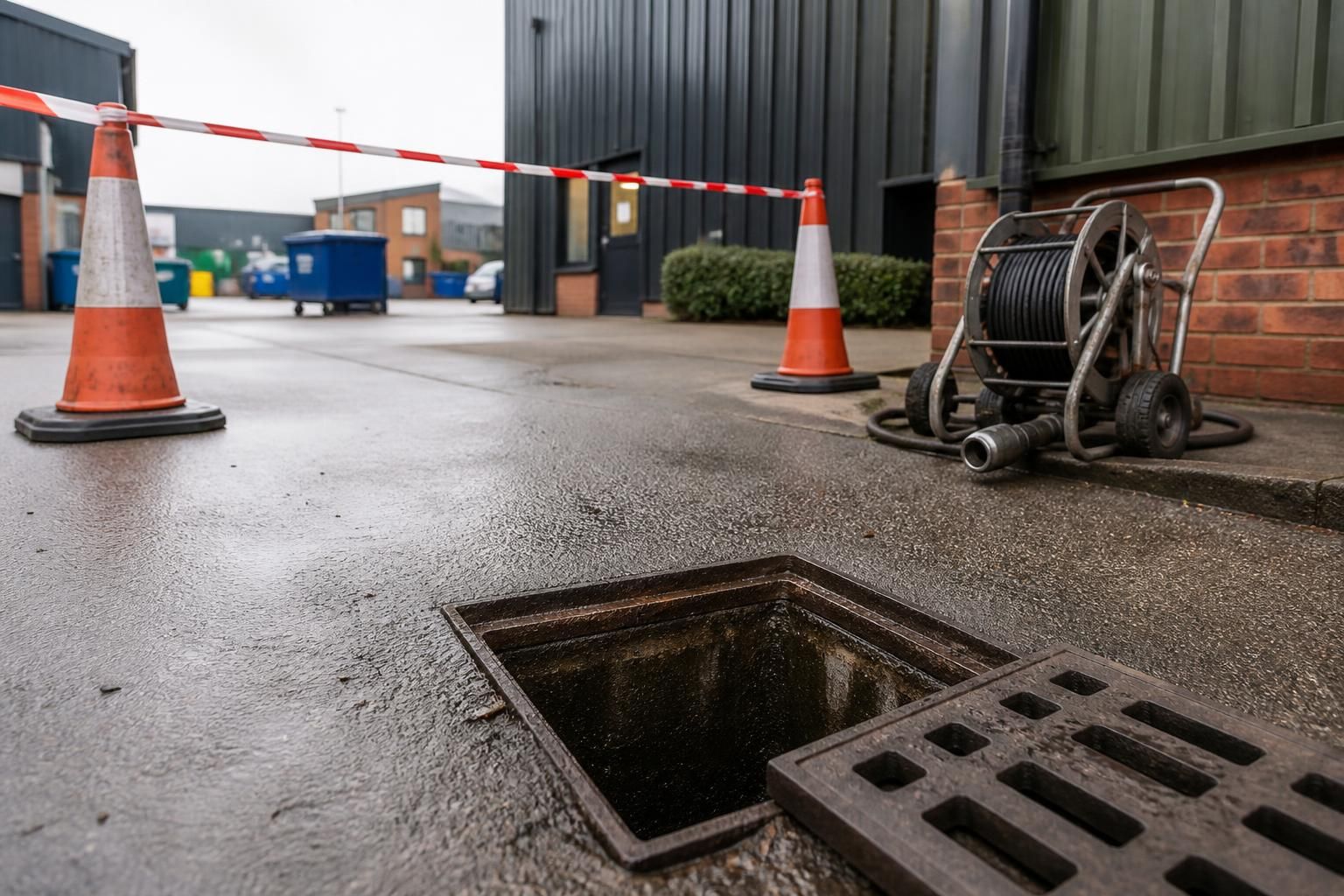
Before a commercial drain unblocking visit, prepare the site, relevant information and responsible contacts so the engineer can assess the blockage safely and determine the appropriate method of clearance. Good preparation also helps prevent avoidable delays, protects the premises and supports accurate follow-up work if the drainage problem has an underlying cause.
- Confirm who can authorise work. Nominate a responsible person to meet the engineer, provide site information and approve any necessary work within the agreed scope. If the property is leased, confirm whether the landlord, managing agent or tenant is responsible for the affected drainage system and who can authorise additional investigation.
- Gather relevant drainage records. Collect drainage drawings, inspection reports, maintenance records and details of previous repairs where available. These documents can help identify the route of underground pipework, connections between buildings and any recurring problem areas without relying solely on assumptions made from the visible symptoms.
- Check site safety requirements. Tell the plumbing company about hazards such as restricted areas, uneven surfaces, chemical storage, vehicle movements, electrical risks or contaminated water. If the premises has its own induction, permit or personal protective equipment requirements, explain these before the visit so the work can be planned appropriately.
- Protect stock, equipment and finishes. Move vulnerable goods, packaging, electrical equipment and movable furnishings away from areas that could be affected by splashing, access equipment or removed waste. Where items cannot be moved, identify suitable protective coverings and make sure they do not create a trip hazard or obstruct safe working.
- Record any operational constraints. Note delivery schedules, food preparation requirements, customer-facing activities, cleaning routines and restricted-use areas that may affect how the work is carried out. Sharing this information allows the engineer to understand which facilities are most important to keep available and whether a staged approach may be appropriate.
- Prepare questions about the proposed work. Ask what method may be used, whether the work is intended to clear the immediate blockage or investigate a recurring fault, and whether any specialist equipment may be needed. It is also sensible to clarify what will be inspected after clearance, how removed material will be handled and whether further repairs could be recommended if damage is identified.
- Arrange records for after the visit. Decide who will receive the findings and retain the service report, photographs, recommendations and any invoice with the property's maintenance records. If the blockage affects a rented or managed building, share the outcome with the relevant parties and schedule any advised remedial work before the same drainage problem develops again.
A drain unblocking visit may resolve the immediate restriction, but repeated blockages can indicate problems such as damaged pipework, poor falls, root ingress, grease accumulation or an inadequate drainage arrangement. Ask for the cause to be explained in practical terms and distinguish between a clearance visit and any separate repair, cleaning or survey that may be recommended.
For commercial premises in Birmingham and the wider West Midlands, providing clear site information and assigning an authorised contact gives a plumbing engineer a better basis for safe, accurate drainage work. It also ensures that any remaining issue is documented rather than treated as an isolated blockage.