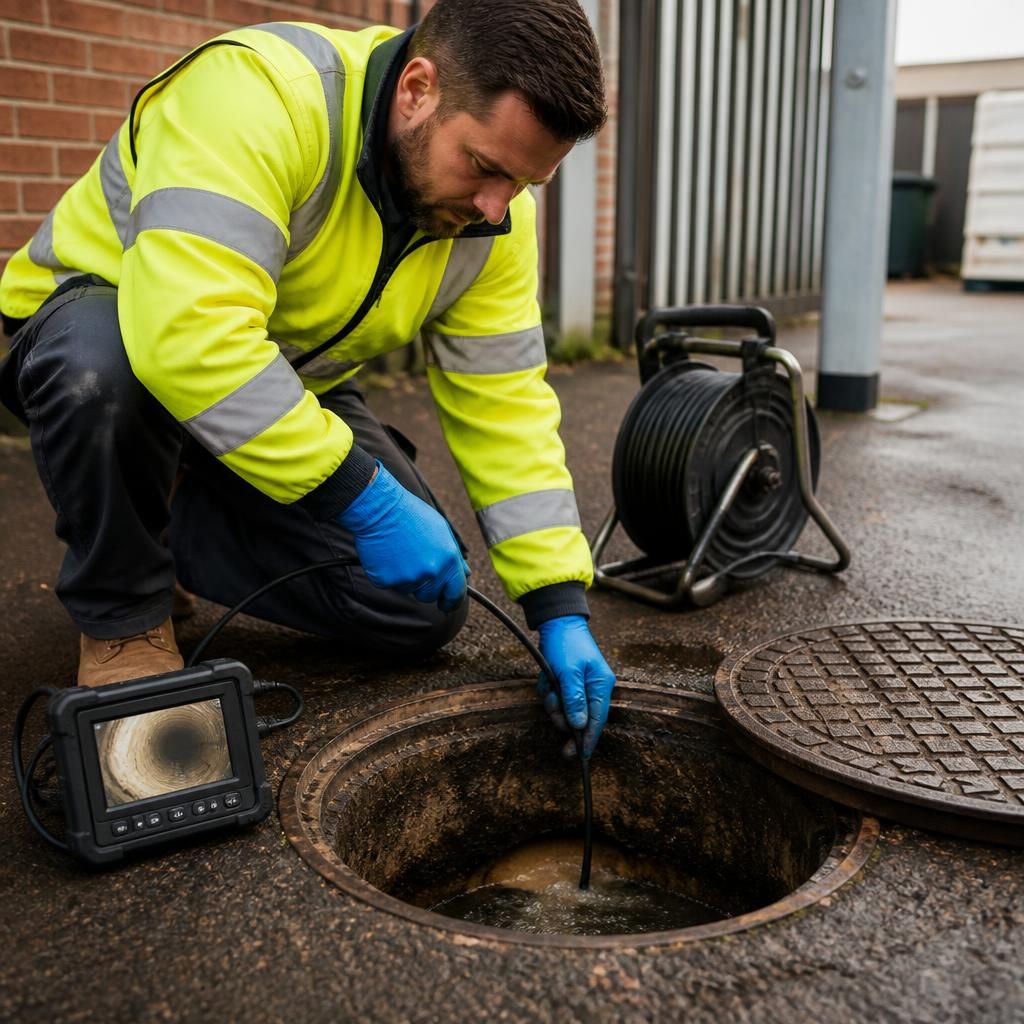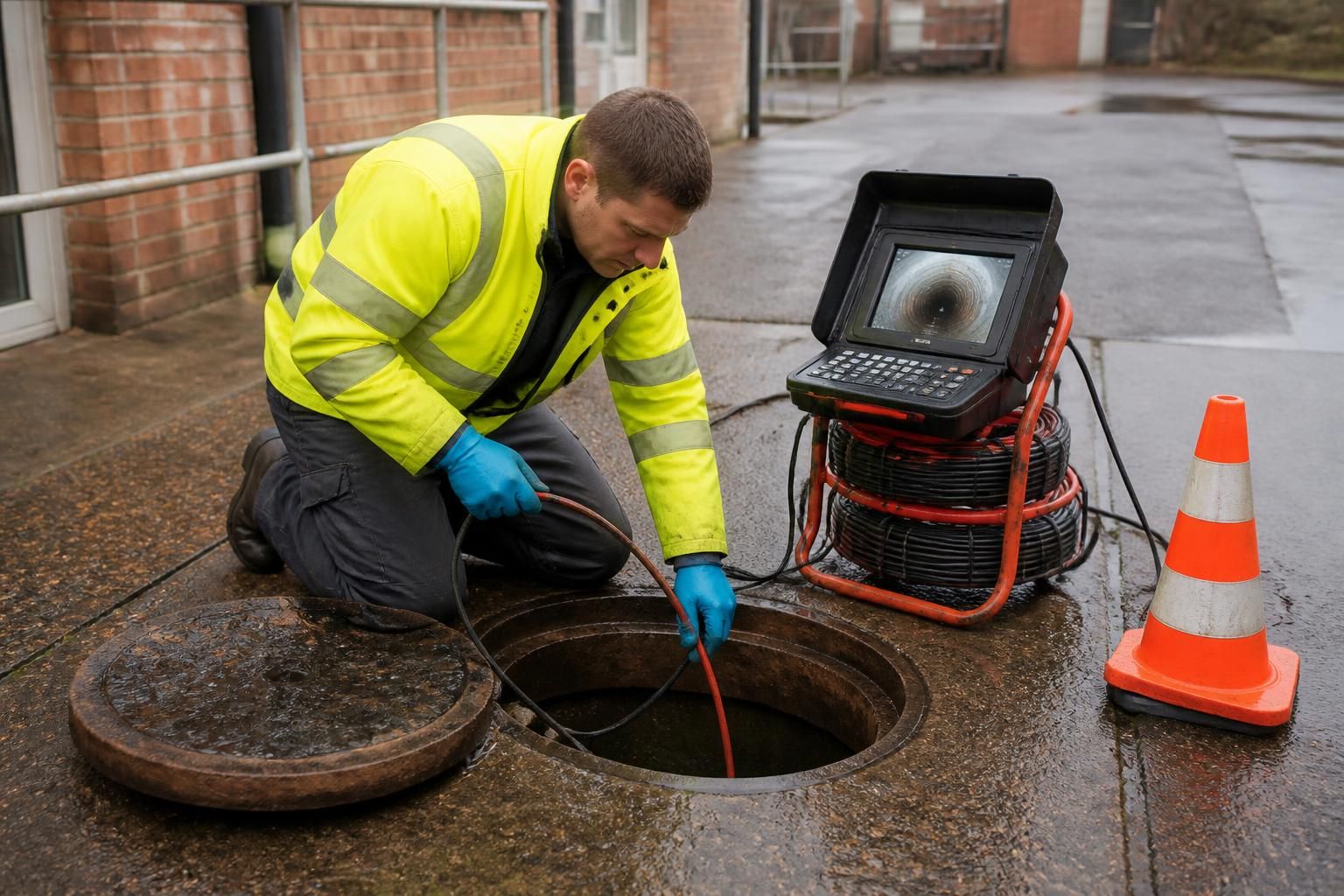
A commercial drain needs professional unblocking when an obstruction is affecting the drainage system beyond a simple, accessible outlet, or when its effects are creating operational, hygiene or safety risks. In a commercial property, the warning signs may appear in service areas, kitchens, washrooms, plant rooms or external drainage points rather than at one obvious fixture.
- Toilet water levels change unexpectedly: A toilet that rises unusually high, empties slowly after flushing or shows fluctuating water levels can indicate resistance further along the branch drain. This should not be treated as an isolated toilet fault if other sanitary fittings are affected.
- Drainage problems follow busy periods: If symptoms appear after meal preparation, increased occupancy, deliveries or cleaning operations, the pipe may be struggling with accumulated grease, food residue, paper products or other debris. The timing can help a plumber identify how the blockage is forming.
- A kitchen waste system stops coping with normal use: Commercial kitchens produce more fats, oils, grease and solid waste than domestic systems. A sink or waste outlet that becomes difficult to use, leaves residue behind or repeatedly needs attention may require specialist cleaning and unblocking rather than another temporary treatment.
- External access points show abnormal water levels: Water sitting unusually high in an inspection chamber or manhole, residue around the cover, or discharge from an access point can indicate that the obstruction is in the shared or downstream drainage run. Opening a cover without suitable precautions can expose staff to contaminated water and other hazards.
- Floor drainage becomes unreliable: A floor drain that accepts wash-down water poorly, leaves deposits around its grate or behaves differently from nearby drains may be affected by a local obstruction or a restriction further along the pipework. This is particularly important in kitchens, washrooms, plant rooms and areas cleaned with large volumes of water.
- Water is appearing where it should not: Damp marks near drainage routes, staining around joints, or moisture emerging beside an access chamber can indicate that wastewater is being held back or escaping from a damaged connection. Unblocking may be necessary, but the pipe should also be checked for defects if the problem does not clear properly.
- Staff or customers report hygiene concerns: Contaminated water, residue, unpleasant conditions around drainage points or an inability to clean an area properly can make a blockage a health and safety issue. The affected area may need to be restricted until the drainage system has been assessed and made safe.
- Drainage equipment or protective devices activate: Pumps, level alarms, grease management equipment and other drainage controls may indicate that flow is restricted. An alarm should be investigated rather than repeatedly reset, since the underlying obstruction can continue to build up.
Some signs point to a blockage, while others suggest that unblocking alone may not be the complete solution. A sudden change after a specific event may indicate foreign material in the pipe. A gradual decline in performance can be associated with grease, silt, scale or root ingress. If the same section remains problematic after cleaning, the cause may include a displaced joint, collapsed pipe, inadequate fall or a defective connection.
A professional assessment normally begins by identifying the affected fixtures and tracing the drainage route. The engineer may inspect accessible chambers, check flow through the relevant branch and establish whether the restriction is local or on a shared run. Suitable mechanical equipment or high-pressure water jetting can then be selected according to the pipe, obstruction and site conditions. Where the cause is uncertain or the issue has returned, a CCTV drain survey can help distinguish a removable blockage from structural damage.
Professional help is especially appropriate where access is difficult, the obstruction is beyond a trap, wastewater may be contaminated, or previous plunging and chemical products have not resolved the fault. Chemical drain cleaners can damage some materials, create fumes and leave hazardous residues for anyone who later works on the pipework, so they should not be relied on as a commercial drainage strategy.
When reporting the issue, provide details of the affected area, when the symptoms began, whether they relate to kitchen or washroom use, any recent maintenance and the location of access chambers. This information helps the plumber plan the inspection and determine whether the property needs unblocking, cleaning, repair or further investigation. Keeping records of previous incidents can also reveal a recurring restriction before it develops into a larger drainage failure.