Bathroom sink unblocking is normally approached through the existing waste fittings rather than by taking the basin off the wall or pedestal. The plumber first identifies where the restriction is located, then selects a method that reaches it while protecting the basin, taps, waste and surrounding surfaces.
Common access points include:
- The plughole: A plunger or suitable hand-operated tool can loosen material close to the plughole. The overflow may need to be covered so that pressure is directed towards the blockage instead of escaping through the overflow opening.
- The overflow: Some blockages collect around the overflow channel or where it joins the waste. Access through this point can help when water remains in the basin and the plughole cannot be used effectively.
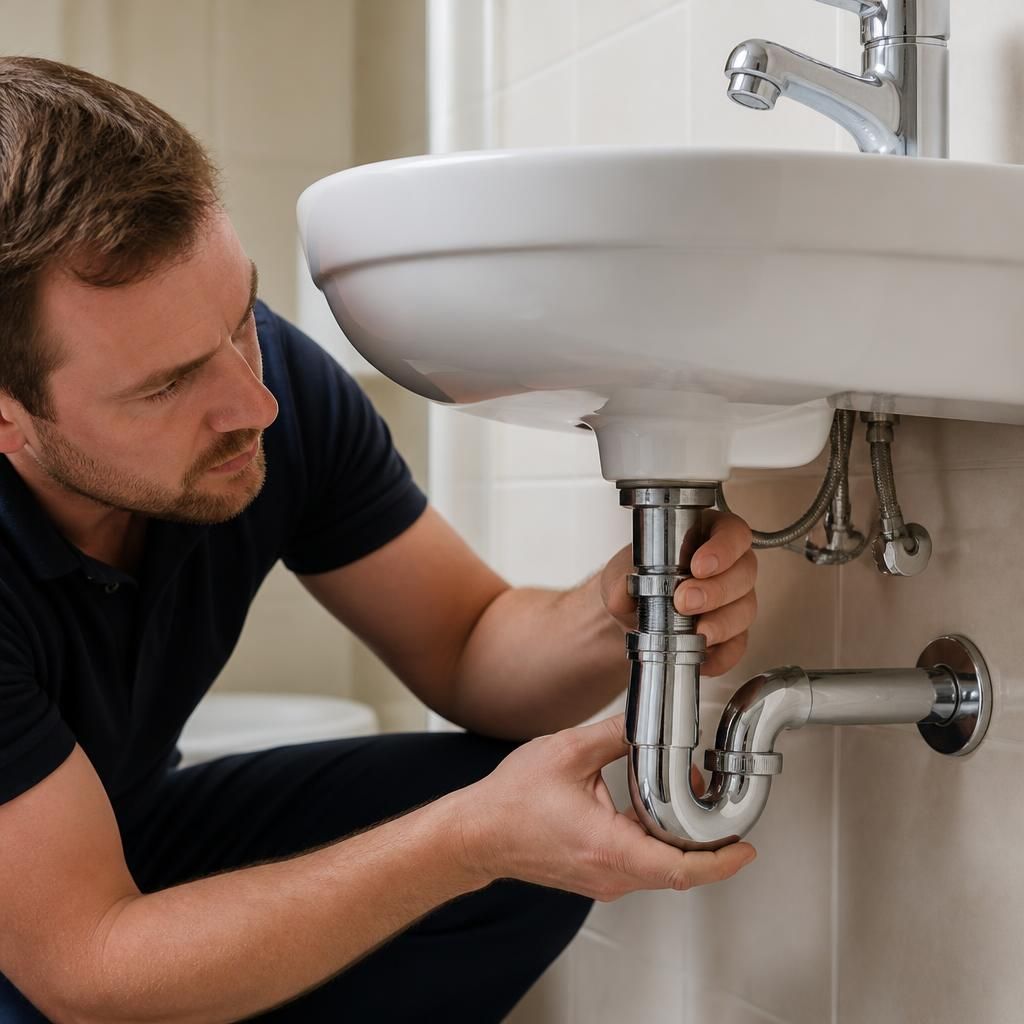
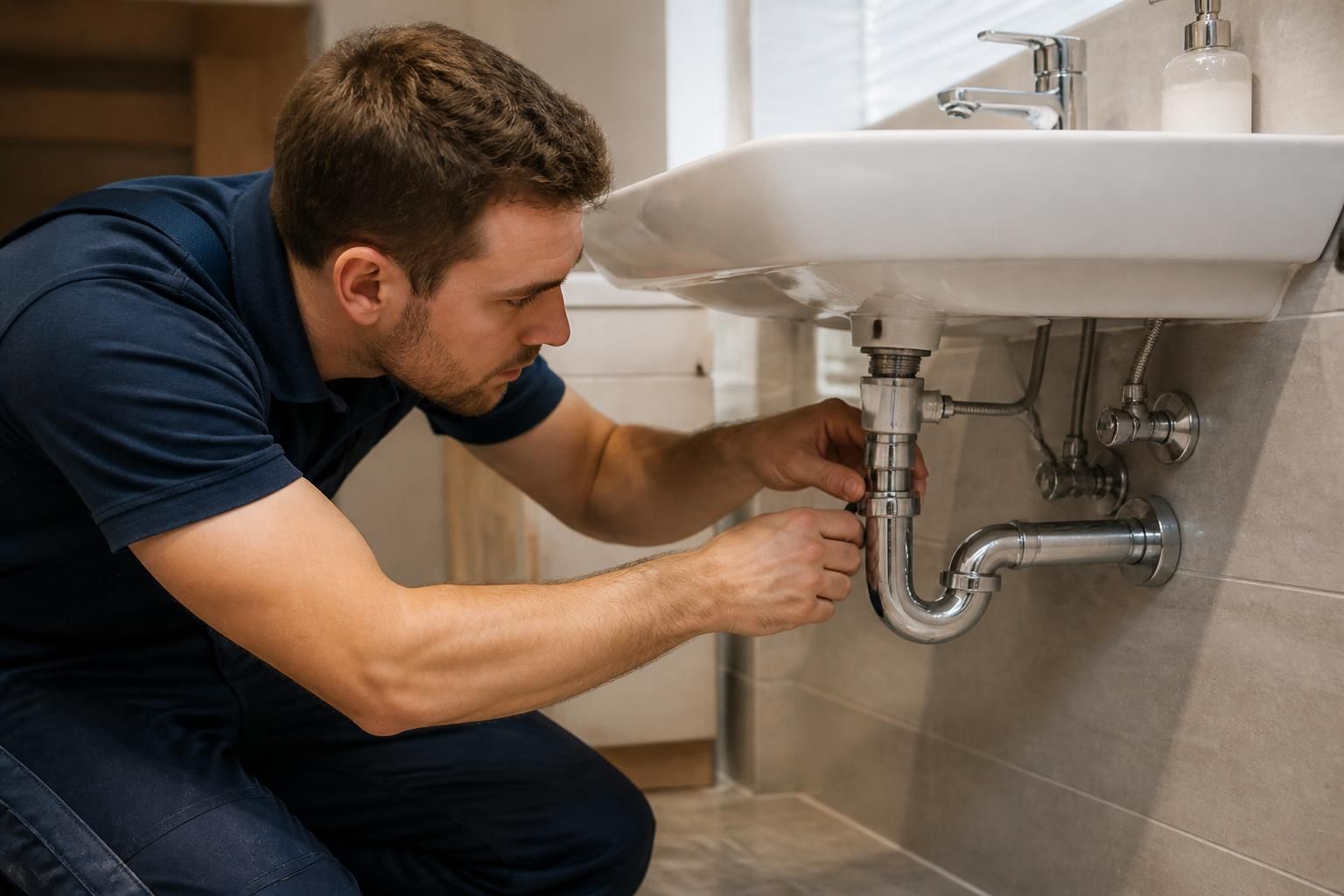
- The waste trap: The trap beneath the basin can usually be disconnected, emptied and cleaned without removing the basin itself. This is particularly useful when hair, soap residue or other debris has accumulated in the trap.
- The waste pipe: A flexible auger or similar tool may be passed into the pipework if the restriction is beyond the trap. This can help establish whether the blockage is local to the basin or further along the branch waste.
Removing the basin is generally unnecessary because the waste assembly is designed to be serviced from below or through the top fittings. Taking the basin off can create additional work, including disconnecting the tap or waste, disturbing wall fixings, replacing seals and resealing the basin against the wall or vanity unit. It also introduces a risk of damaging the ceramic or the surrounding tiles.
There are circumstances where removal may be considered. This may happen if the waste fitting is inaccessible because of fitted furniture, the basin has been installed unusually tightly against a wall, or a solid object is lodged in a position that cannot be reached through the waste system. Removal could also be necessary when the waste fitting itself is damaged, seized or incorrectly installed. In these cases, the plumber should explain why normal access is unsuitable before dismantling the basin.
A typical assessment involves checking how quickly the water drains, whether other nearby fixtures are affected and whether there are signs of a leaking trap or waste joint. The plug and visible waste opening may then be inspected for hair and residue. If the restriction appears to be in the trap, the area beneath the basin is protected before the trap is opened. Water held in the basin and trap must be contained to prevent damage to cupboards, flooring or stored items.
Mechanical clearing is usually preferable to pouring additional chemical drain cleaner into a slow or blocked bathroom sink. Strong chemicals may remain in standing water and create a hazard when the trap is opened. They can also affect seals, finishes and plumbing components. If a chemical product has already been used, this should be disclosed before anyone works on the waste so appropriate precautions can be taken.
After the obstruction has been removed, the waste should be checked for leaks while the basin is filled and emptied. The plumber may also run water through the outlet for long enough to confirm that it is draining consistently. A sink that clears temporarily but becomes slow again can indicate a partial blockage further along the pipe, a poorly aligned waste, inadequate fall or a recurring build-up inside the pipework.
You can reduce the likelihood of another blockage by keeping hair, cotton products, wipes, excess soap and other solid material out of the plughole. A removable plug strainer can catch debris before it enters the waste. Boiling water should not be used as a universal solution, particularly where plastic components or vulnerable sealants are present; the correct cleaning method depends on the fittings and pipework.
Ideal Plumbing Services can assess the basin and waste arrangement before deciding whether specialist access or dismantling is justified. The aim is to clear the obstruction while leaving the basin, fittings and surrounding bathroom intact wherever the installation allows.