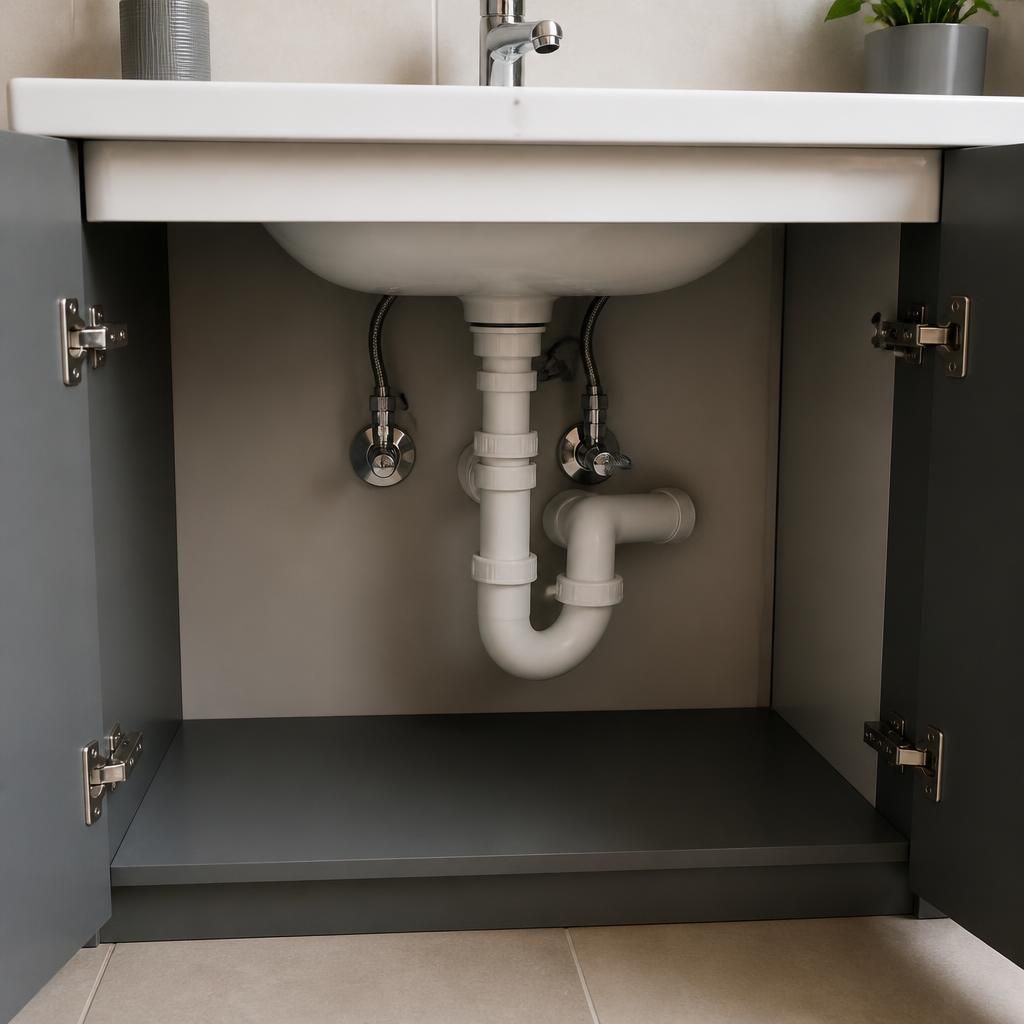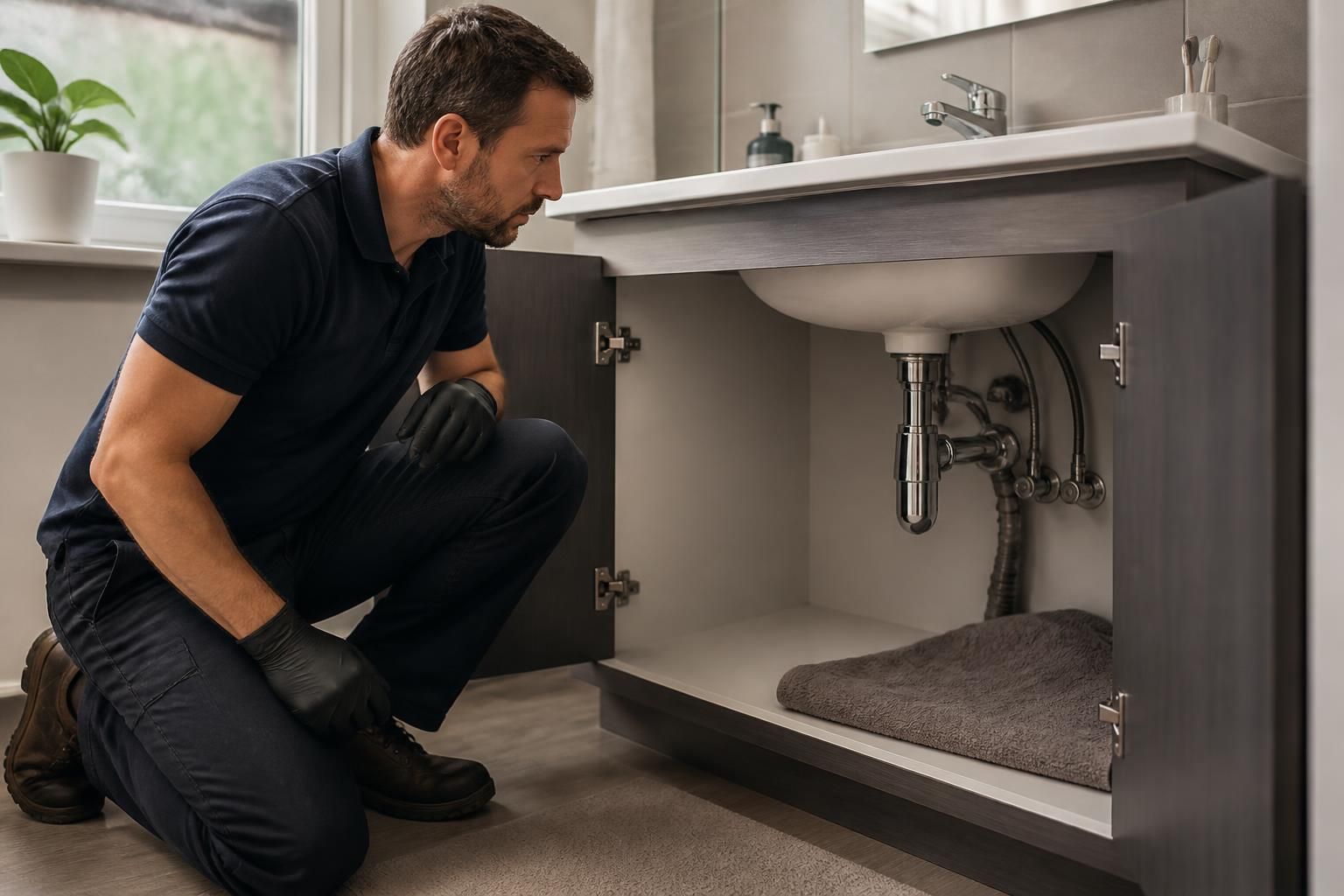
Before a plumber arrives, prepare the bathroom safely, avoid anything that could worsen the blockage and make the plumbing beneath the basin accessible for inspection. The most useful preparation is to isolate the water supply if this can be done safely, avoid chemical treatments and gather practical information about the problem.
Check the local water isolation valves. Many bathroom sinks have small isolation valves on the supply pipes beneath the basin. If a tap is dripping or a fitting appears to be leaking, turn the relevant valve clockwise only if it is easy to reach and operates normally. Do not force a stiff valve, loosen connections or attempt to remove the trap. If you cannot identify the correct valve, leave the plumbing untouched and explain this to the plumber.
Do not add drain chemicals. Caustic drain cleaners can fail to clear the obstruction and may remain in the trap or pipework. They can cause burns, damage some plumbing components and create a hazard for anyone who later opens the system. Tell the plumber if any chemical product has already been used, including its name if known.
Keep the area safe. Remove toiletries, cleaning products and electrical items from nearby surfaces, and keep children and pets away from the bathroom while the blockage is being assessed. Wear suitable gloves if you need to handle anything contaminated by wastewater, then wash your hands thoroughly. Avoid using the sink, bath or shower if their waste water appears to be backing up into the same drainage system.
Prepare useful details for the assessment. The plumber may need to know:
- whether the water drains slowly, remains completely still or returns after other fixtures are used;
- whether the basin has an overflow, pop-up waste, plug chain or another type of waste fitting;
- whether the problem affects only this sink or other bathroom fixtures as well;
- whether any repair, alteration or cleaning work has recently taken place; and
- whether the property is rented and whether the landlord or managing agent needs to authorise the work.
Photographs of the basin, waste fitting and visible pipework can also help a plumber understand the arrangement before inspecting it. Do not rely on photographs instead of an in-person assessment, particularly where there is a leak, persistent backflow or a blockage affecting more than one fixture.
If the sink is in a rented property, follow the tenancy reporting process and keep a record of when the issue was reported. A landlord or agent may need to arrange access or approve work, while tenants should avoid making alterations to the plumbing themselves.
A plumber will normally identify whether the obstruction is in the waste fitting, trap or further along the drain before choosing a suitable method. Providing safe access and avoiding unapproved dismantling or chemical products allows that inspection to begin without introducing additional damage or risk. Ideal Plumbing Services provides bathroom sink unblocking and related plumbing repairs for residential customers in Birmingham and across the West Midlands.