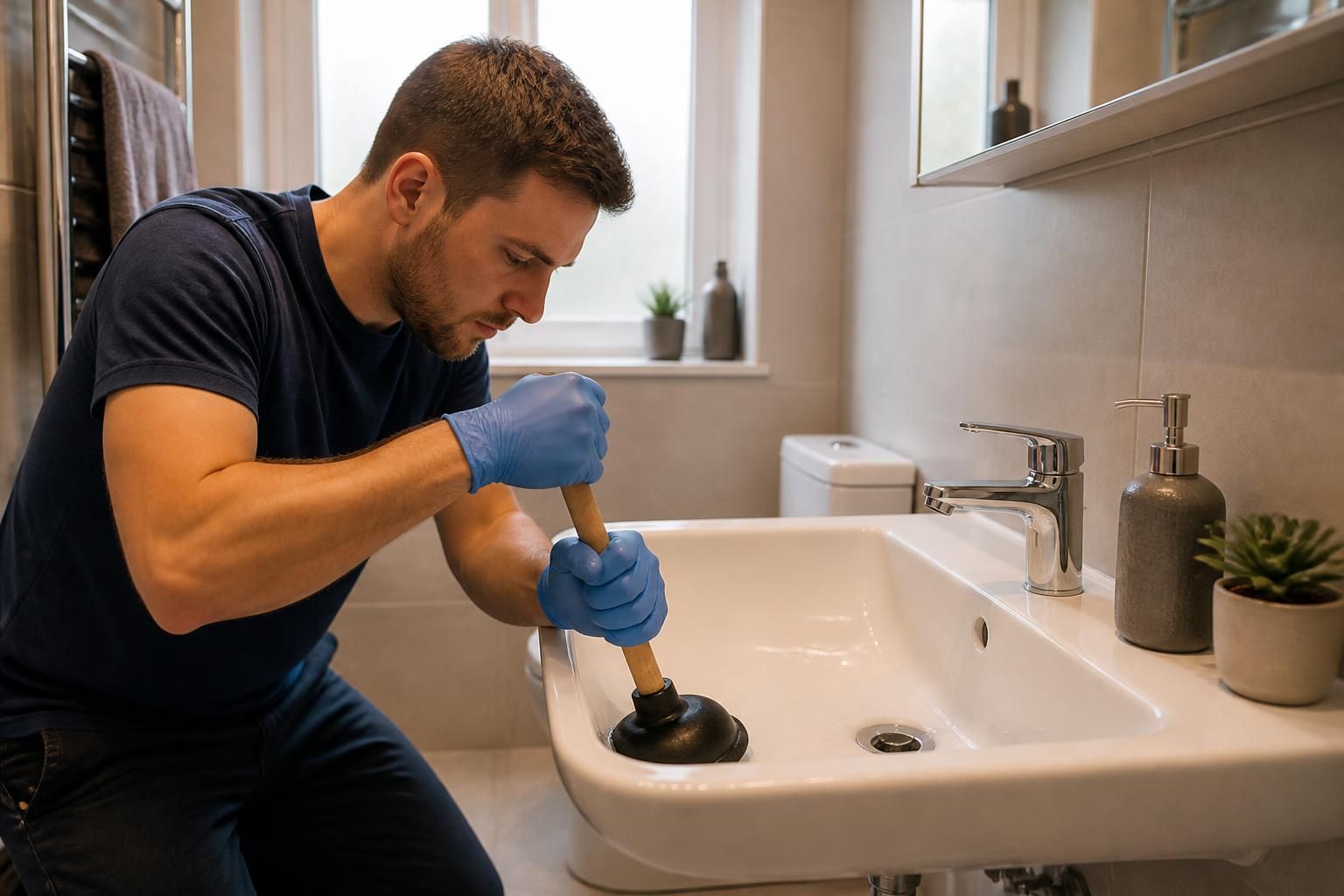
In a rented property, responsibility for a blocked bathroom sink usually depends on the tenancy agreement, the cause of the blockage and whether the problem is part of the property’s plumbing system. A tenant should report the issue to the landlord or letting agent, while only attempting low-risk checks that are unlikely to damage the basin, waste fitting or pipework.
Who normally deals with the blockage?
- Landlords: A landlord will generally be responsible for repairs to fixed plumbing and sanitation installations, provided the blockage is not the result of the tenant’s misuse or avoidable damage.
- Tenants: Tenants are usually expected to keep fittings reasonably clean, remove ordinary surface debris and report faults without unreasonable delay. They may be charged where the blockage was caused by items being put down the sink or by careless use.
- Letting agents: If the property is managed by an agent, follow the reporting procedure in the tenancy documents. The agent may arrange an inspection or pass the issue to the landlord’s contractor.
The tenancy agreement may set out the reporting process, repair obligations and rules about using contractors. Check these terms before arranging a plumber yourself, particularly if the landlord normally requires approval for maintenance work. A tenant who instructs a contractor without permission may not be able to recover the cost, unless the agreement or circumstances provide otherwise.
What should you check first?
- Remove and clean the plug, pop-up waste or stopper if it lifts out without force.
- Clear hair, soap residue and other visible material from the opening using gloves.
- Try a suitable sink plunger with enough water to cover the rubber cup. Cover the overflow opening with a damp cloth to help create pressure.
- Run a small amount of water to see whether the flow improves. Stop if water begins to rise, leak from the trap or overflow onto the surrounding fittings.
Avoid mixing drain chemicals or using them as a first step. They can damage some fittings, create hazardous splashes and leave corrosive liquid in the trap for anyone who later works on the pipe. Do not force tools into the waste or remove the trap unless you are confident it can be refitted correctly and your tenancy terms permit this work.
When should you contact the landlord or agent?
Report the problem if basic cleaning does not restore drainage, if the sink repeatedly blocks, or if there is a leak, foul odour or water coming back through the waste. Repeated blockages can indicate a restriction further along the waste pipe rather than a problem at the plughole. Include photographs or a short description of the symptoms, such as whether the basin drains slowly, stops completely or backs up when another fitting is used.
If the blockage is causing water to escape, stop using the basin and protect nearby flooring and cupboards with towels or a container where safe. Tell the landlord or agent that there is a risk of water damage and keep a record of when you reported it. Do not use another bathroom fitting if doing so causes water to rise through the blocked sink or creates further leakage.
Can a tenant arrange a plumber?
This depends on the agreement and the landlord’s instructions. If the landlord or agent authorises a plumber, keep written confirmation of what work is approved and ask for an itemised invoice. The plumber may need to establish whether the restriction is in the tenant’s sink waste, a shared pipe or the building’s drainage system. That distinction can affect who pays.
Where the blockage resulted from ordinary wear, a defect or pipework outside the tenant’s control, it is more likely to be treated as the landlord’s repair. Where an inspection finds wipes, sanitary products, excessive hair, grease or another inappropriate item in the waste, the tenant may be held responsible for the associated call-out and repair costs. The final position should be assessed against the tenancy agreement and the evidence from the inspection.
For a blockage that cannot be cleared safely with simple measures, a professional plumber can inspect the waste without relying on guesswork and advise whether the basin, trap or connected pipe needs attention. Keep the landlord or agent informed throughout so that the repair is documented and responsibility for the work is clear.