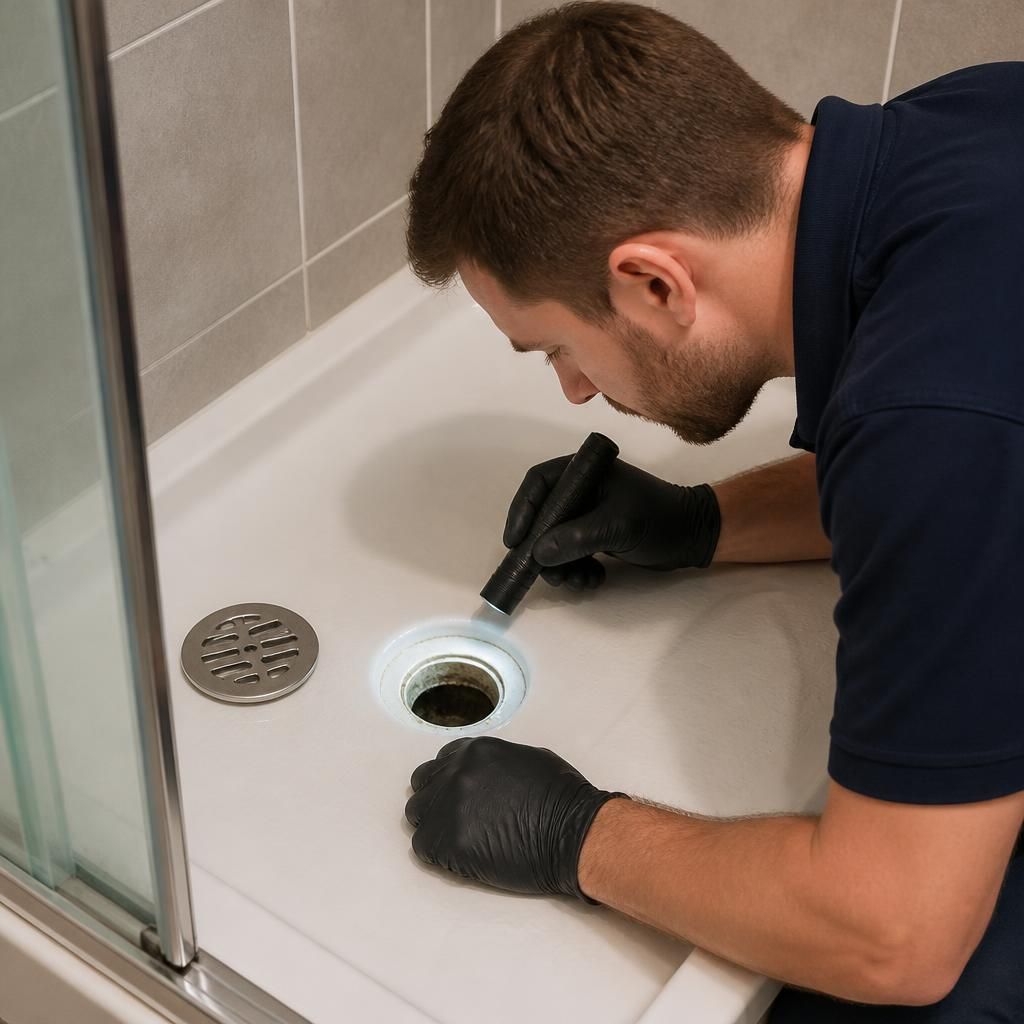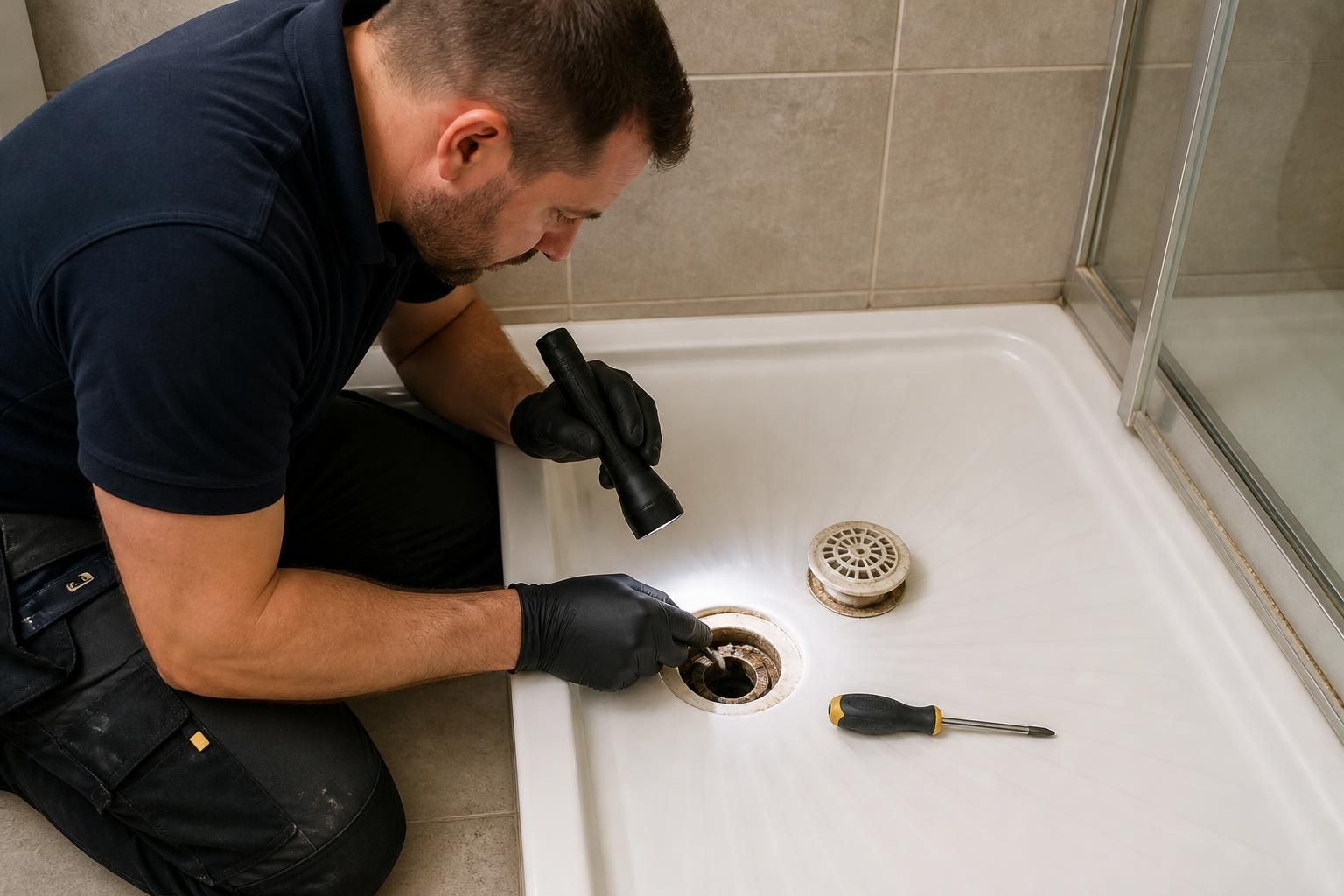
In many cases, a shower waste can be cleared from above, leaving the shower tray undisturbed. The practical method depends on where the obstruction is, whether the waste cover and trap are accessible, and whether the pipework has been installed with enough room for safe cleaning.
Initial checks
Remove the waste cover carefully and inspect the opening with a torch. Hair, soap residue and trapped debris are common causes of slow drainage and may be close enough to the surface to remove by hand or with a suitable plastic extraction tool. Avoid forcing tools down the waste, as this can dislodge seals, damage the trap or push the obstruction further into the pipe.
If the obstruction is within reach, a correctly sized plunger can help loosen it. There needs to be enough water over the plunger’s edge to create a seal, and nearby overflow or secondary openings may need to be covered during plunging. Controlled pressure is preferable to repeated, forceful pumping, particularly where the shower tray or waste fitting feels unstable.
A plumber may use a flexible drain-cleaning cable or other mechanical equipment through the waste opening. This can deal with blockages beyond the trap, but the equipment must be suitable for the pipe size and used carefully around bends and joints. Inspection equipment can also help establish whether the problem is a local blockage, a damaged pipe or a poorly aligned waste connection.
When access from above may not be enough
- The trap is sealed beneath the tray and cannot be removed or cleaned through the waste opening.
- The blockage lies beyond a bend that household tools cannot reach safely.
- The waste pipe has collapsed, separated or become badly restricted.
- Water remains in the trap despite careful cleaning and mechanical attempts.
- The tray has been installed over a solid floor or fixed enclosure, leaving no useful access panel.
In these situations, the shower tray is not automatically the first component to remove. A professional will normally check for access from an adjacent room, a removable panel, the ceiling below or the waste connection itself. This can avoid unnecessary disturbance to the tray and surrounding finishes. If no suitable access exists, partial or complete removal may be required to reach the faulty section safely.
Methods to avoid
Strong chemical drain cleaners are not a reliable solution for every shower blockage. They may fail to dissolve compacted hair and soap deposits, and residual chemicals can create a hazard for anyone opening the trap afterwards. They can also affect some seals, finishes and pipe materials. Boiling water should be avoided on acrylic or other heat-sensitive shower components unless the manufacturer’s instructions specifically allow it.
Repeated plunging, poking or chemical treatment can turn a simple obstruction into a leaking waste connection. Stop if water begins appearing around the tray, ceiling below or adjacent wall, or if the waste fitting moves when the cover is handled. A leak alongside poor drainage may indicate a damaged seal rather than a blockage alone.
After clearing, the waste should be tested with a measured flow of clean water while checking accessible joints for leaks. A suitable hair-catching waste cover, regular removal of surface debris and periodic cleaning with a non-corrosive product can reduce the chance of another build-up. If the shower continues to drain slowly after the visible debris has been removed, the restriction may be further along the waste pipe and merits a proper inspection rather than more forceful DIY treatment.