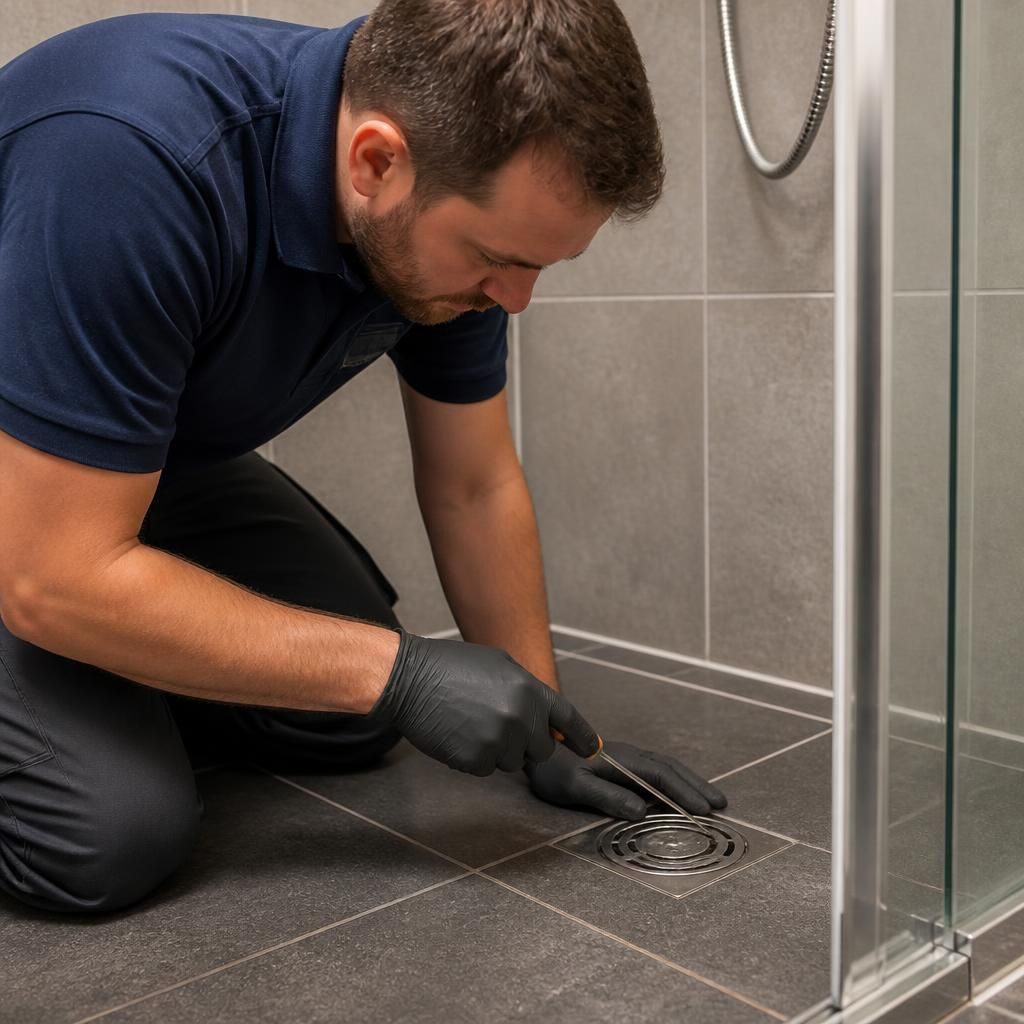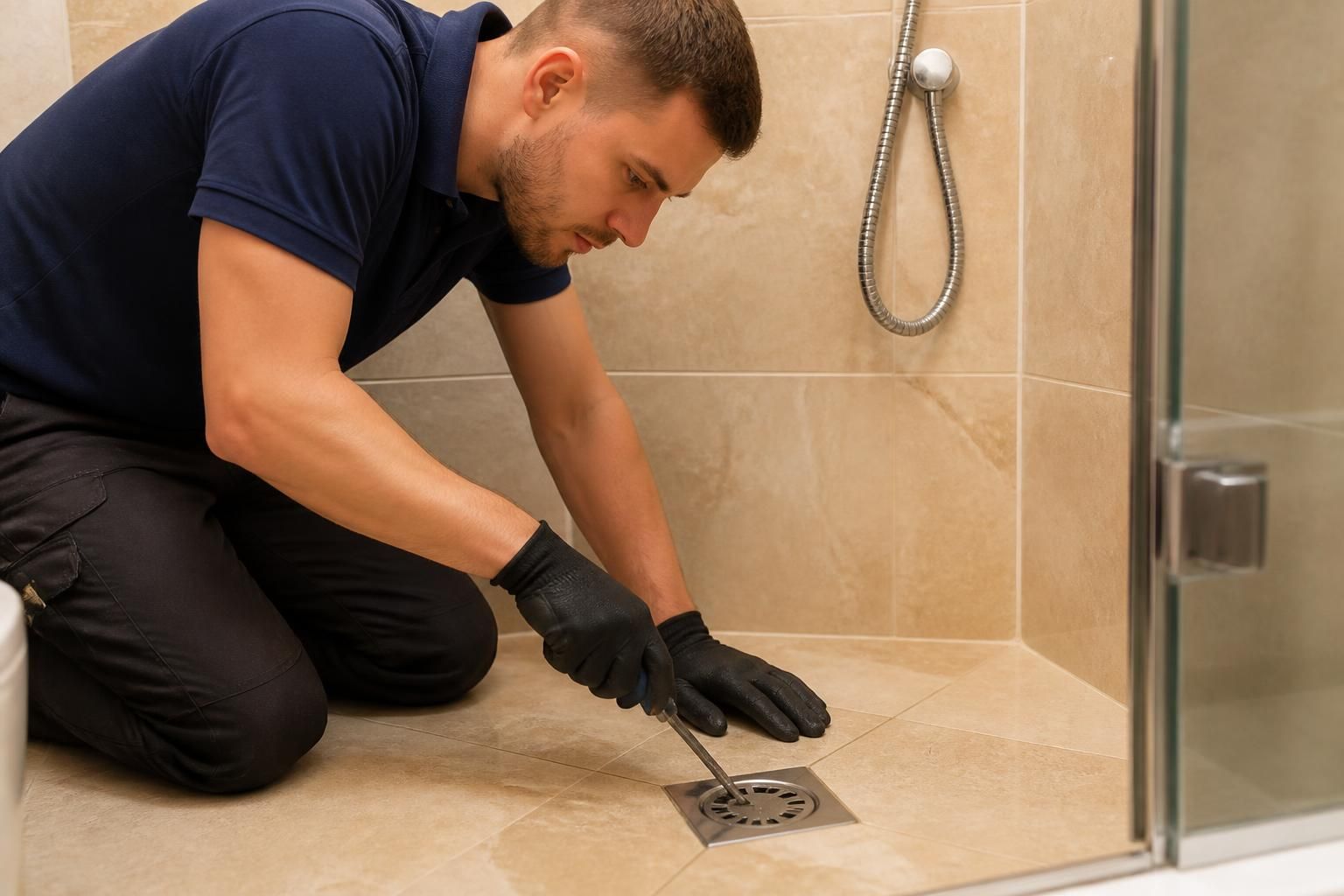
Shower drain unblocking should not damage bathroom tiles when the blockage is assessed first and the correct method is used with controlled pressure. The main risks are chipped tile edges, scratched surfaces, damaged grout and disturbed waterproof seals around the drain or shower tray.
The risk depends partly on where the obstruction is located. Hair, soap residue and debris close to the waste opening can often be removed through the drain cover without affecting the surrounding tiles. A blockage farther along the waste pipe may require more force or specialist equipment, increasing the risk if unsuitable tools are used or the drain is accessed carelessly.
- Sharp tools: Screwdrivers, knives or improvised metal objects can scratch the tile glaze, chip the drain surround or break the seal beneath the cover.
- Excessive pressure: Force applied against a fixed waste fitting can loosen the fitting or place stress on the shower tray and nearby grout.
- Chemical drain cleaners: Strong chemicals may stain or weaken grout, damage some drain components and create a hazard if the waste later needs to be dismantled.
- Disturbed sealant: Removing or levering around the drain can damage the waterproof seal. Water may then pass below the tray even when the tiles appear intact.
- Movement of the tray: A shower tray that flexes under pressure can place strain on joints between the tray, tiles and sealant.
Safe unblocking normally starts with identifying the type of drain and removing only the accessible cover using the appropriate tool. Surface debris can then be cleared, followed by a suitable manual method such as controlled plunging or a drain-cleaning tool designed for the waste. The tool should be kept aligned with the pipe rather than forced against the tile, tray or drain flange. Water flow should be tested gradually so that leaks can be detected before the area is returned to normal use.
It is also important to distinguish a blockage from a damaged or poorly installed waste. If water remains slow after debris has been removed, the obstruction may be deeper in the pipe, or the pipe may have an inadequate fall, a displaced joint or a build-up that repeatedly catches hair and soap. Repeatedly applying chemicals or pushing tools further into the waste can make the original problem harder to diagnose and may increase the chance of damage.
Stop and arrange a professional assessment if the drain cover will not lift without force, the shower tray moves, tiles sound hollow, grout is already cracked, water appears outside the shower area, or a musty smell suggests moisture beneath the tray. A professional can inspect the accessible waste, use equipment suited to the pipework and check the surrounding seal after clearing the obstruction. This is particularly important where a leak could affect flooring, ceilings or rooms below.
After unblocking, check the grout lines, silicone joints and drain surround for gaps, lifting or discolouration. Run the shower for a short period while observing the underside of the tray where access is available, then check adjacent flooring for unexplained moisture. These checks help identify a seal problem early rather than mistaking a leak for a recurring blockage.
Ideal Plumbing Services provides shower drain unblocking and related plumbing repairs for homeowners, landlords and tenants in Birmingham and across the West Midlands. The appropriate approach depends on the drain design, the location of the obstruction and the condition of the tray, tiles and waterproofing around it.