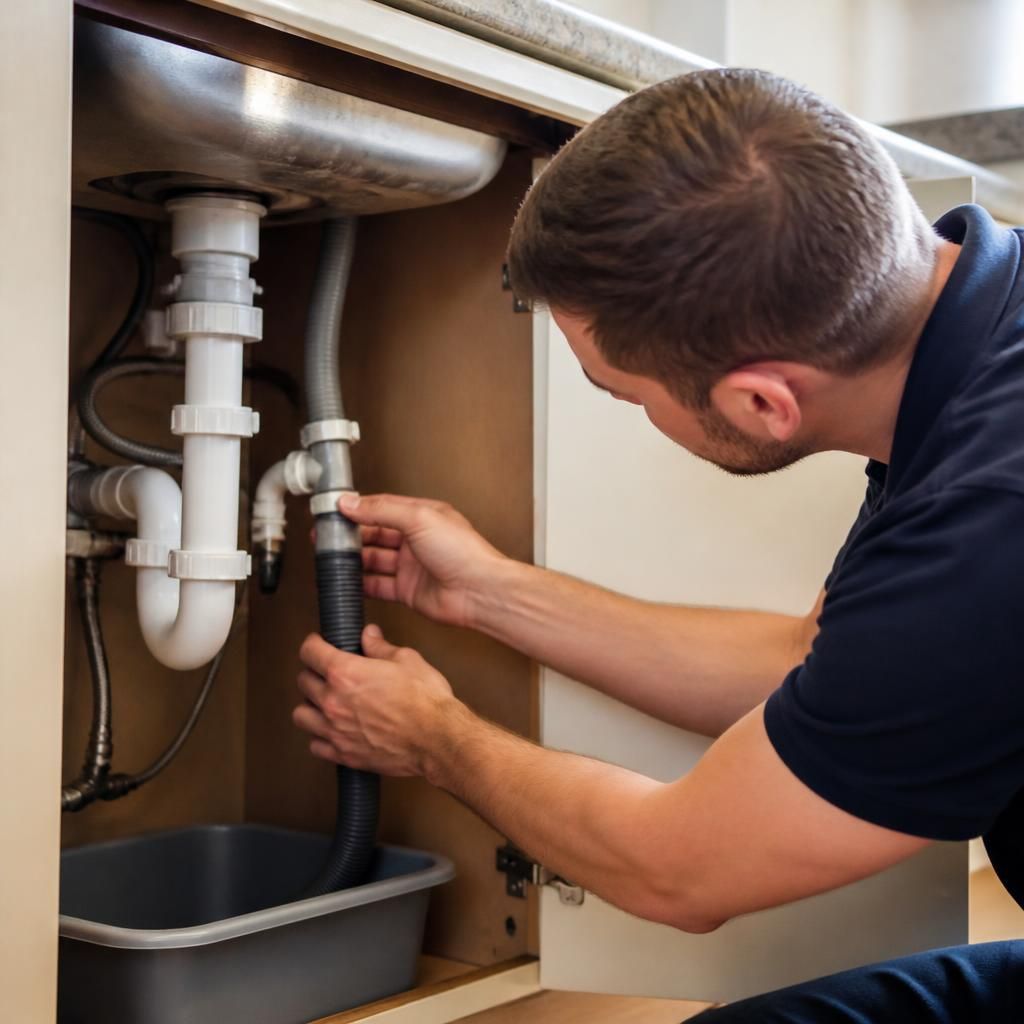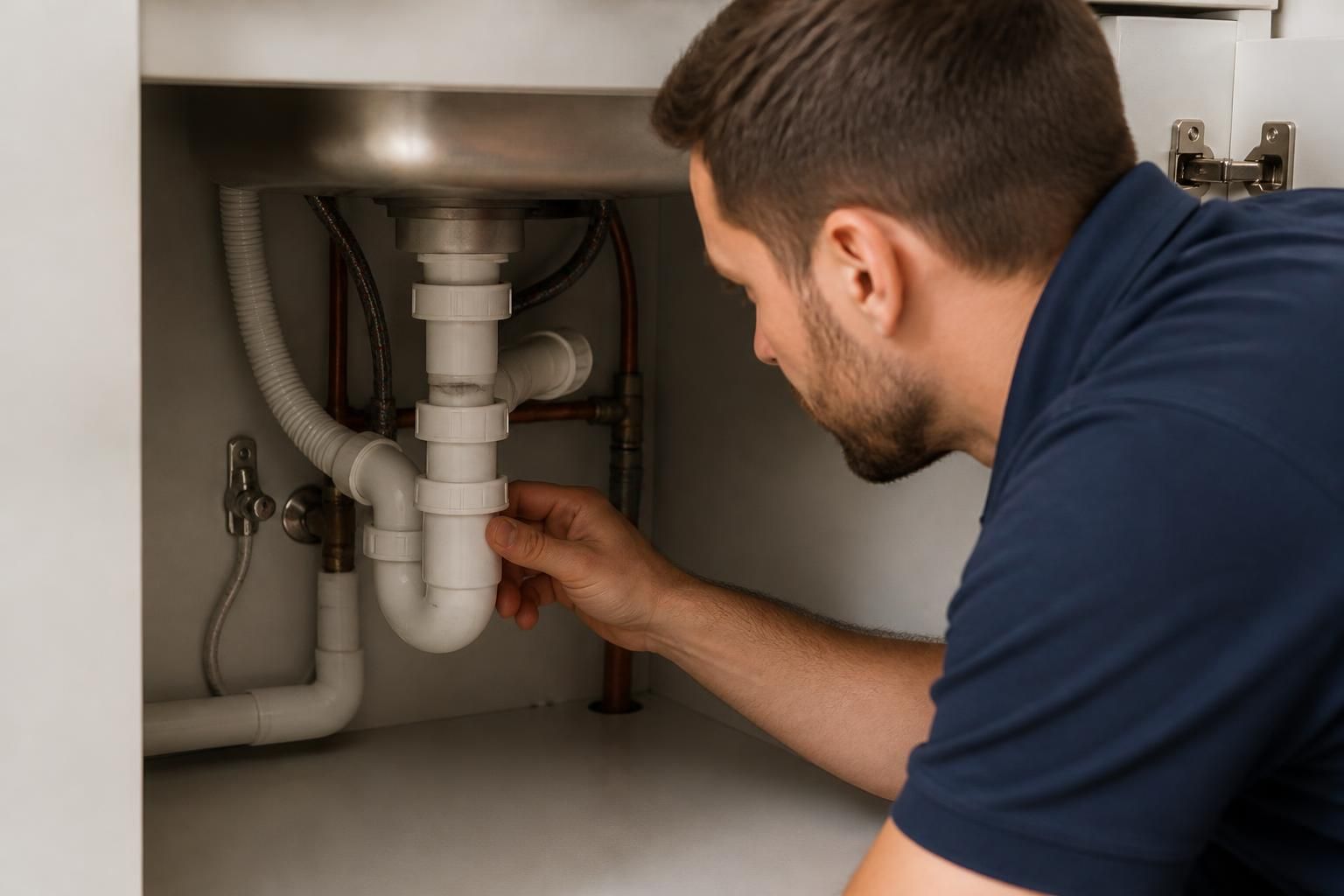
A leak beneath a kitchen sink is usually assessed by tracing the water back to its source, checking the surrounding connections and determining whether the fault is accessible without removing fitted units. Many leaks can be dealt with as a localised repair, but the correct solution depends on whether the water comes from the supply side, the waste side or pipework hidden within the cabinet or wall.
What a plumber checks first
- Whether the leak occurs continuously or only when the tap, dishwasher or sink is being used.
- Whether water is tracking from a joint above and appearing elsewhere in the cupboard.
- Whether the pipework has signs of corrosion, cracking, movement or previous temporary repairs.
- Whether dampness has affected the cabinet base, flooring, skirting board or adjacent units.
This inspection matters because water can run along the underside of a worktop or cabinet before it becomes visible. Replacing the part where the water is first noticed may not solve the problem if the actual fault is higher up or behind the unit.
What the repair may involve
Once the source has been identified, the plumber will normally isolate the relevant water supply, remove any necessary access panels and release trapped water. The defective connection or section of pipework can then be repaired or replaced, followed by a controlled test. The test should include running the tap and, where relevant, filling and emptying the sink to check both supply and waste connections under normal use.
If the fault is behind a fixed cabinet or within a wall, access may need to be created before the plumbing can be reached. A plumber should explain the proposed access work before proceeding. Where water has damaged surrounding materials, the plumbing repair and the replacement of swollen cabinetry, flooring or plaster may be separate tasks.
What to do before the plumber arrives
- Place a container and towels beneath the affected area to limit further spread.
- Remove stored items from the cupboard so the source and any dampness can be seen safely.
- Do not use the sink if doing so causes more water to escape.
- Close the local isolation control if it can be operated safely. If the leak cannot be isolated locally, the main internal stop valve may be needed.
- If water is close to sockets, appliances or electrical connections, avoid contact and turn off the electricity only if this can be done without approaching wet equipment.
Do not rely on sealant or tape as a permanent solution. These measures may reduce visible dripping briefly but cannot correct damaged fittings, poor alignment or deteriorated pipework. Avoid dismantling connections if the cupboard is already wet, as loosening the wrong joint can release more water.
A leaking sink should be dealt with promptly even when the flow appears minor. Continued moisture can cause hidden mould, unpleasant odours, timber swelling and damage to flooring or neighbouring units. If the water is discoloured, the leak is substantial, or the source cannot be identified, professional diagnosis is particularly important.
Ideal Plumbing Services provides domestic plumbing repairs for homeowners, landlords and tenants in Birmingham and the wider West Midlands. A plumber can assess the fault, explain the repair required and identify any related damage before work begins, with clear charges and no hidden fees.