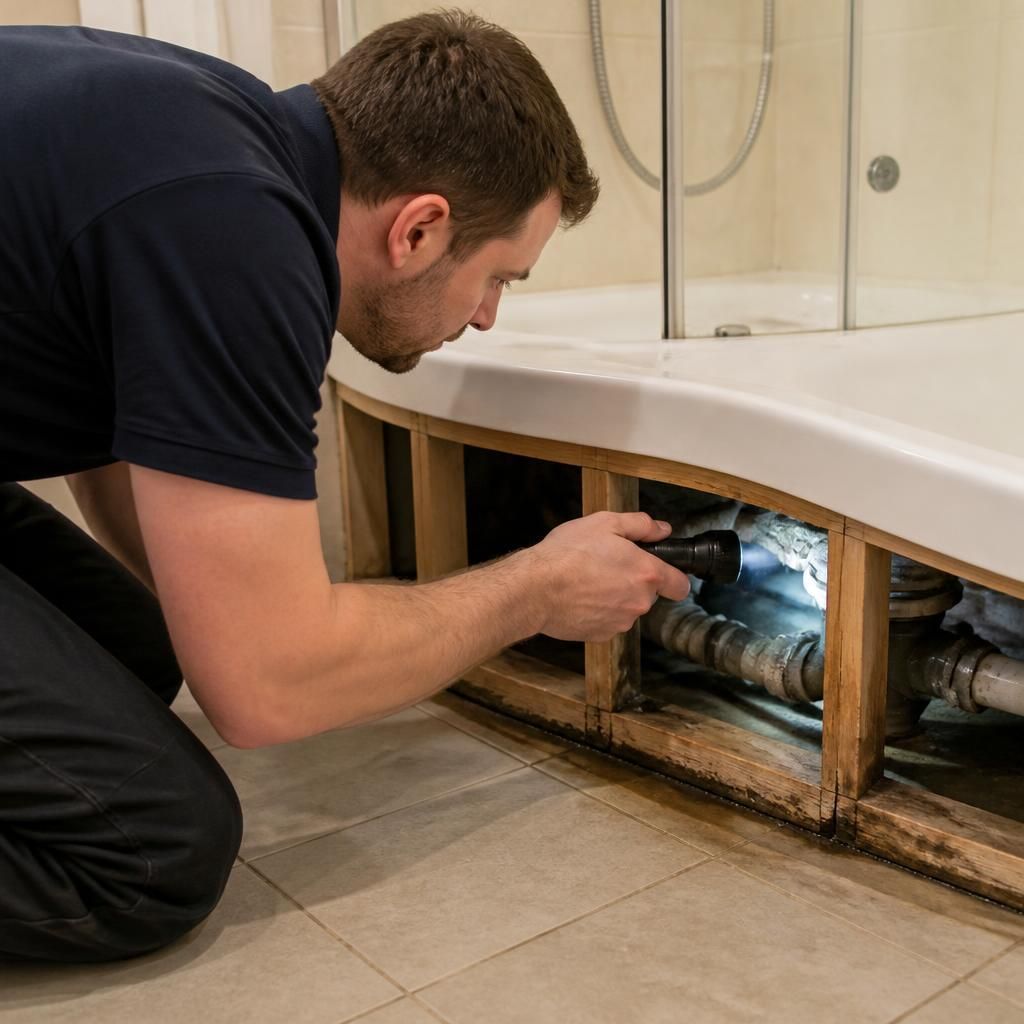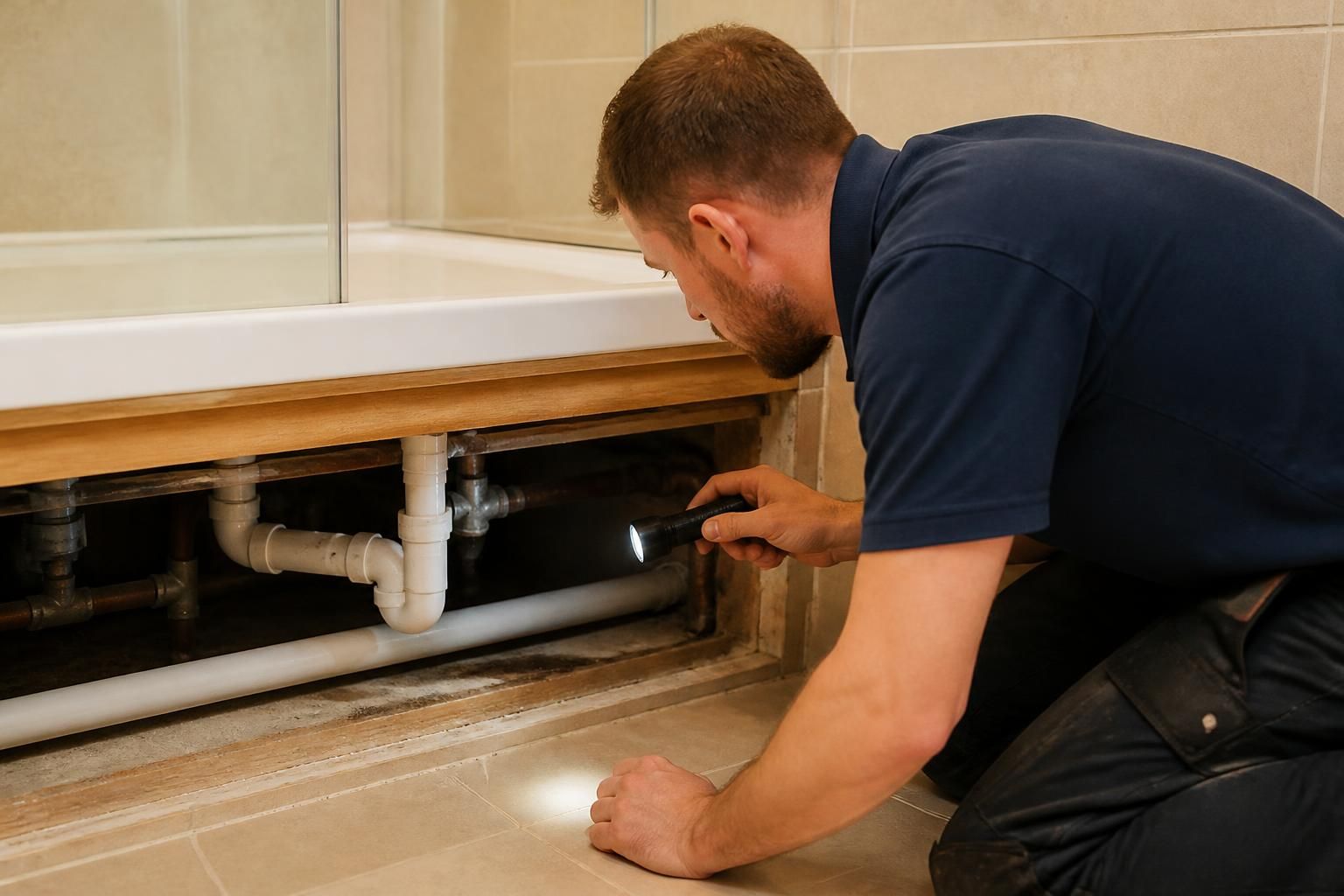
After the source of a shower leak has been found, the next stage is to determine the most suitable permanent repair and check whether surrounding components have also been affected. The plumber will normally confirm the cause, explain the repair options and establish whether any access work is needed before completing and testing the repair.
The repair depends on the failed component. A worn seal or joint may be renewed, while a damaged waste connection, shower valve, tray, enclosure or concealed pipe may require a more involved repair or replacement. If the faulty part is behind tiles, a bath panel or another fixed surface, the required access should be explained before work begins. In some cases, removing a small area is preferable to leaving a defective connection in place, but unnecessary disturbance should be avoided.
Before the work is authorised, ask for a clear explanation of:
- which component caused the leak;
- what repair or replacement is recommended and why;
- whether tiles, panels or other finishes need to be removed;
- what materials and labour are included in the price; and
- whether any related defects need attention to prevent the problem returning.
Once the defective part has been repaired, connections should be checked under normal shower use. This can include running the shower, observing the waste and supply connections, and inspecting accessible joints for fresh moisture. A repair should not be treated as complete simply because no water is visible immediately; water can travel behind fittings and appear away from the original fault.
Any disturbed sealant or grout should be reinstated where appropriate, and removed panels or fittings should be refitted securely. The shower area should then be left clean and usable, with any limitations explained if further drying or finishing work is required. Where water has entered flooring, walls or adjoining rooms, drying may take longer than the plumbing repair itself. Persistent musty odours, staining, softened materials or peeling finishes warrant further investigation rather than cosmetic covering.
A written record of the work can also be useful, particularly for landlords or anyone planning future maintenance. It should identify the repaired component, any parts replaced and any follow-up recommendation. To reduce the likelihood of another leak, keep silicone joints and grout under observation, avoid putting strain on shower fittings and deal with cracked sealant or loose components before water reaches concealed areas.
For homeowners, tenants and landlords in Birmingham and the West Midlands, Ideal Plumbing Services can assess the cause of a shower leak and explain the appropriate repair route. A clear scope of work and transparent charges help ensure that the repair addresses the source rather than only its visible symptoms.