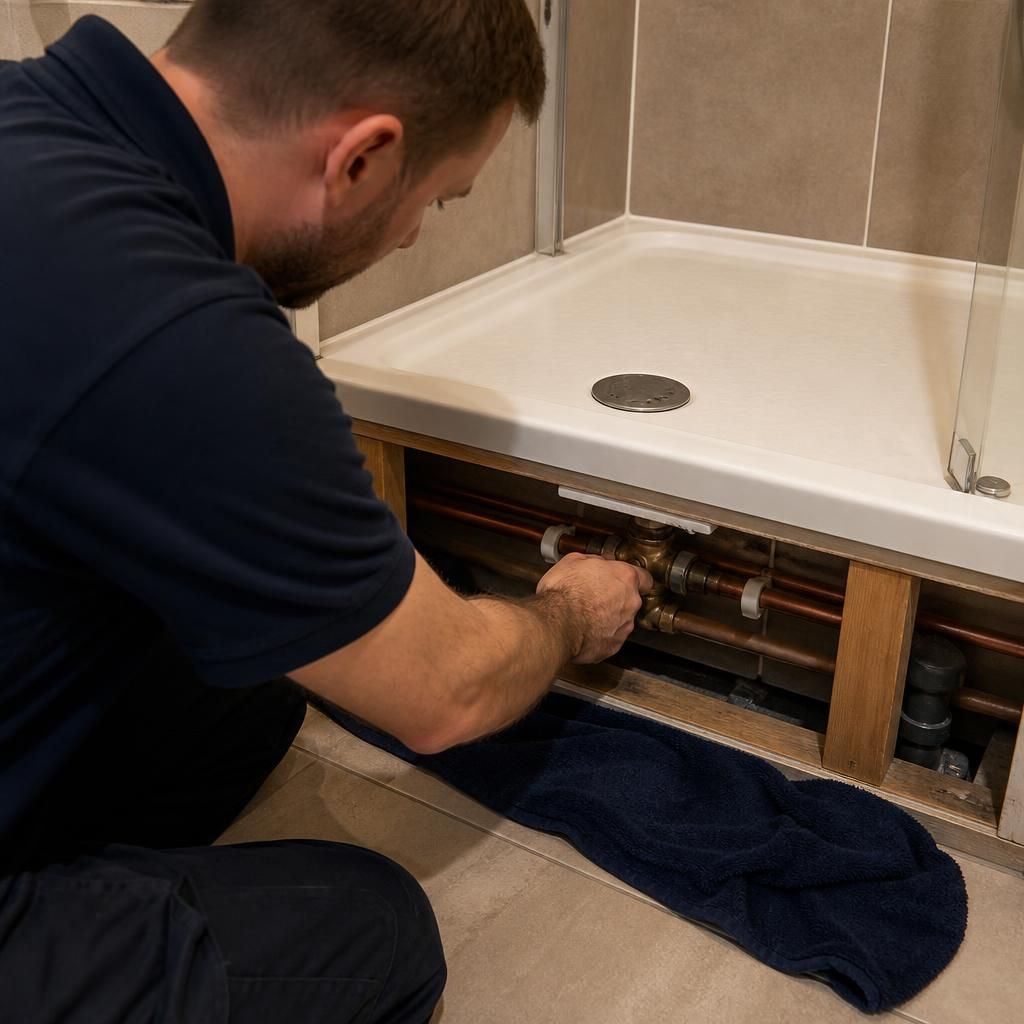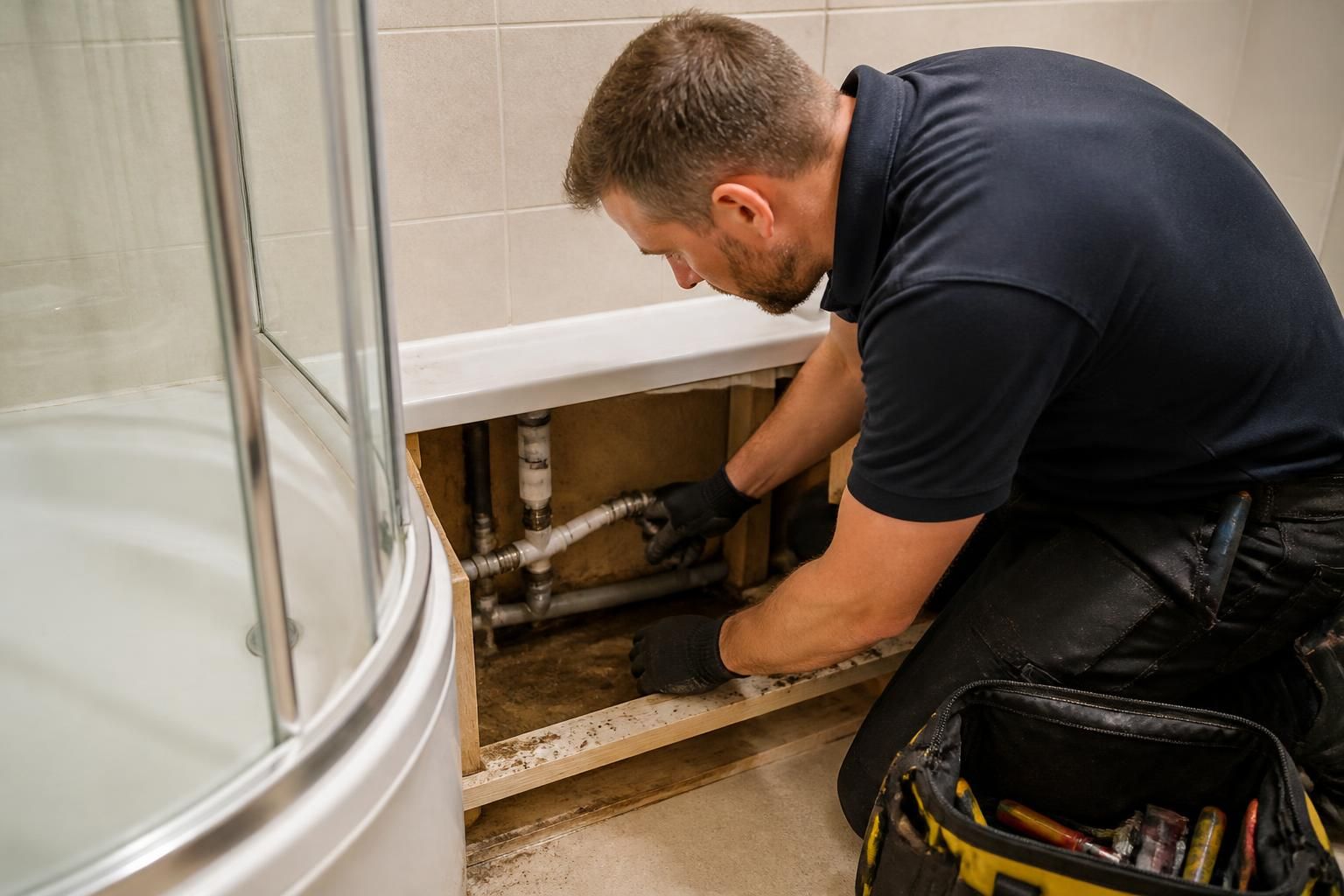
The disruption from an emergency shower leak repair depends mainly on where the leak is located, how easily the affected pipework can be reached and whether moisture has spread into the surrounding structure. A visible connection or valve can often be repaired with minimal disturbance, while a leak behind a wall, tray or tiled surface may require more extensive access and reinstatement.
Before carrying out repair work, the plumber will normally establish whether the water is coming from the supply pipework, waste connection, shower valve, tray, enclosure or sealant. This distinction matters because the visible water may not be close to the actual fault. Accurate diagnosis helps avoid unnecessary removal of tiles, panels or other bathroom fittings.
During the work, the shower itself will generally need to remain out of use until the leak has been repaired and the affected area has been checked. In some cases, nearby bathroom facilities can still be used normally. If the leak involves shared pipework or has affected another room, the plumber may need access to those areas as well.
Several factors can make the repair more disruptive:
- Pipework concealed behind a wall, ceiling or fixed shower enclosure
- Tiles or panels that cannot be removed without damage
- A shower tray or waste fitting that has to be lifted to reach the connection
- Water damage to plasterboard, flooring, cabinets or insulation
- Persistent dampness that requires the area to dry before cosmetic work is completed
Where access is difficult, the repair may involve creating a controlled opening rather than dismantling the entire shower area. The opening should be kept as small as practical, but the exact size depends on the position of the faulty component and the room needed to remove and replace it safely.
Protective measures can reduce the effect on the rest of the bathroom. These may include using floor protection, keeping removed fittings together, containing debris and checking adjacent surfaces for signs of continuing moisture. Good housekeeping is particularly important where water has reached flooring, electrical fittings or rooms below.
Repairing the leak and restoring the appearance of the shower are separate stages. A plumber may be able to make the plumbing watertight during the visit, but replacement tiles, sealant, plasterboard, flooring or paint may require additional work once the area is dry. Matching existing finishes can also take longer than the plumbing repair itself, especially if spare tiles or panels are not available.
After the repair, the affected connections should be tested for further leakage and the surrounding area inspected for movement, staining or dampness. Avoid using the shower until the repair has been confirmed as sound and any sealant, adhesive or other finishing material has cured as required. Reporting the leak promptly and clearing access to the bathroom can help keep the work more straightforward, without guaranteeing that concealed damage will not be found.
For homeowners, landlords and tenants, it is useful to record visible damage before work begins and to confirm which reinstatement tasks are included in the agreed repair. Where a leak has affected another property or a shared building, the relevant landlord, managing agent or insurer may also need to be informed.