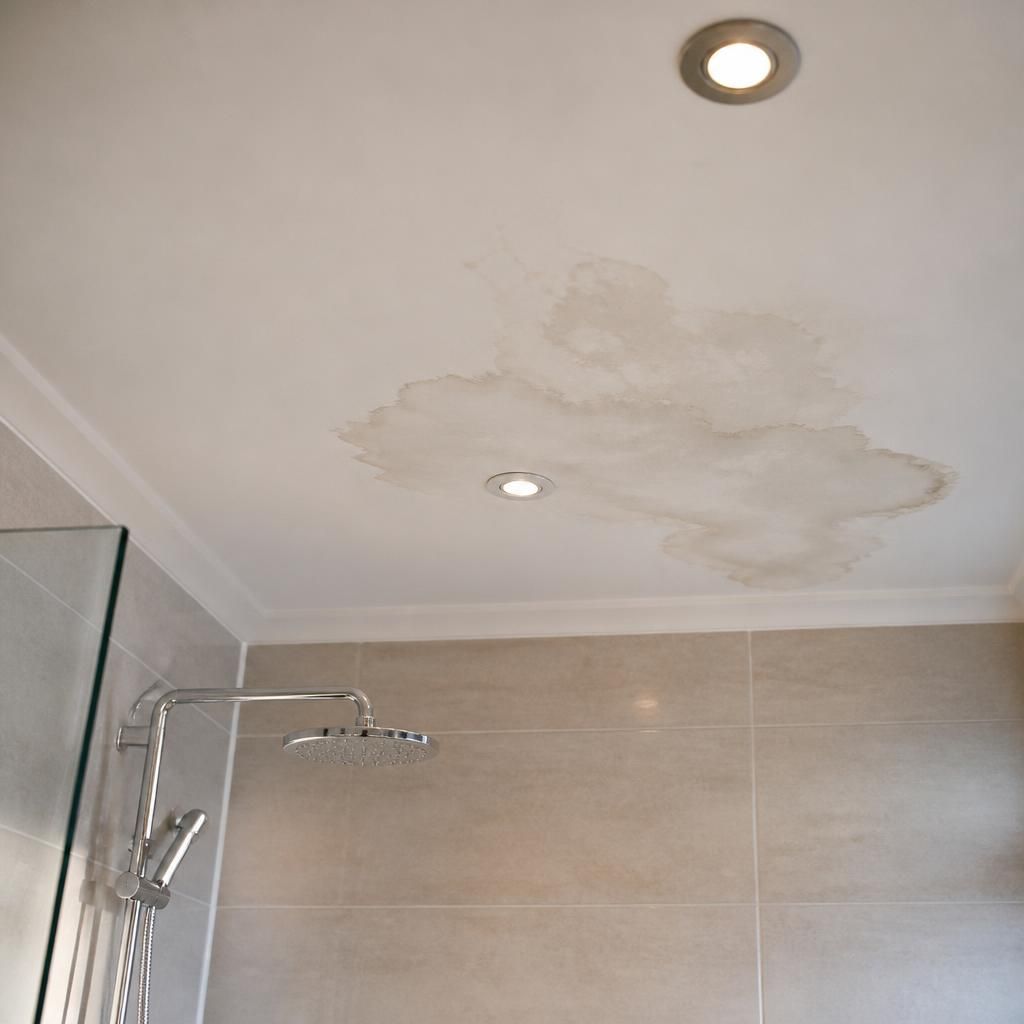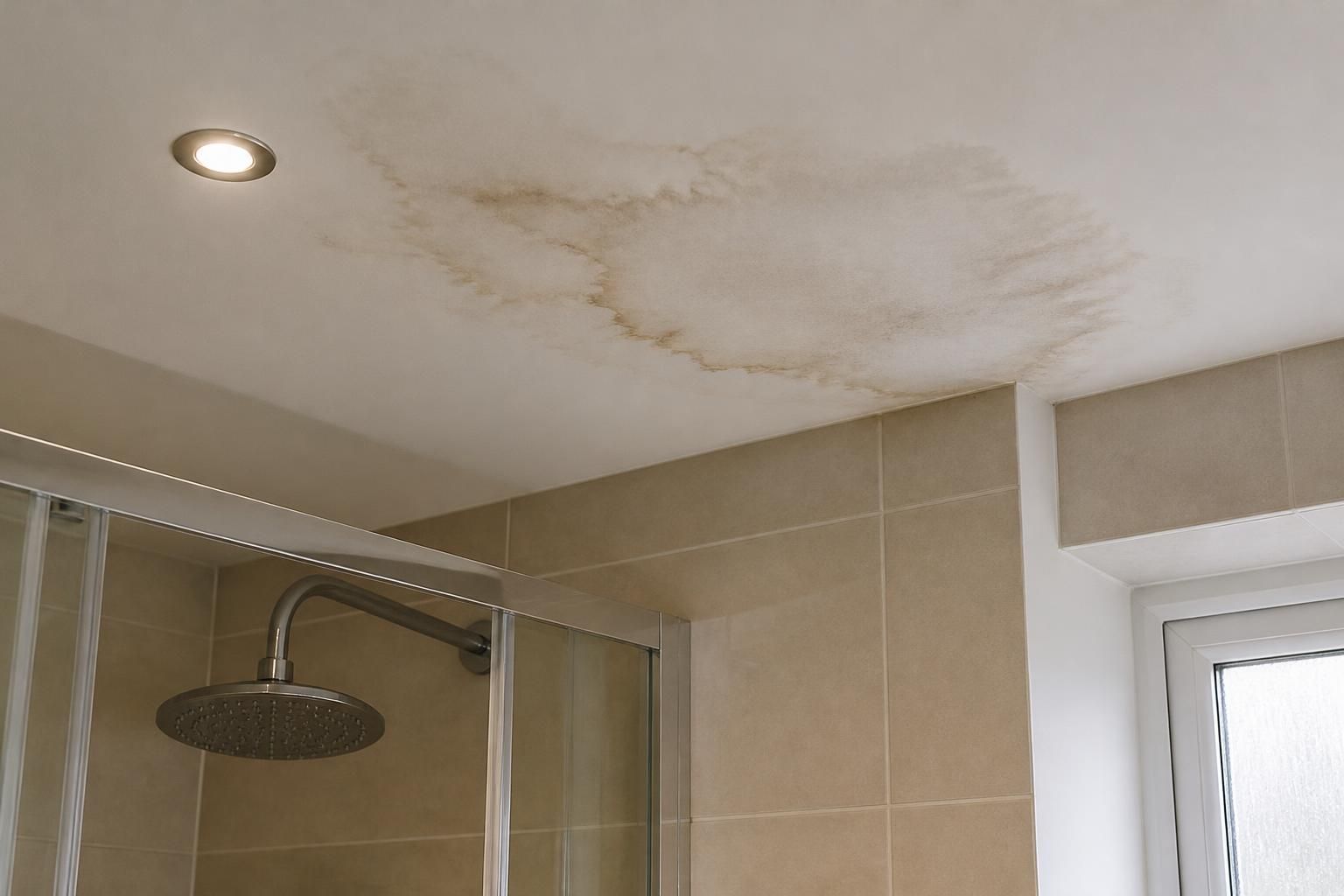
An emergency shower leak is indicated by active or concealed water loss that could quickly damage ceilings, floors, walls, fixtures or electrical systems. The most concerning signs are a leak that continues when the shower is not running, water spreading beyond the shower area, a noticeable change in water pressure, or signs that the ceiling or floor structure is becoming affected.
Some indications are easier to identify while the shower is being used. Watch for water appearing around the valve, shower arm or pipe connections rather than from the showerhead itself. Water that emerges from behind the control plate, runs down the wall, or collects beneath the tray may indicate a failed seal, damaged pipework or a problem with the waste connection. A shower that drains slowly at the same time as water appears outside the enclosure may also have a leaking or obstructed waste system.
Concealed leaks can produce less obvious clues. Listen for running or dripping sounds when every tap and appliance is off, and check whether the water meter continues to register use when no water should be flowing. A sudden reduction in pressure, a temperature fluctuation caused by a fault around the shower valve, or water appearing in an adjoining room can justify urgent investigation even when the source is not visible.
The situation should be treated as particularly urgent when:
- water is reaching a light fitting, electrical socket, extractor fan or other electrical equipment;
- water is coming through a ceiling or causing the ceiling surface to bulge, sag or soften;
- the leak cannot be stopped using the shower controls;
- water is spreading into flooring, cupboards or walls outside the bathroom;
- there is a risk of slipping or damage to belongings in nearby rooms; or
- the shower is located above a room containing electrical wiring, appliances or valuable contents.
If a leak is suspected, stop using the shower and, where it can be done safely, isolate the relevant water supply. Do not remove tiled panels, open a ceiling or probe behind the shower wall, as this can increase water damage and make the source harder to establish. Keep people away from wet electrical areas and switch off power only if the consumer unit and surrounding area are dry and safe to access.
A plumber will normally establish whether the water is coming from the supply pipework, shower valve, enclosure seals, tray, waste or nearby plumbing. The location of visible water is not always the location of the fault, because water can travel behind tiles, beneath flooring or along joists. Prompt leak detection helps distinguish a failed seal from concealed pipework damage and identifies the appropriate repair without unnecessary disturbance.