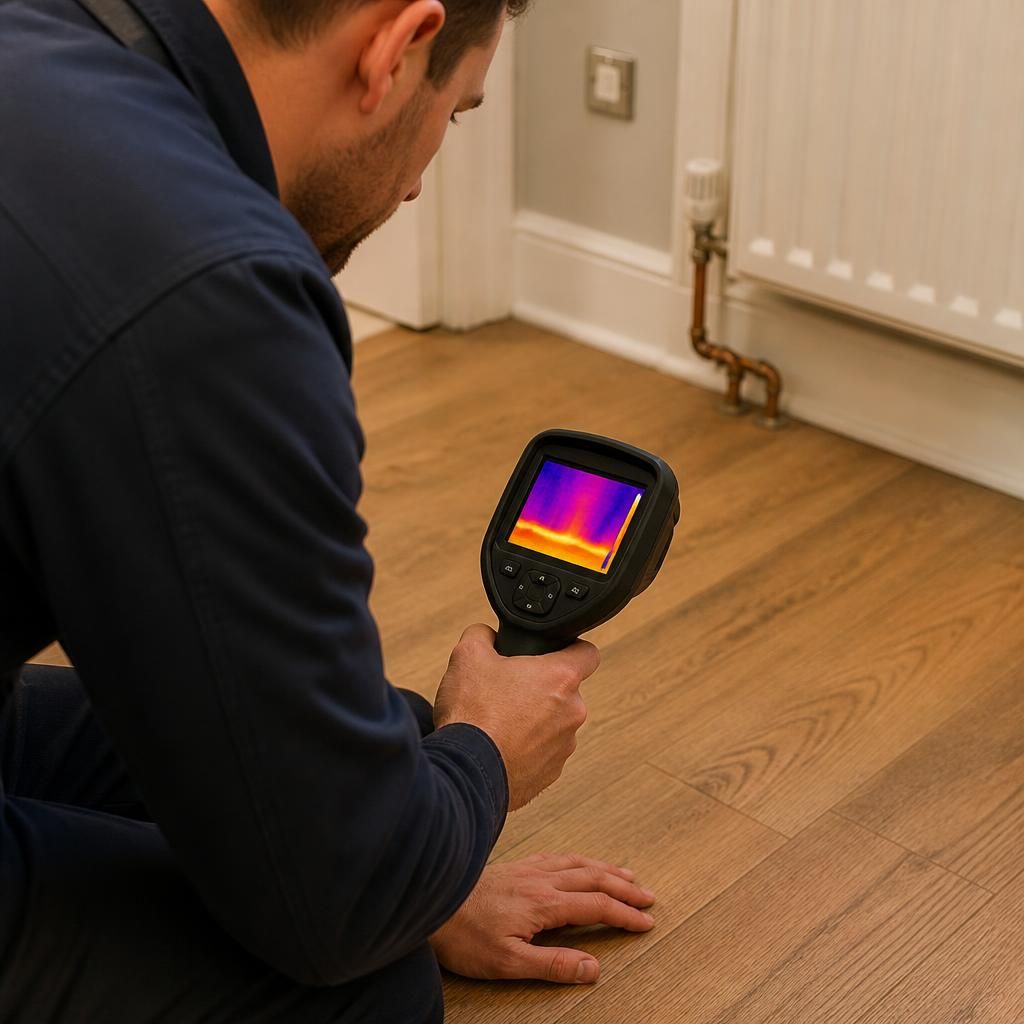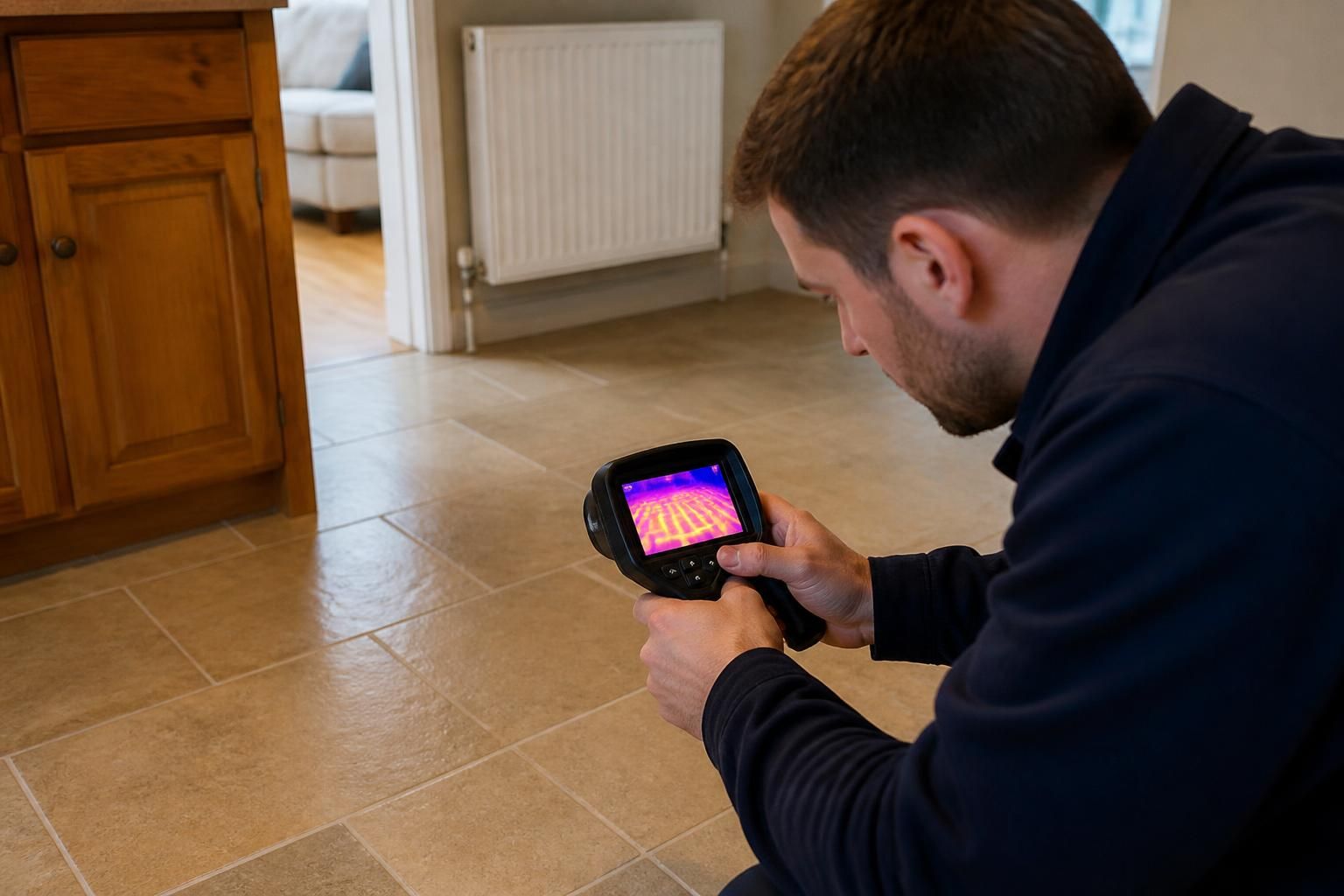
Underfloor leak detection is an investigative process designed to identify the position and likely source of escaping water while limiting unnecessary disturbance to the property. The level of disruption depends mainly on the floor construction, the location of the pipework, the severity of the leak and how readily the affected area can be accessed.
What the inspection usually involves
- Initial assessment: The plumber considers visible symptoms such as damp patches, staining, mould, unusual floor temperatures, loss of pressure or unexplained water use. Information about when the problem began and which fixtures are affected can help narrow the search.
- System checks: Plumbing and heating systems may be checked for pressure loss or other indications that water is escaping below the floor. Isolating sections of pipework can help determine which circuit or supply is involved.
- Specialist investigation: Depending on the circumstances, the plumber may use acoustic listening equipment, thermal imaging, moisture measurements or other non-invasive techniques. These methods help compare readings across the floor and identify areas that warrant closer examination.
- Confirmation and advice: Once the evidence has been assessed, the suspected leak location and the most suitable repair approach can be explained. Detection findings can help avoid opening a larger area than necessary.
Factors that can increase disruption
- Concrete floors may restrict direct access to buried pipework and can require more involved repair work if the leak is confirmed.
- Floor coverings, fitted units or heavy furniture may obstruct readings or prevent access to inspection points.
- Older properties may have altered or undocumented pipe routes, making the investigation less straightforward.
- A leak beneath a suspended timber floor may be easier to inspect from a void, although insulation, restricted clearance or structural features can still affect access.
- Water that has travelled away from the original fault can create damp areas some distance from the leak, so the most obvious mark is not always the point that needs attention.
Before the visit, it is useful to clear movable items from the suspected area and make relevant stop taps, boilers, cylinders, meters and heating controls accessible. Keeping records of pressure changes, damp patches or when symptoms appear can also provide useful context. Floor coverings should not be removed in advance unless advised, as unnecessary lifting can create additional damage.
Detection equipment does not remove the need for repair, drying or making good where materials have already been affected by water. If an opening is required to confirm a fault or reach pipework, its size and position should be based on the findings rather than chosen speculatively. A clear detection report can therefore help separate the investigative stage from the remedial work and support a more controlled repair plan.
In practical terms, most of the disruption comes from providing access and dealing with the confirmed fault, rather than from taking measurements and tracing the leak itself. An experienced plumber will assess the building and pipework before selecting an investigation method, with the aim of obtaining useful evidence while protecting flooring, fittings and surrounding finishes wherever possible.