A water leak beneath a house is often indicated by changes in water usage, moisture behaviour or the condition of the building, even when there is no visible burst pipe. The most dependable early check is to turn off every water-using appliance and tap, then observe the water meter. If the reading continues to change, water may be escaping somewhere within the supply or plumbing system.
Check the meter and internal stop tap
Make sure washing machines, dishwashers, toilets and water-softening equipment are not running before checking the meter. Record the reading, leave the property without using water, and check it again later. A change suggests flow, but it does not identify where the leak is located. If the internal stop tap is closed and the meter still registers movement, the issue may be on the service pipe between the meter and the property rather than beneath the floor.
Look for changes around fixtures and pipe routes
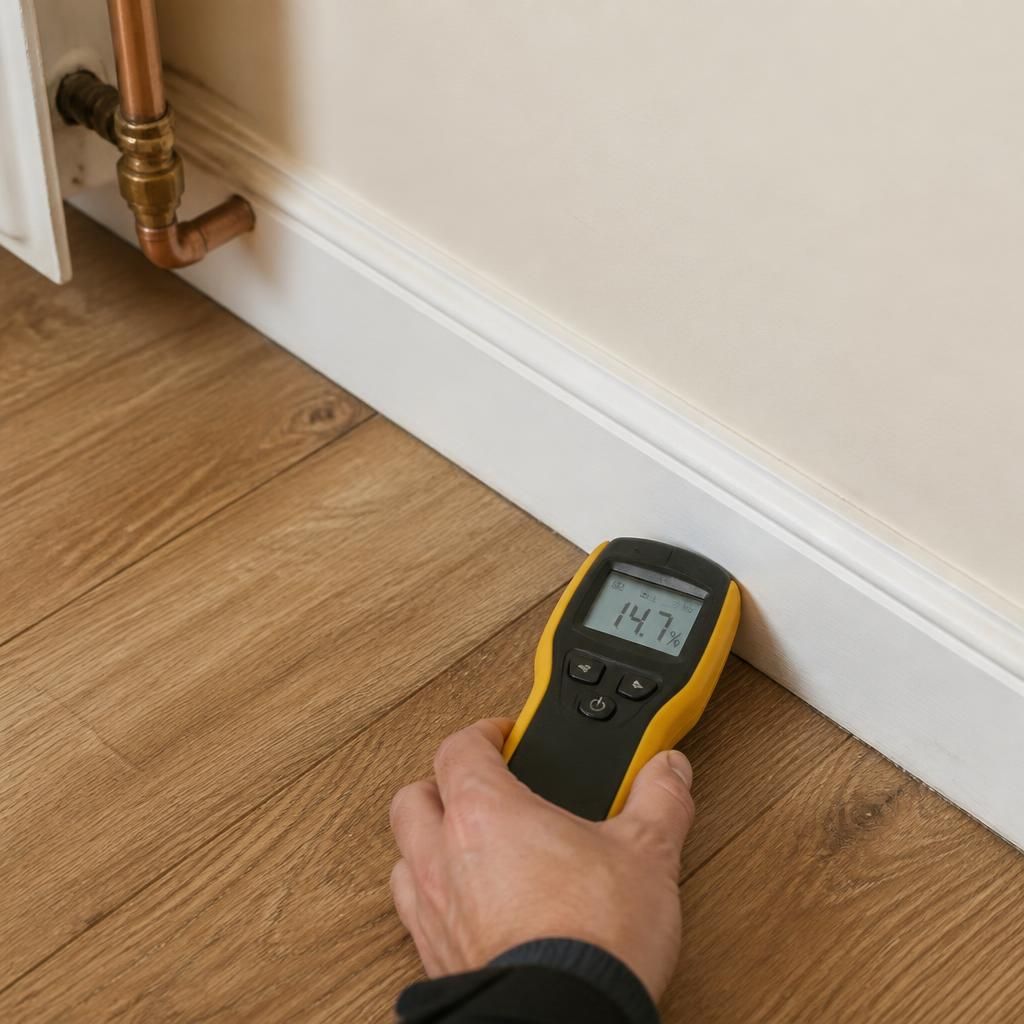
Inspect accessible pipework, radiator connections, boilers, toilets and kitchen units first. A concealed leak under the house becomes more likely if these visible areas are dry but the meter continues to register use. Pay particular attention to rooms containing bathrooms, utility appliances and central-heating pipework, as these are common routes for hidden water services.
Consider how the symptoms are developing
A small underfloor leak may produce intermittent evidence rather than a continuously wet area. The signs may become more noticeable after using a shower, flushing a toilet, running a washing machine or operating the heating. A gradual change over days or weeks is still important, because a slow escape can affect floor structures and surrounding materials before water becomes visible.
Distinguish a plumbing leak from condensation or an external problem
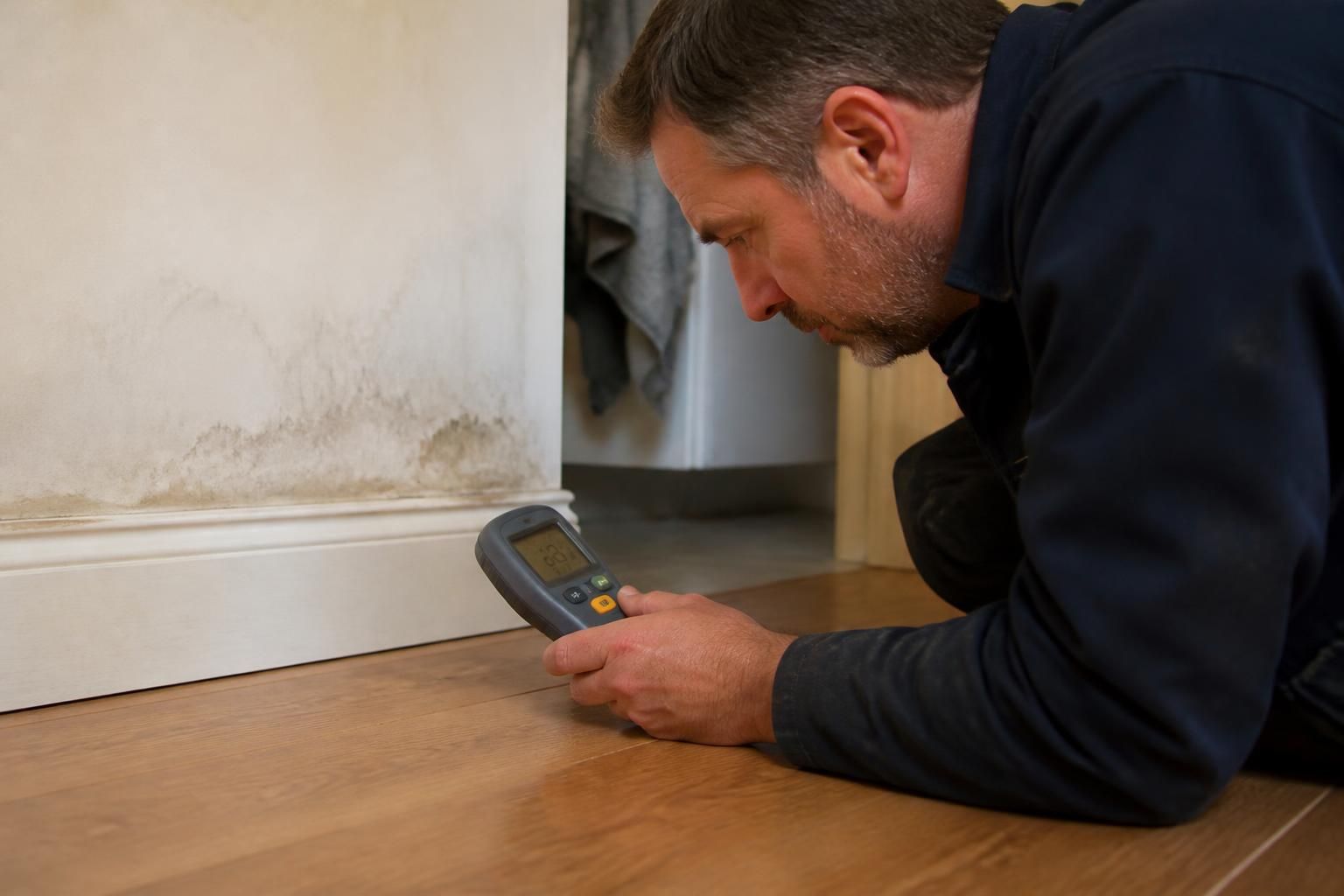
Moisture close to an outside wall may result from rainwater penetration, defective drainage or condensation rather than a plumbing fault. Damp linked to a particular water-using activity, unexplained meter movement, or moisture along an internal pipe route is more suggestive of a supply or drainage leak. The pattern, location and timing of the moisture all help establish the likely source.
Use caution when checking the floor
Do not lift flooring, drill through boards or remove structural materials simply to search for a leak. Pipes and cables may be concealed below the surface, and unnecessary access can increase repair work. Keep the affected area clear, avoid using nearby plumbing if doing so increases moisture, and photograph any changes for reference.
When professional investigation is appropriate
Arrange leak detection when meter movement cannot be explained, moisture is returning after drying, or the source cannot be found through accessible checks. A plumber can use non-invasive methods such as acoustic listening, thermal imaging or tracer techniques, depending on the construction and pipework. These methods help narrow down the location before any opening-up or repair is considered.
Prompt attention is particularly important where water is near electrical equipment, the floor feels unstable, a ceiling below is affected, or the leak cannot be isolated. Turn off the relevant water supply if it is safe to do so and seek qualified plumbing advice. Finding the source accurately is essential because repairing visible damage without addressing the concealed pipe or joint will not resolve the underlying problem.