Yes. Water leak tracing can be carried out in a rented property, but the investigation should be arranged with the landlord or letting agent and the tenant’s permission should be respected before access or testing takes place. Tracing identifies where water is escaping; responsibility for the resulting repair normally depends on the source of the leak, the tenancy agreement and whether anyone has caused or worsened the damage.
In many rented homes, the landlord is responsible for plumbing and fixed installations that form part of the property, such as internal pipework, tanks, radiators and sanitary fittings. A tenant may be responsible where the leak results from misuse, accidental damage or failure to report a known problem. Leaks from appliances or fittings supplied by the tenant may also need to be considered separately. The tenancy agreement and any relevant insurance policy should be checked rather than assuming responsibility from the location of the water alone.
Where a leak affects another flat, a communal area or a neighbouring property, more than one party may need to be involved. The landlord, managing agent, freeholder or buildings insurer may require a report before authorising repair work. Keeping written records, photographs and copies of messages about the leak can help establish when the problem was noticed and what action was taken.
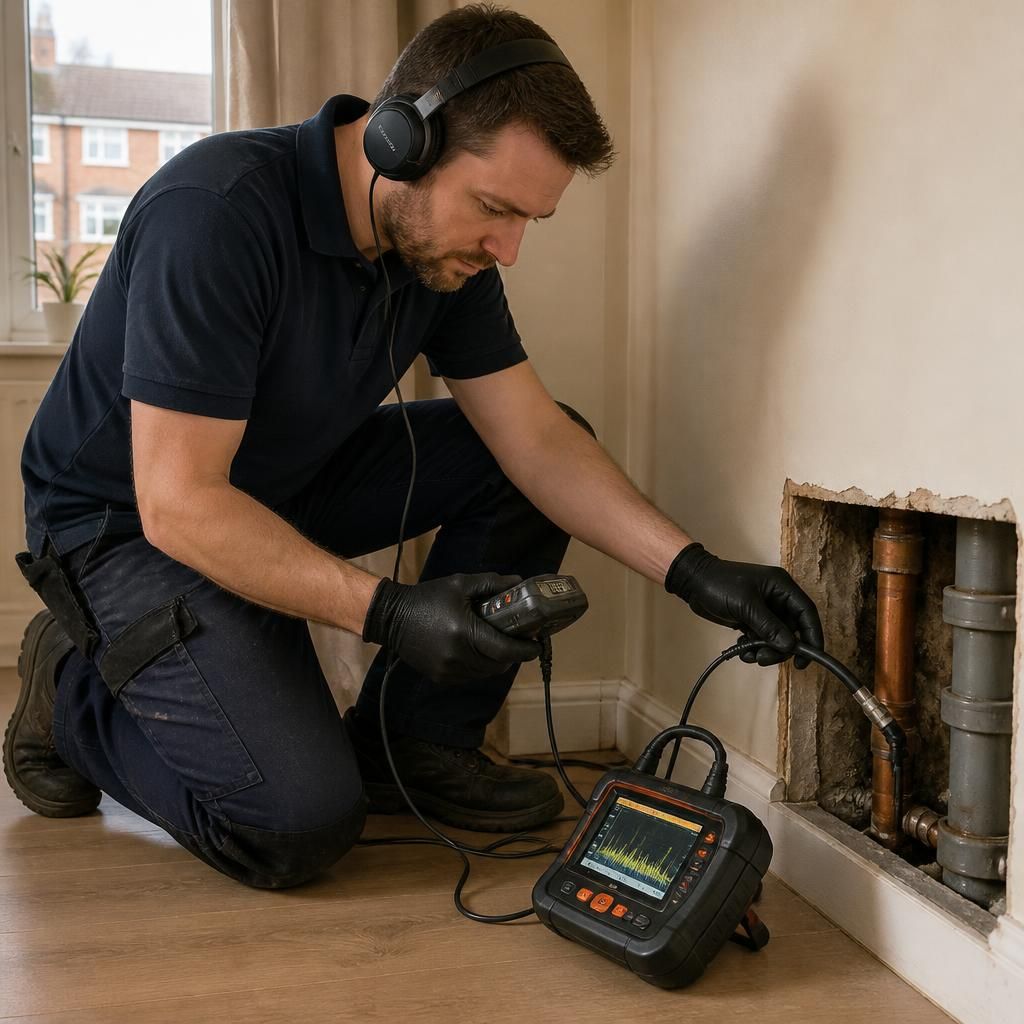
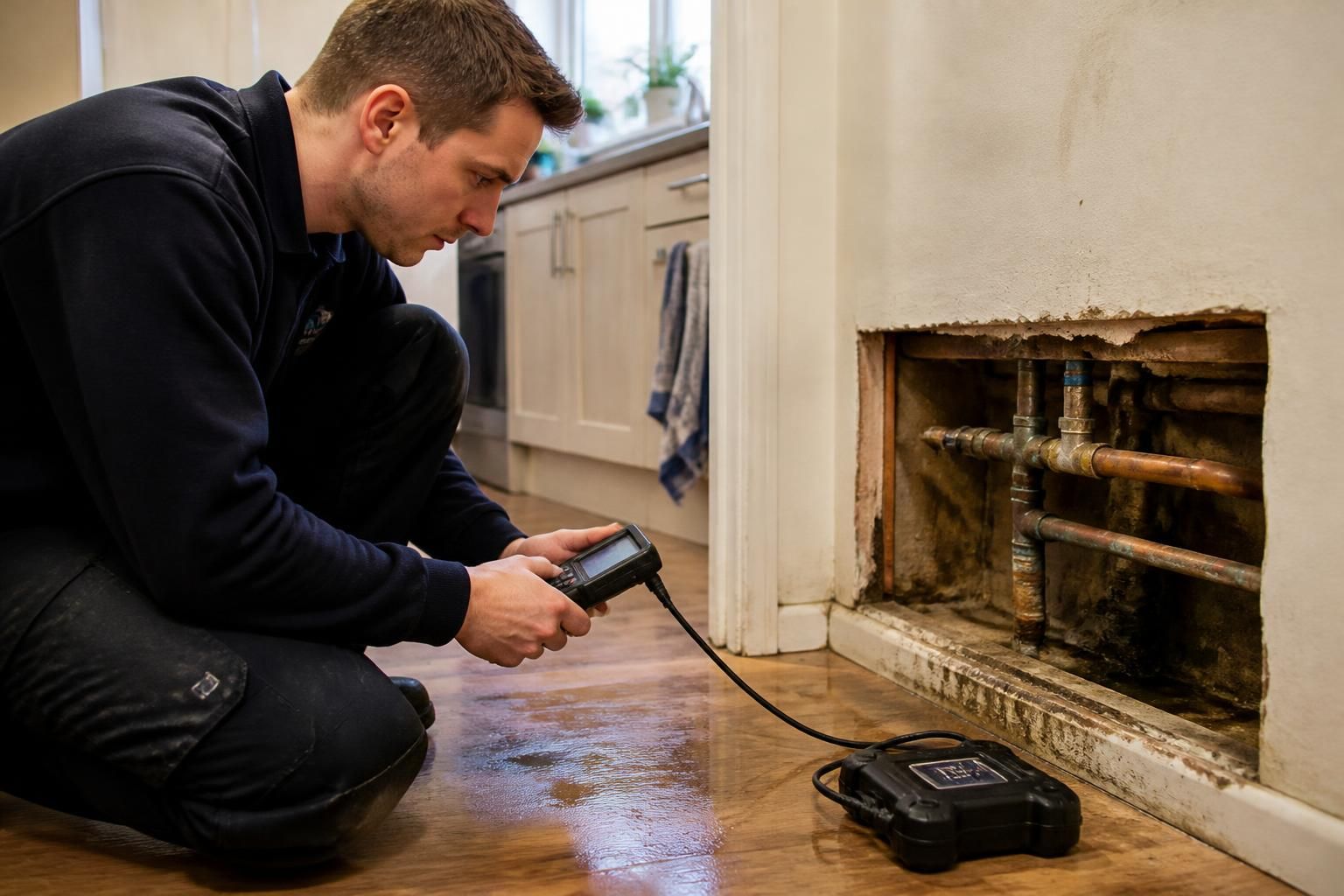
A suitable tracing process usually begins with a visual inspection and questions about when the dampness appears. The plumber may then use equipment such as moisture meters, thermal imaging or acoustic detection to narrow down the source. These methods can help investigate pipework beneath floors, behind walls or around bathrooms without immediately opening up the property. The exact method depends on the type of pipework, access available and whether the leak is continuous or intermittent.
Tenants should not arrange drilling, lifting flooring or removing fixtures without the required consent. Non-invasive tracing may still require access to several rooms, cupboards or neighbouring areas, particularly where the visible damage is some distance from the actual leak. A landlord or agent should be told what access is needed and whether any further opening-up may be recommended after the initial investigation.
Before an appointment, provide details of the symptoms, including staining, damp smells, loss of water pressure, sounds from pipework or changes that occur when taps, toilets or heating are used. If it is safe to do so, protect belongings and isolate the water supply using the internal stopcock where an active leak is causing damage. Do not interfere with electrical equipment in a wet area; seek appropriate assistance if water has reached sockets, switches or appliances.
After tracing, ask for the findings in writing. A useful report should identify the suspected source, the evidence supporting that conclusion, areas affected by moisture and whether further access or opening-up is needed. This can help the landlord, tenant and insurer decide who should arrange the repair and whether additional drying or building work is required.
Ideal Plumbing Services can carry out professional leak tracing for rented homes and explain the findings clearly to the relevant tenant, landlord or agent. Agreeing access and authorisation in advance helps the investigation proceed without creating a separate dispute about responsibility for the property or any repair work.