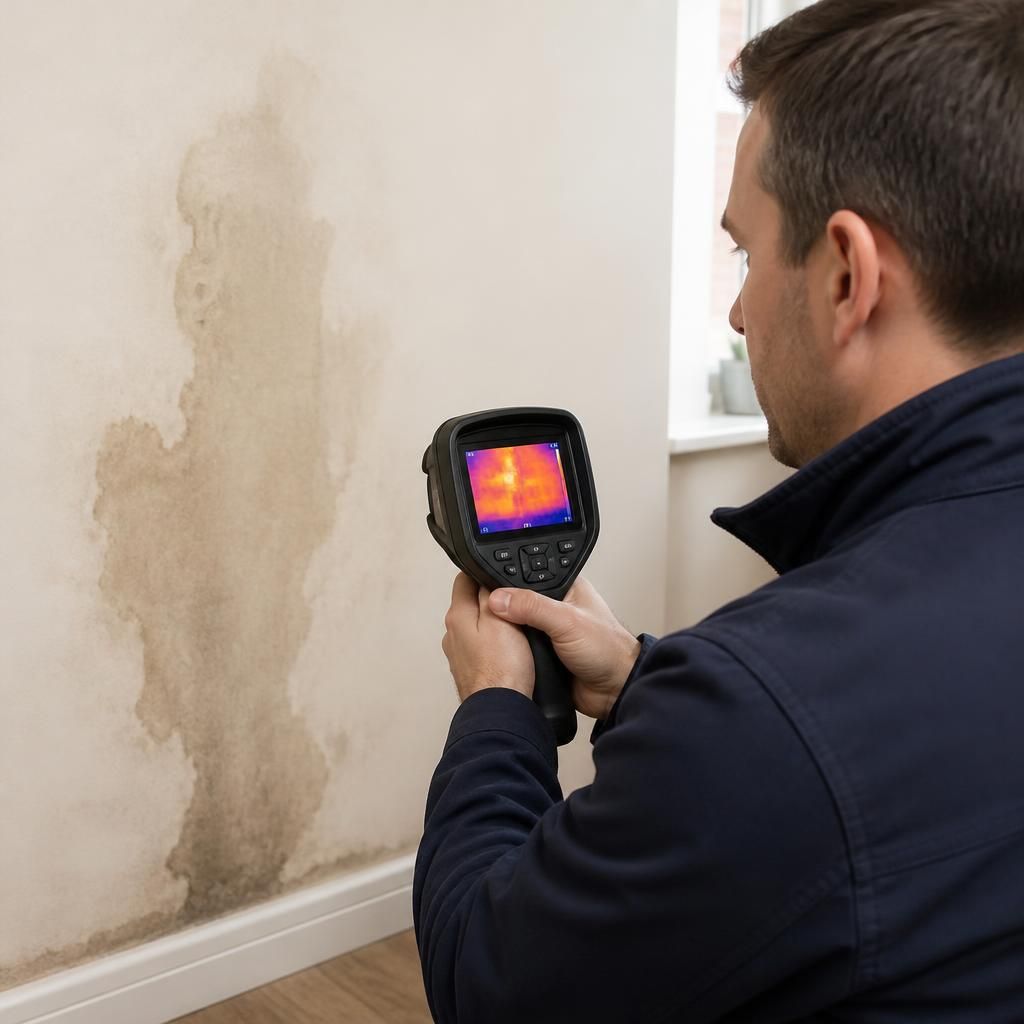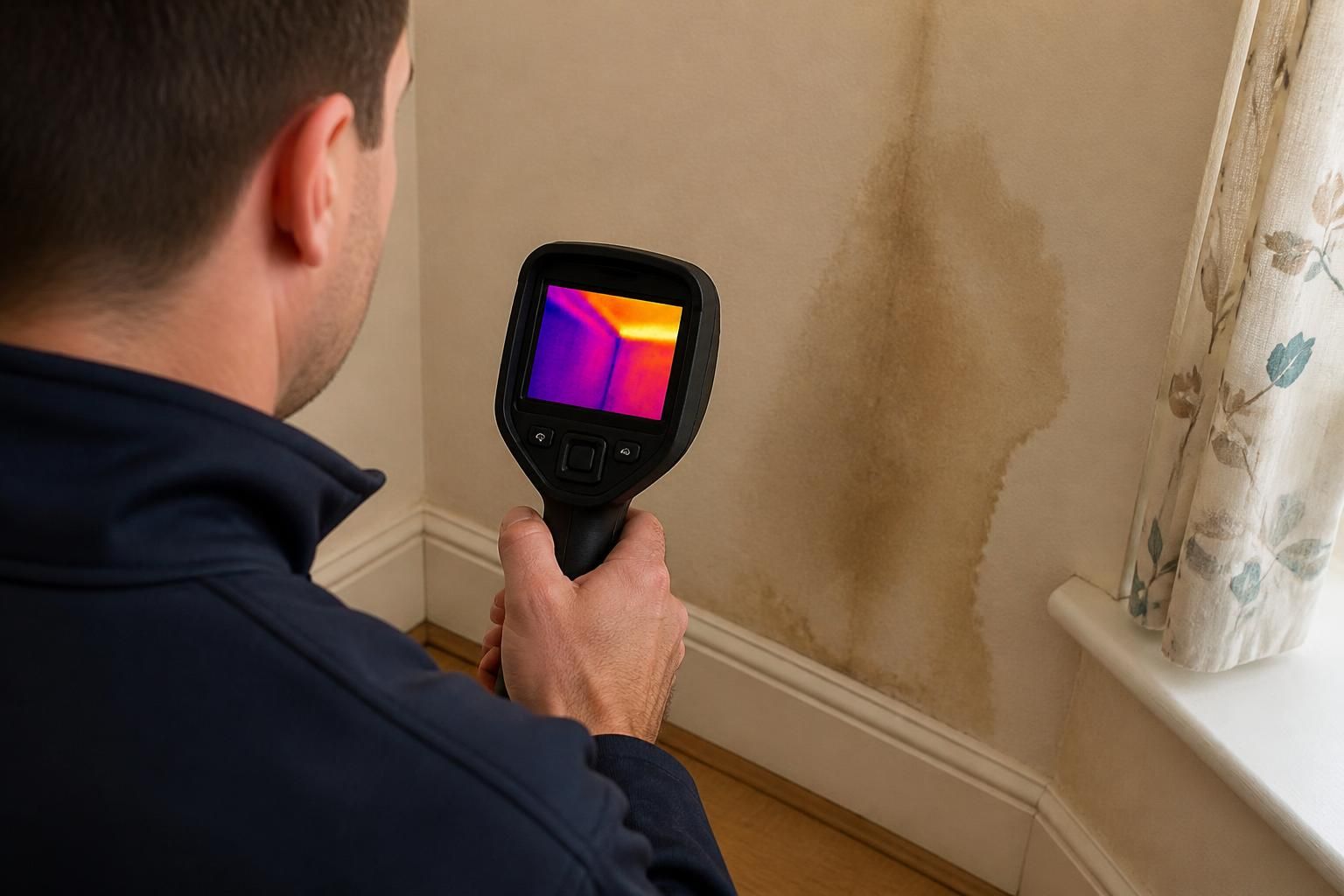
Properly carried out, water leak tracing is designed to locate the source with as little disturbance to the building as possible. The tracing stage generally involves investigating visible signs and using specialist testing methods before any wall, floor or ceiling is opened. This helps distinguish the point where water is appearing from the point where the pipe is actually leaking.
Methods that can limit disruption
- Moisture measurement: Moisture meters can help identify damp areas in plaster, flooring and other building materials. Readings are compared across the surrounding area to establish the likely spread of water.
- Thermal imaging: A thermal camera can reveal temperature changes associated with escaping hot or cold water. It is useful for narrowing down an area, although it cannot identify every leak through every type of construction.
- Acoustic detection: Specialist listening equipment can detect sound created by pressurised water escaping from pipework, including pipework concealed behind finishes or below floors.
- Pressure testing: Testing the plumbing system can show whether pressure is being lost and can help separate a pipework leak from a problem with an appliance, fitting or waste pipe.
- Tracer gas: In suitable situations, a gas introduced into an isolated pipe can escape through the fault and be detected at the surface. This can be helpful where other methods cannot identify the route of the leak.
These techniques do not all suit every leak. The appropriate approach depends on the type of plumbing system, whether the pipe carries hot or cold water, the construction of the property and the symptoms already present.
When access may be needed
Non-invasive testing may identify a likely location, but it does not always provide enough access to confirm the condition of the pipe or complete a repair. If opening the structure is necessary, the work should be targeted rather than carried out across a broad area. Possible access points include a small section of plasterboard, a removable floor covering, a section of skirting or a carefully selected area of flooring.
The size and position of any opening depend on the pipe layout and the evidence gathered during testing. A pipe located beneath tiles, screed or concrete can require a different access method from one concealed behind a hollow partition wall. Removing a fitting, lifting a board or creating an inspection opening may cause some local disturbance, but it can avoid unnecessary removal elsewhere.
What can cause apparent damage during an investigation
Some of the damage associated with a leak is caused by the escaping water rather than by the tracing process. Prolonged moisture can lead to staining, bubbling paint, softened plaster, swollen timber, lifting flooring, damaged grout or mould growth. A technician may need to inspect these areas because they provide evidence about how water has travelled, even when the leak itself is located elsewhere.
There is also a difference between tracing and repairing. Tracing identifies the probable source and route of the leak; repair work may require additional access to remove defective pipework, replace a fitting or reach a concealed connection. Any planned opening should be discussed before work proceeds, including how the access will be made and whether making good the surface is included in the proposed work.
How professionals reduce the risk of unnecessary disruption
- Inspect the visible symptoms and establish whether the issue relates to supply pipework, heating pipework, drainage or an appliance.
- Use the least disruptive suitable test first, rather than immediately removing finishes.
- Compare results from more than one indication where appropriate, such as moisture readings alongside acoustic or thermal evidence.
- Mark the most likely area before any opening is considered.
- Protect nearby surfaces and keep any access as localised as the pipe layout allows.
- Record the findings so that repair work can be planned without repeating unnecessary investigation.
Before an appointment, it is useful to clear access to the affected area and note changes such as damp patches, drops in pressure, unusual meter movement or a boiler pressure problem. Avoiding unnecessary use of the affected plumbing may also prevent further water damage, but suspected electrical hazards or significant flooding should be treated as urgent safety issues.
For properties in Birmingham and the wider West Midlands, a professional leak detection assessment can establish whether the evidence points to concealed pipework and what level of access, if any, is likely to be required. The important point is that opening walls or floors should be based on test results, not guesswork.