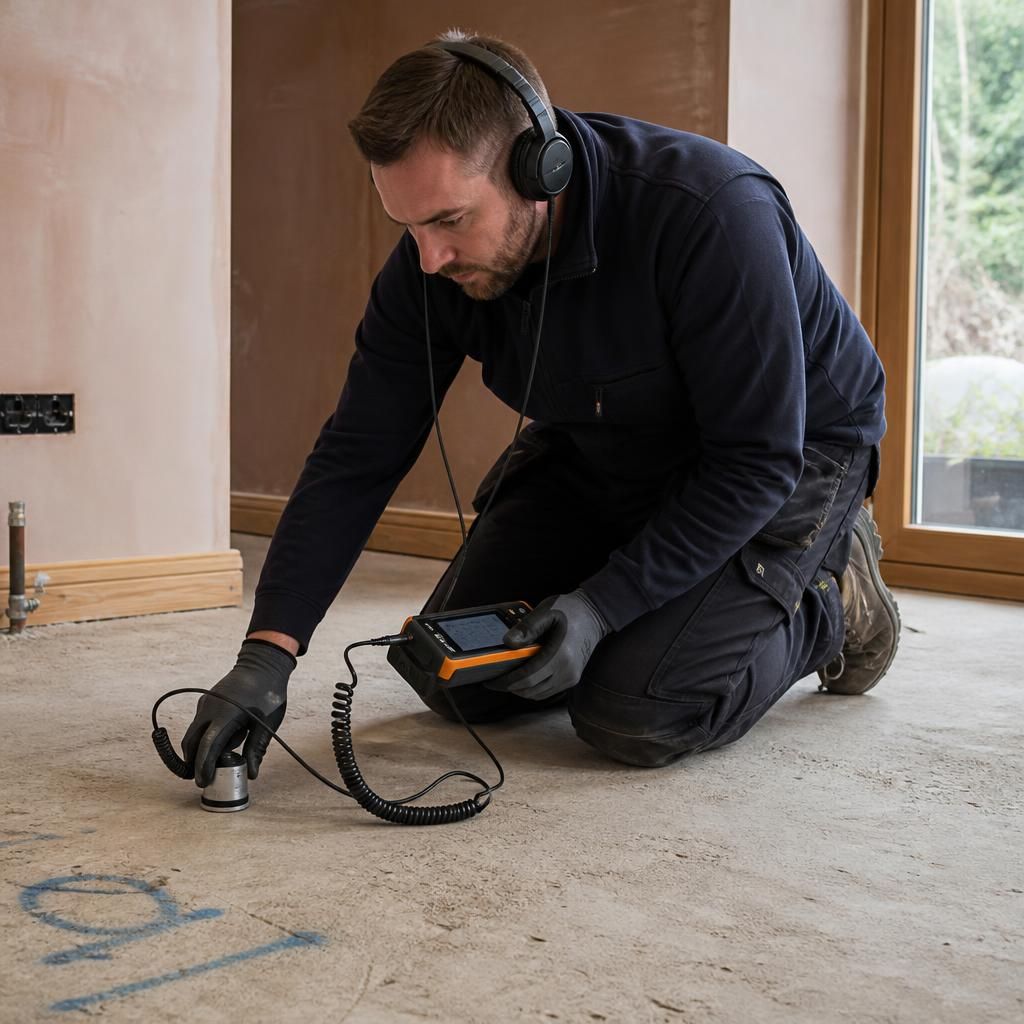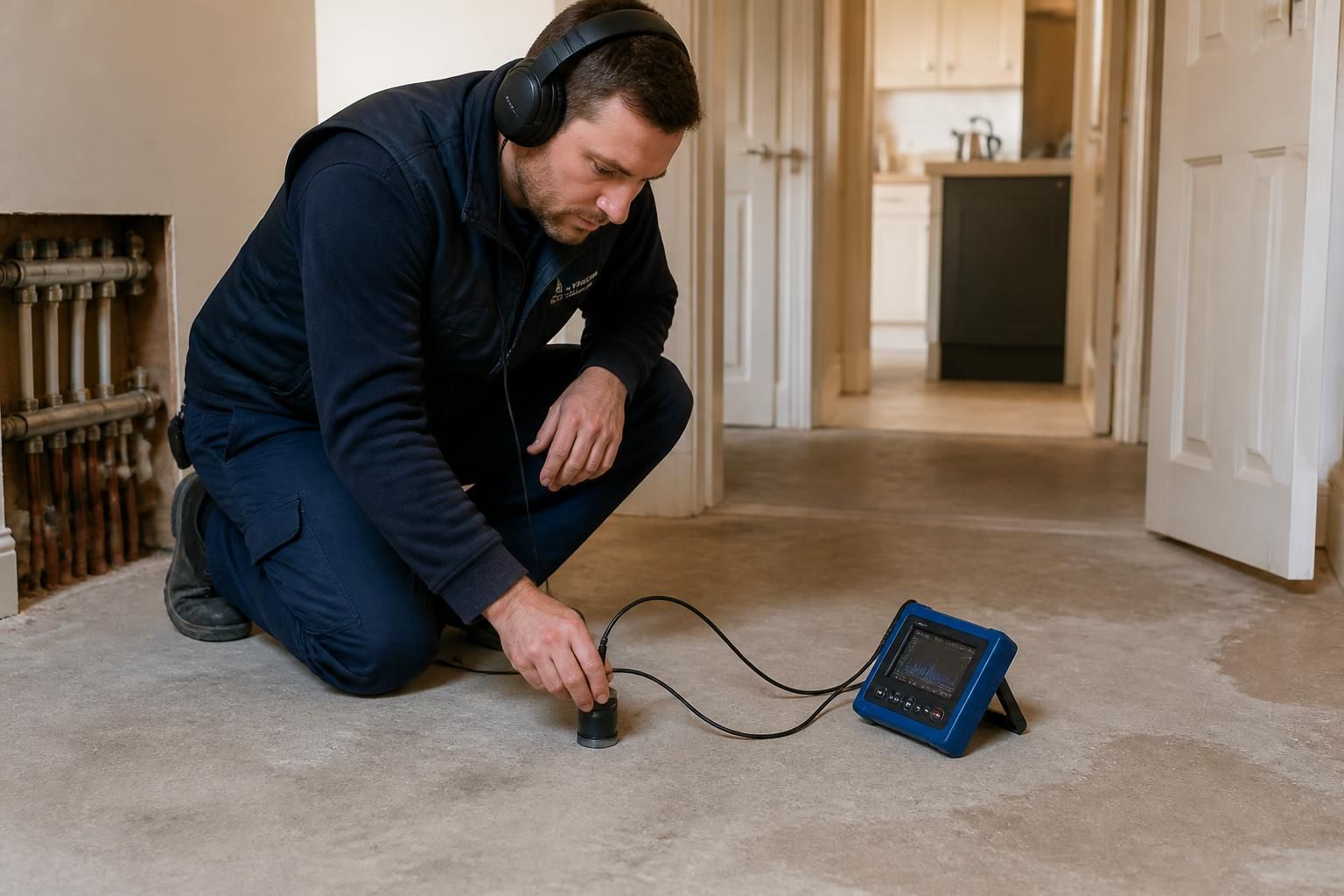
Concrete is not a barrier to professional leak tracing. A concealed supply pipe, heating pipe or underfloor pipe can often be assessed without lifting the entire floor, although the reliability of the result depends on the pipe layout, the type of leak and the condition of the surrounding slab.
Different techniques may be used together rather than relying on one test. Acoustic equipment can pick up the vibration or noise produced as pressurised water escapes. Thermal imaging may show an unusual heat pattern where a warm-water or heating pipe is affected, while moisture readings can help distinguish a current leak from an unrelated damp area. In suitable circumstances, tracer gas testing can help identify a small or difficult-to-hear escape beneath a solid floor.
The tracing process usually involves:
- establishing which pipework may be beneath the concrete and checking accessible fixtures, valves and connections;
- isolating sections of the plumbing or heating system where this is practical;
- testing pressure or flow to determine whether water is being lost;
- using suitable detection equipment to narrow the suspected route and position of the pipe;
- marking the most likely access point so that any opening-up work can be planned rather than carried out across a large area.
Detection beneath concrete is not always able to identify the exact break point. Water can travel along the underside of a slab, through joints or into surrounding materials before appearing at the surface. As a result, a damp patch, mould mark or warm area may be some distance from the original defect. The pipe material, depth, floor construction, background noise and whether the leak is continuous can also affect the investigation.
A leak may be suspected when a meter continues to register usage while outlets are closed, when system pressure falls, or when flooring becomes damp without an obvious source. These signs do not by themselves prove that the pipe beneath the concrete is leaking, because failed appliances, external water ingress and leaks in walls or service ducts can produce similar symptoms. Tracing helps compare the evidence and identify the most plausible route.
Once the likely location has been established, a plumber can advise on the next step. This might involve accessing a limited section of flooring, isolating and repairing the affected pipe, rerouting pipework, or carrying out further testing if the evidence is inconclusive. Tracing is intended to reduce unnecessary disruption, but it cannot guarantee that no access to the floor will be required, particularly where the pipe is deeply embedded or the leak is very small.
For properties in Birmingham and the wider West Midlands, Ideal Plumbing Services provides water leak tracing and testing for residential plumbing systems, including investigations where pipework is concealed beneath solid floors. A clear explanation of the suspected location and the evidence found should be provided before repair work is agreed.