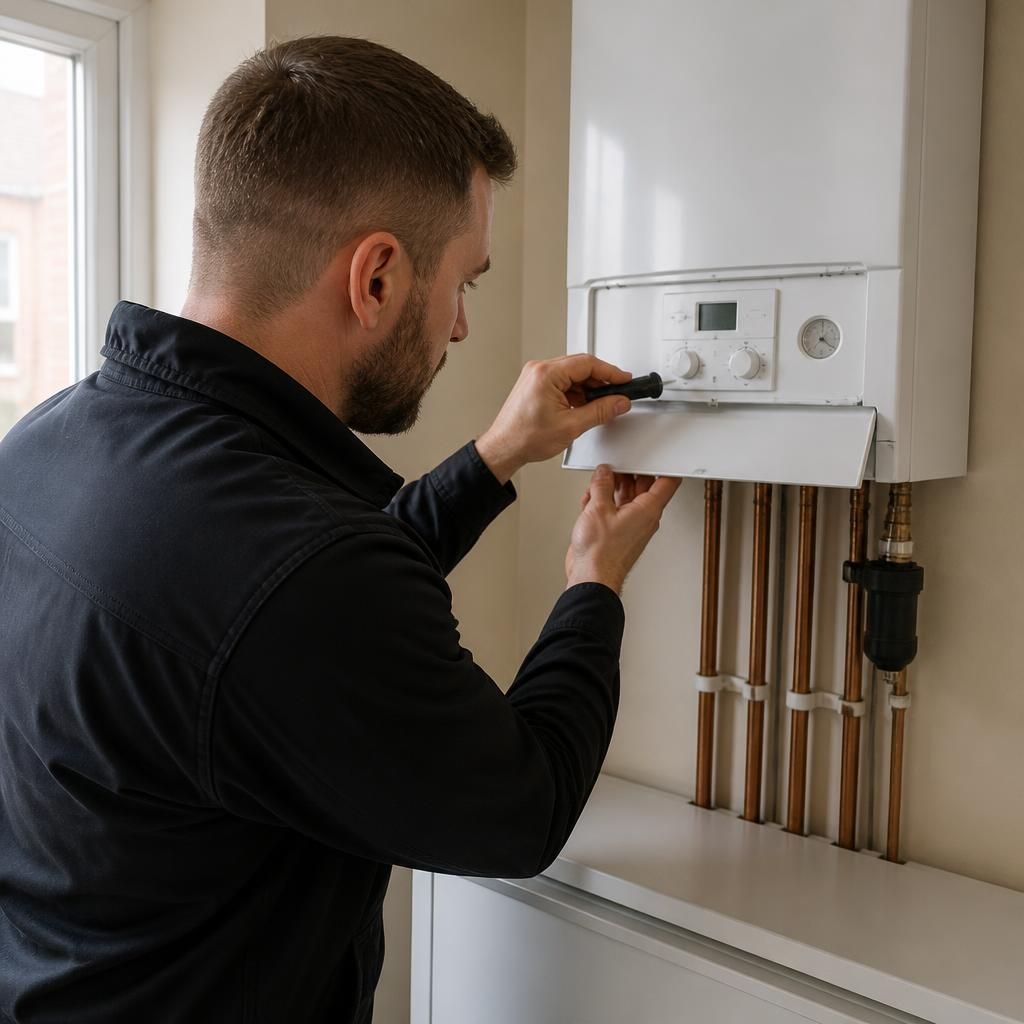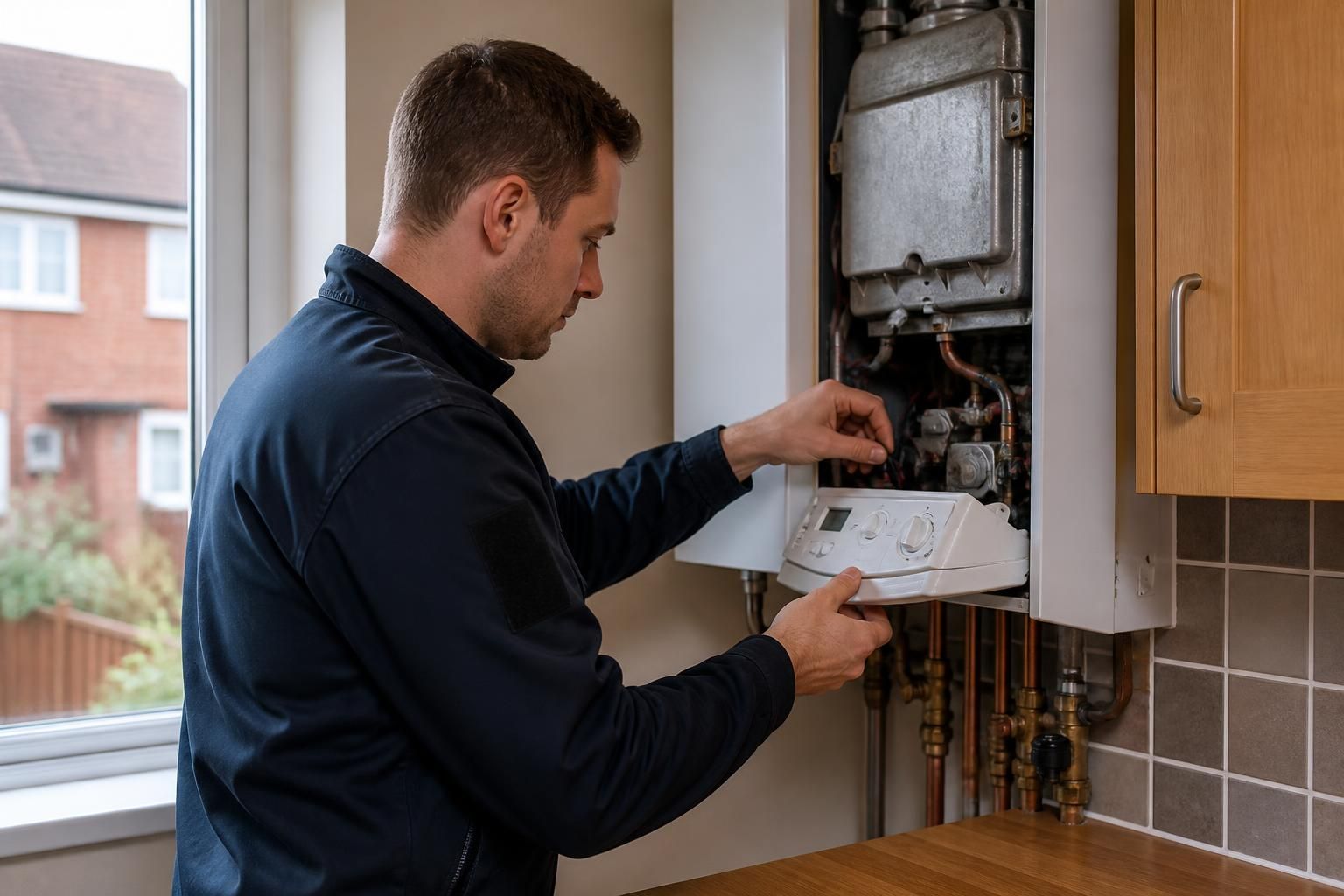
A rental-property boiler service is a planned inspection and maintenance visit carried out to assess the appliance, its controls and connected components. The engineer will look for signs of wear, contamination, unsafe operation and developing faults, then explain whether the boiler is suitable to remain in service or needs repair.
Who should arrange the service?
Responsibility usually depends on the tenancy agreement and whether the boiler is supplied as part of the property. Landlords commonly arrange maintenance for appliances they provide, while tenants should report unusual noises, repeated pressure loss, poor heating, error codes or changes in hot-water performance without attempting repairs themselves.
Before an engineer attends, the person arranging the visit should confirm which boiler and controls are included, provide access to the appliance and any relevant areas, and share details of previous faults or repairs. If the boiler is inside a rented home, the landlord or managing agent should coordinate access with the tenant and explain what work has been authorised.
What does the engineer check?
- The boiler casing, heat exchanger and accessible internal components for damage, corrosion, deposits or deterioration.
- The burner and combustion performance, using suitable testing equipment where required.
- The flue route and visible terminals for signs of damage, obstruction or poor condition.
- Pressure, temperature, controls and safety devices to identify abnormal operation.
- The condensate pipe, system connections, radiators and valves where these form part of the reported problem.
- Evidence of leaks, repeated resetting, unusual sounds or inefficient heating behaviour.
The exact procedure varies according to the boiler type, its condition and the symptoms reported. A service is not simply a visual check: it should produce useful information about the appliance’s operating condition and any maintenance that may be needed.
Gas safety and engineer qualifications
Work on a gas boiler should be completed by an appropriately qualified Gas Safe registered engineer. This is particularly important in a rented property because an unqualified repair or incorrect reassembly can create risks for occupants and may affect the landlord’s responsibilities. The engineer should be able to identify unsafe conditions and explain clearly if the appliance must not be used until remedial work is completed.
A routine service and a repair are different types of work. Servicing is intended to assess condition and maintain operation, whereas a repair addresses a specific defect, such as a failed sensor, damaged component, ignition problem or persistent pressure issue. If a service identifies a fault, the engineer should describe the problem, outline the recommended repair and make clear whether further work is urgent or can be planned.
Records for landlords and tenants
After the visit, the person responsible for the property should retain the service documentation. It can record the date, appliance details, observations, tests carried out and any recommendations. Tenants may reasonably ask for information about work affecting the heating system, particularly where the engineer has advised that the boiler is unsafe, requires a repair or should not be operated in its current condition.
Landlords should also consider the wider heating system rather than focusing only on the boiler. Radiator performance, controls, pipework, ventilation and condensate drainage can all affect comfort and reliability. Where a property has recurring faults, a detailed service report can help distinguish a boiler problem from an issue elsewhere in the system.
For a rented property, the most useful approach is to arrange servicing through the landlord, managing agent or authorised property contact, ensure the tenant knows how to report problems, and use a suitably qualified engineer for any gas-related inspection or repair. Ideal Plumbing Services can support landlords and tenants with boiler servicing, fault diagnosis and related plumbing or heating repairs.