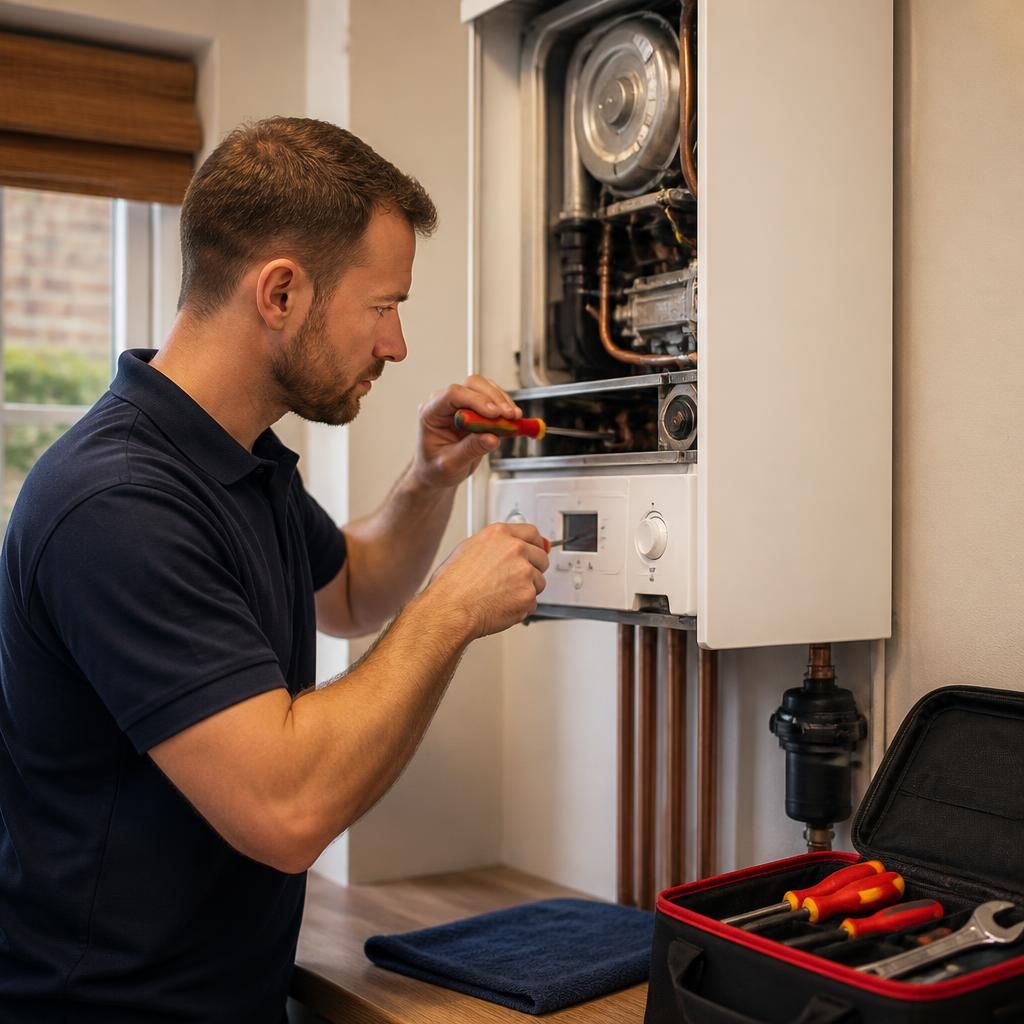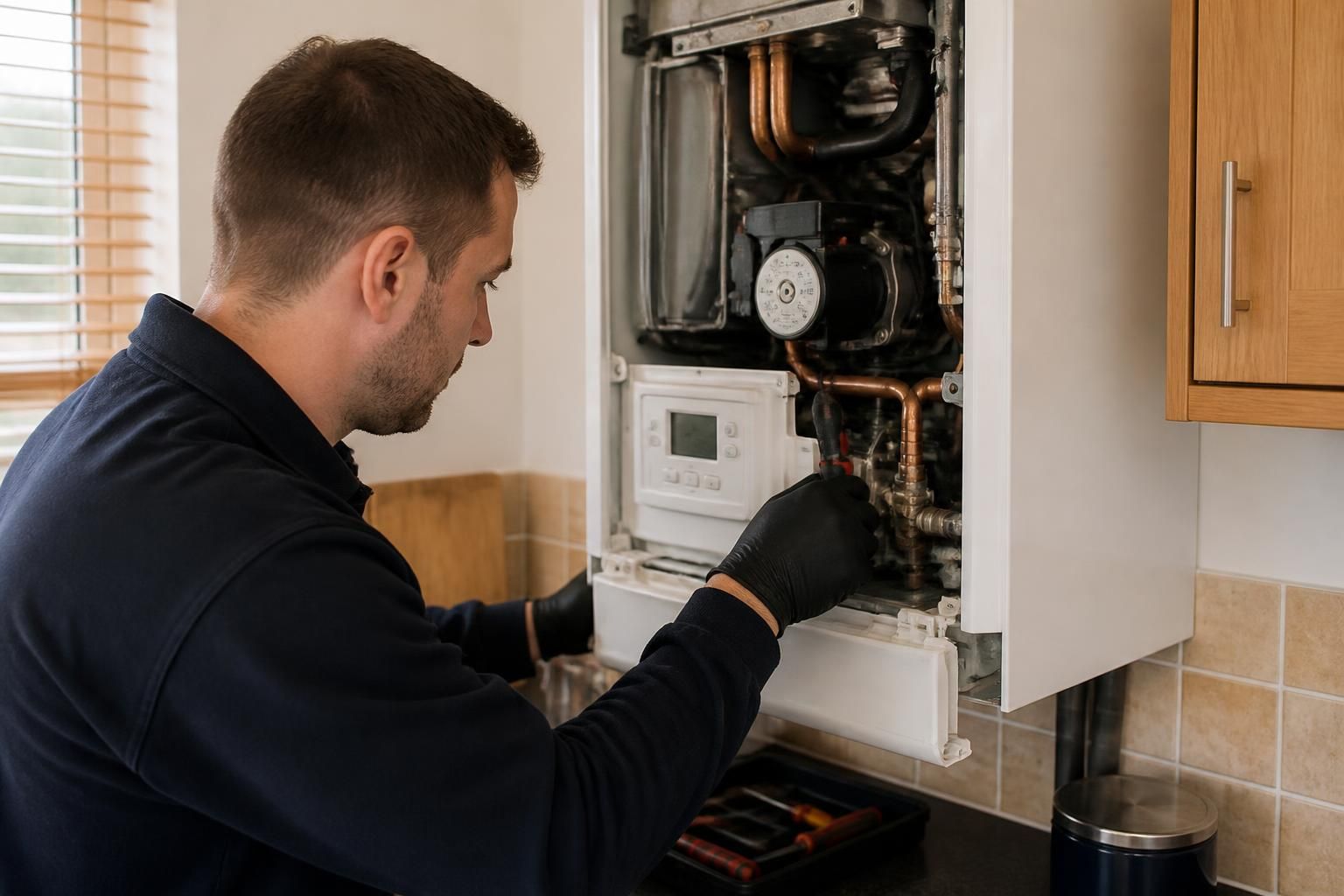
Boiler repairs should not normally make your home unusable, but the level of disruption depends on the fault, the boiler’s location and whether other parts of the heating system need attention. A simple adjustment or component repair may involve little more than the engineer working beside the appliance. More involved work can affect heating, hot water, nearby pipework or electrical controls for longer while the system is made safe and tested.
The main sources of disruption are usually practical rather than structural. The engineer may need clear access to the boiler, controls, isolation points and connected pipework. If the boiler is in a cupboard, utility room, loft or confined area, stored items may need to be moved first. Access can also be required to radiators, thermostats, programmers or other components if the fault is not limited to the boiler itself.
Some repairs require part of the heating system to be drained before a component can be removed. This can involve temporary pipework, containers for system water and checks for leaks when the system is refilled. A heating system may also need its pressure restored and its controls reset. These tasks are normal parts of certain repairs, but they can create more activity around the appliance than a basic inspection.
How long will the disruption last? There is no single repair time that applies to every boiler fault. The duration depends on how quickly the cause can be confirmed, the complexity of the repair, the condition of associated components and whether the required part is available. A minor fault may be dealt with during the engineer’s visit, while a repair involving a specialist component, damaged pipework or a difficult-to-reach installation may require additional work.
If a repair cannot be completed immediately, the engineer should explain what has been found, what work is recommended and what effect this will have on the home. Ask whether the boiler can remain safely in use, whether any part of the system should stay isolated and what signs would require further attention. Do not use a boiler that has been identified as unsafe or attempt to bypass a safety device.
Will there be mess or noise? Most boiler repairs are relatively contained, but some dust, water or noise may be unavoidable. Removing panels, accessing pipework, replacing pumps or dealing with nearby fittings can involve tools and short periods of drilling or pipework work. A careful engineer should protect surrounding surfaces, keep parts and tools organised, and leave the work area in a suitable condition after testing.
Greater disruption is more likely when the boiler is connected to concealed pipework, when a leak has affected surrounding materials or when the fault has caused repeated loss of pressure. In these cases, investigating the underlying cause may involve looking beyond the boiler itself. Repairing the appliance without addressing a related issue could allow the fault to return, so a proper diagnosis is important even when it adds to the work involved.
What can you do to make the visit easier?
- Clear items from around the boiler, controls and visible pipework.
- Make a note of error messages, unusual noises, pressure changes, leaks or occasions when the fault occurs.
- Keep details of any previous repairs or service information available if you have them.
- Identify the location of the boiler’s controls and isolation points, without removing covers or attempting repairs yourself.
- Protect belongings near the work area and keep children and pets away from tools, open panels and stored system water.
Once the repair is complete, the engineer should check the appliance and relevant controls, look for leaks and confirm that it operates correctly. You may be shown how to use a reset function, adjust the controls or monitor the pressure. If the fault involved combustion, ventilation or flue components, the safety checks are particularly important; never obstruct ventilation openings or alter the flue.
For homeowners, landlords and tenants, keeping a written record of the fault, work carried out and any recommended follow-up can be useful. Landlords and tenants should also agree who will provide access and who should receive the repair report. Ideal Plumbing Services provides boiler repair support for homes in Birmingham and the wider West Midlands, with the work explained according to the condition of the appliance and heating system.