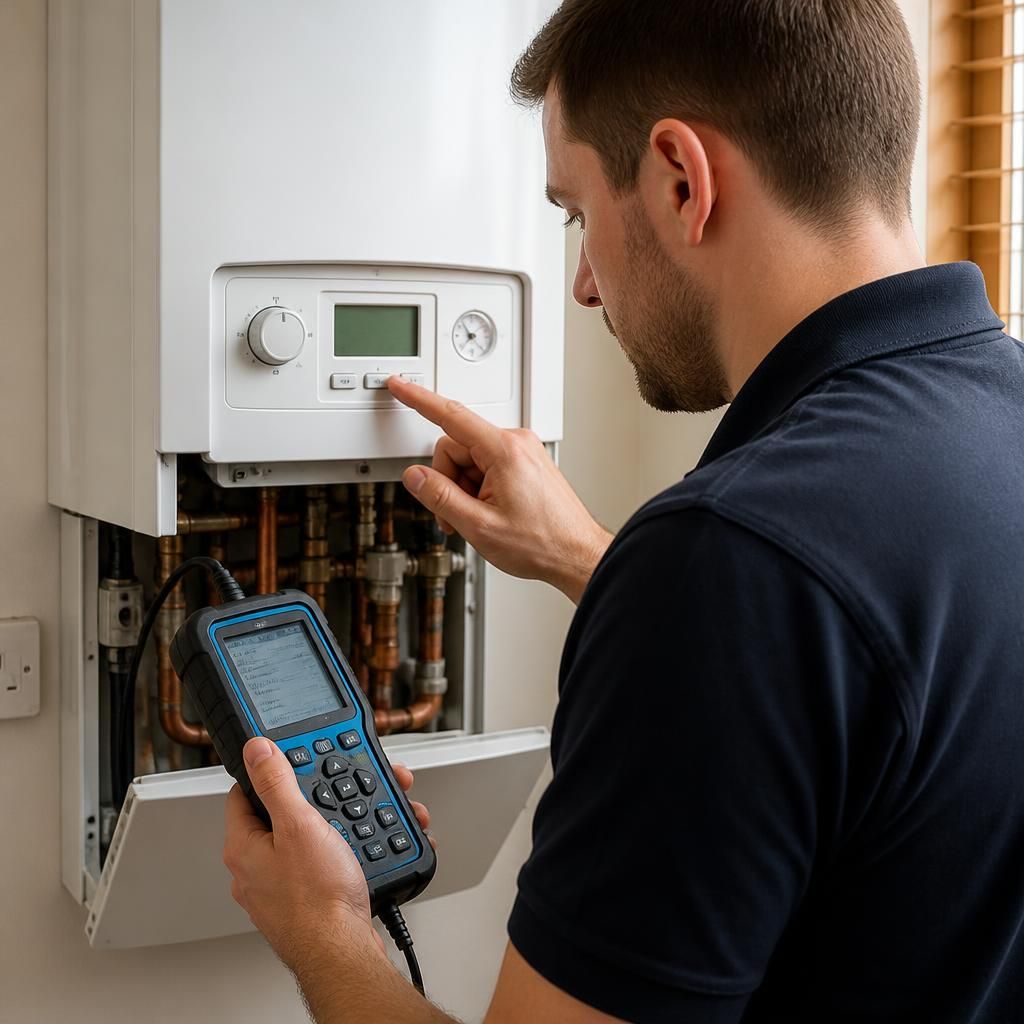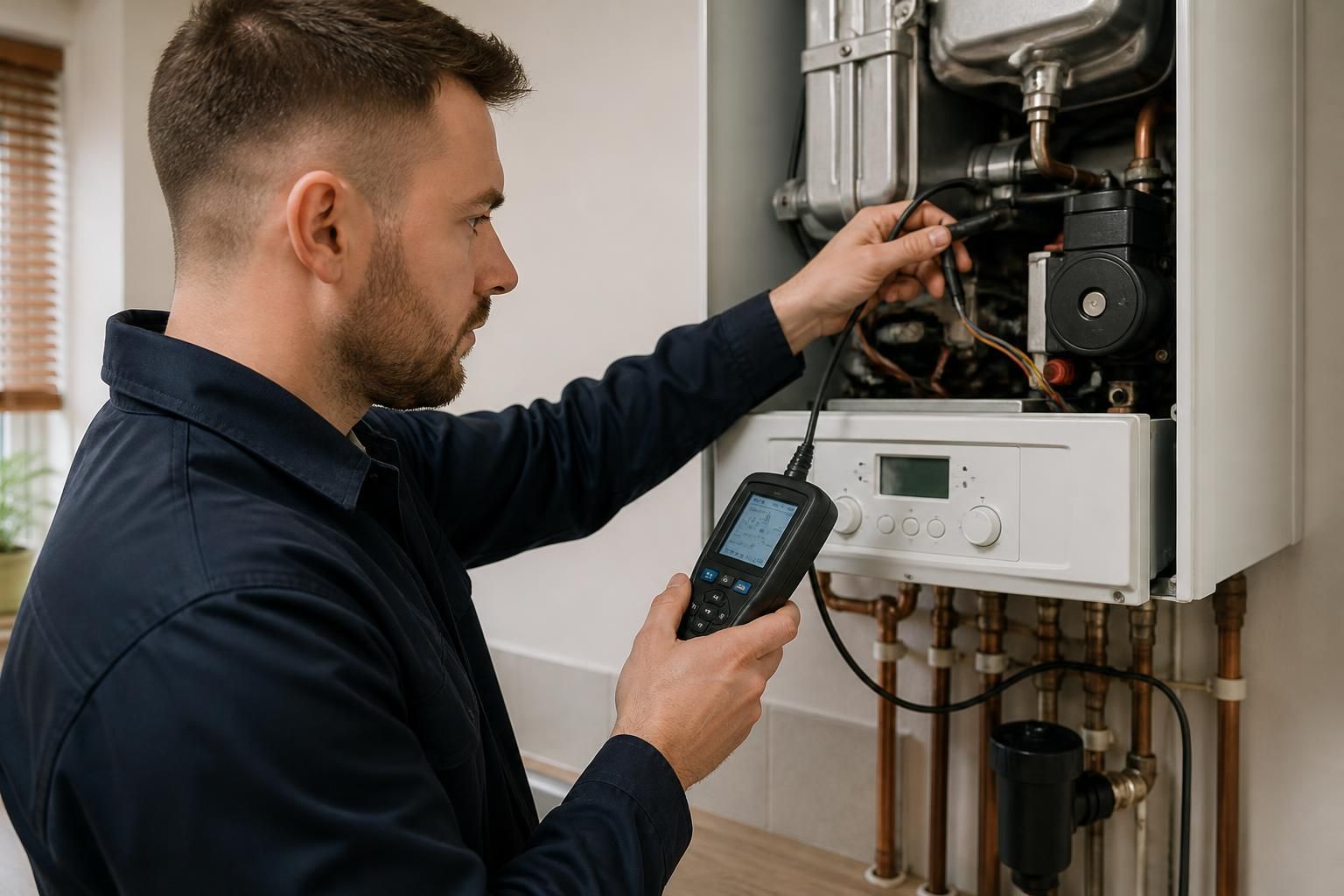
Boiler engineers diagnose faults by tracing how the appliance’s components work together, testing the system rather than replacing parts based only on a symptom. A fault may originate in the boiler, controls, heating circuit, hot-water system, condensate route or flue, so an accurate diagnosis is important before any repair is recommended.
Common component faults engineers investigate
- Circulation pump problems: A pump that is seized, worn or operating incorrectly can prevent heated water from moving around the radiators and pipework. An engineer can assess pump operation, electrical supply and circulation through the system.
- Expansion vessel issues: The expansion vessel allows water to expand safely as it heats. If its charge is lost or its diaphragm is damaged, the system may experience pressure fluctuations or discharge water through the safety valve.
- Pressure relief valve faults: A relief valve that is passing water may point to a problem with the vessel, excessive system pressure or a valve that is no longer closing correctly. The cause needs to be established rather than simply replacing the valve.
- Diverter valve faults: In a combination boiler, the diverter valve directs heat either to the radiators or to domestic hot water. A fault can affect the balance between heating and hot-water operation, and testing can show whether the valve is sticking or failing internally.
- Temperature sensor faults: Sensors monitor water temperature and send information to the boiler’s control system. Incorrect readings can lead to poor temperature control, premature shut-down or unreliable operation.
- Printed circuit board and wiring faults: The control board manages signals between key components. Engineers can check connections, electrical readings and component responses to distinguish a board fault from a problem elsewhere in the system.
- Flue and combustion-related faults: The flue removes combustion products from the appliance. An engineer can inspect the flue installation and carry out appropriate combustion checks where required. Any concern involving fumes, scorching, unusual smells or a carbon monoxide alarm should be treated as a safety issue, and the boiler should not be used until it has been assessed by a suitably qualified professional.
- Condensate drainage problems: Modern condensing boilers produce condensate that must drain correctly. A blocked or damaged condensate pipe can stop the appliance from operating and may require inspection of the pipework, termination and drainage route.
How the diagnosis is carried out
The engineer will normally begin by taking details of what the boiler is doing, when the problem occurs and whether it affects heating, hot water or both. They may then inspect the appliance and surrounding pipework, review the control settings, check system pressure and test relevant electrical and mechanical components. Depending on the fault, diagnostic equipment may be used to read stored information, measure electrical values or confirm whether a component is receiving the correct signal.
Testing is used to separate the original cause from secondary effects. For example, a component may appear to be faulty because it is not receiving power, because a sensor is providing an incorrect reading, or because another part of the system is restricting operation. This approach reduces the risk of replacing a working part and helps the engineer explain which repair is appropriate.
Faults outside the boiler
Not every heating problem is caused by the boiler itself. Engineers may also investigate the programmer, room thermostat, motorised valves, radiators, circulation pipework and filling arrangement. A boiler can be operating correctly while a control fault or restriction elsewhere prevents the home from receiving heat. Checking the wider system is therefore part of a proper diagnosis, particularly where the boiler’s own checks do not identify a clear defect.
Information that can help with diagnosis
- When the problem started and whether it is constant or intermittent.
- Whether the issue affects heating, hot water or both.
- Any changes in pressure, noises, smells or water around the appliance.
- Whether controls, radiators or taps behave differently at the same time.
- Any previous repairs or recent changes to the heating system.
Do not remove the boiler casing or attempt to work on gas components yourself. Basic observations can help an engineer, but internal gas, combustion and electrical checks require suitable training and equipment. Ideal Plumbing Services provides boiler fault diagnosis for residential customers in Birmingham and the wider West Midlands, with repairs advised according to the condition of the appliance and the confirmed cause.