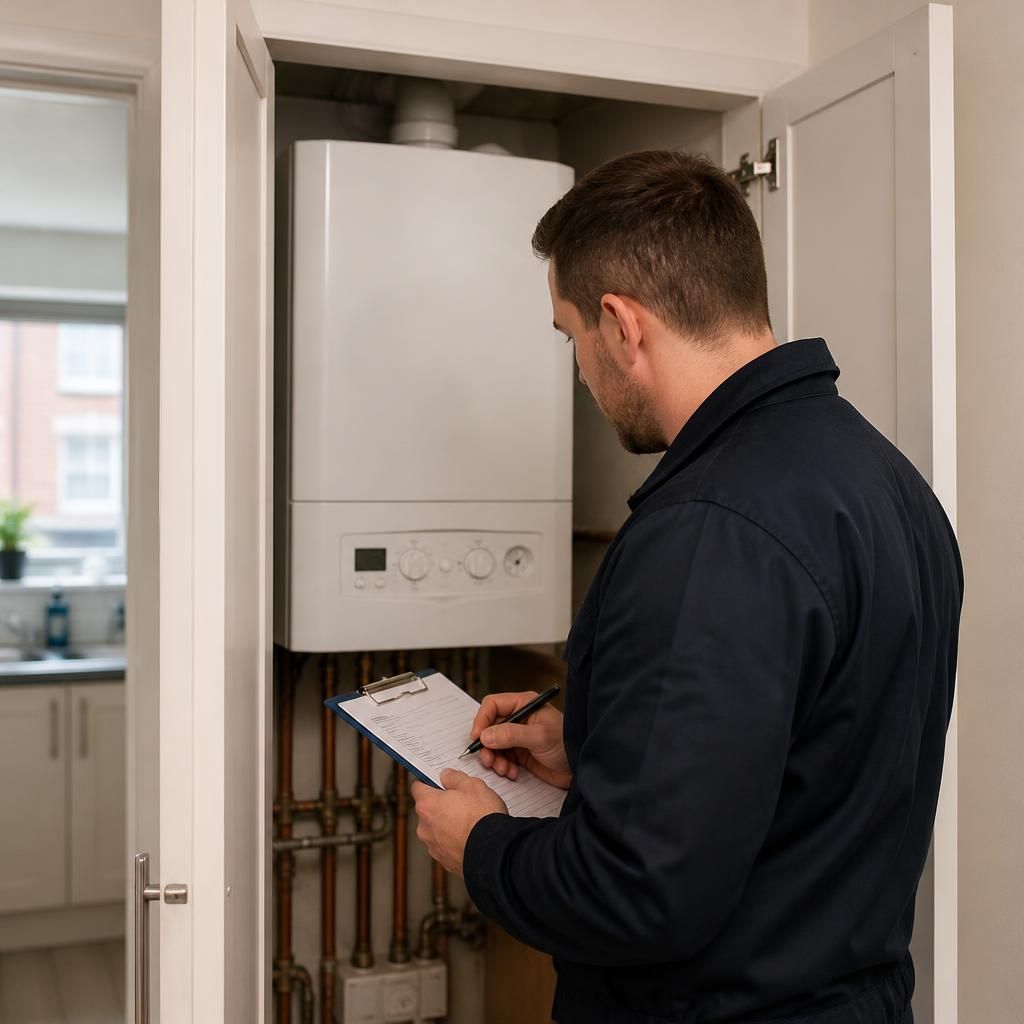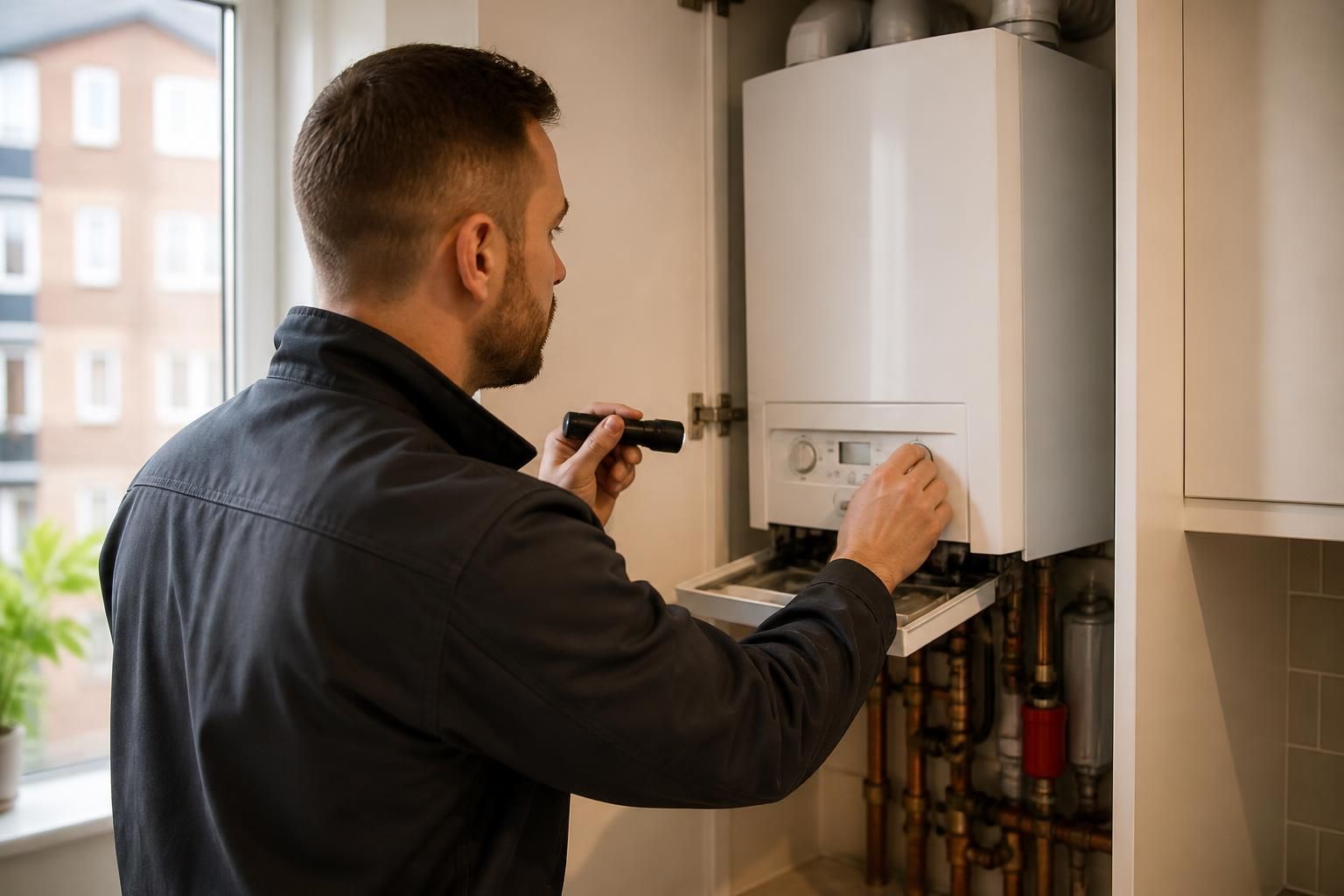
A flat does not prevent a boiler inspection; the main practical considerations are access, responsibility for shared building systems and the type of installation. The engineer may need to inspect not only the boiler itself, but also its controls, gas supply, ventilation, condensate drainage and flue arrangement.
Access to the flat and communal areas
The occupier should arrange access to the room containing the boiler and any relevant controls. Depending on the installation, the engineer may also need access to:
- the gas meter and emergency control valve;
- an external flue terminal, where it can be inspected safely;
- a communal cupboard, riser or plant room;
- roof or service areas containing part of a shared flue system; and
- an access panel or loft space connected with the boiler installation.
In a block of flats, these areas may be controlled by a managing agent, freeholder, housing provider or facilities team. Permission may therefore need to be arranged before the appointment. An engineer should not enter restricted communal areas without the appropriate authorisation, and an inspection may be limited if a required area cannot be reached safely.
What is checked in a flat boiler inspection?
The scope depends on the reason for the visit and the boiler design, but a competent inspection can include checking the appliance condition, gas connections, burner operation, controls, ventilation and visible pipework. The engineer may assess combustion performance using suitable testing equipment and look for signs of incomplete combustion, overheating, leaks, corrosion or unsafe modification.
The flue is particularly important in flats. A concealed or shared flue can pass through walls, ceilings or service shafts, so the engineer will consider the accessible sections, terminal position, inspection openings and available documentation. They may need to recommend further investigation if a flue is boxed in, damaged, incorrectly supported or impossible to examine adequately. A visual inspection cannot confirm the condition of parts that remain completely inaccessible.
Condensing boilers also have a condensate pipe and trap that may require inspection. The engineer can check for poor connections, blockages, unsuitable routing or signs of leakage. Electrical isolation, pressure, expansion components and heating controls may also be reviewed where they form part of the boiler’s safe operation.
Shared and communal heating arrangements
Not every flat has an individual boiler. Some properties receive heat from a communal plant room or a shared heating network. In that situation, an engineer attending the flat may be able to inspect the dwelling’s heat interface unit, controls and visible connections, but responsibility for the central plant, primary pipework or shared flue may rest with the building manager or another appointed contractor.
The inspection should establish which components belong to the flat and which form part of the communal installation. This helps prevent an individual repair being treated as a solution to a fault affecting several properties. If the problem involves shared equipment, the findings may need to be passed to the responsible party for further assessment.
Inspection, servicing and safety records are different
An inspection is not automatically the same as a full boiler service or a formal gas safety check. An inspection may be requested because of a suspected fault, an unusual smell, an installation concern or a need to assess the appliance before work is planned. A service is generally more detailed and may include cleaning and maintenance specified for that appliance. A landlord’s statutory gas safety responsibilities are a separate matter and may cover other gas appliances in the property.
Before work begins, the engineer should explain what the requested inspection includes and identify any limitations. If the boiler is unsafe, cannot be tested properly or has defects that require attention, the engineer should explain the finding and advise what action is appropriate. In some circumstances, the appliance may need to be isolated until the risk has been addressed.
Information to provide before the visit
- the boiler location and whether it is inside a cupboard or behind a removable panel;
- whether the boiler, meter or flue is located in a communal or restricted area;
- the make and model, if known, together with any previous service documents;
- details of fault codes, pressure loss, unusual noises, smells or repeated shutdowns; and
- the contact details of the landlord, freeholder or managing agent where permission is required.
Keeping the area around the boiler clear gives the engineer a safer working space and makes it easier to identify pipework, isolation points and ventilation openings. If access to a shared flue or plant room is needed, arranging this in advance can avoid an incomplete assessment.