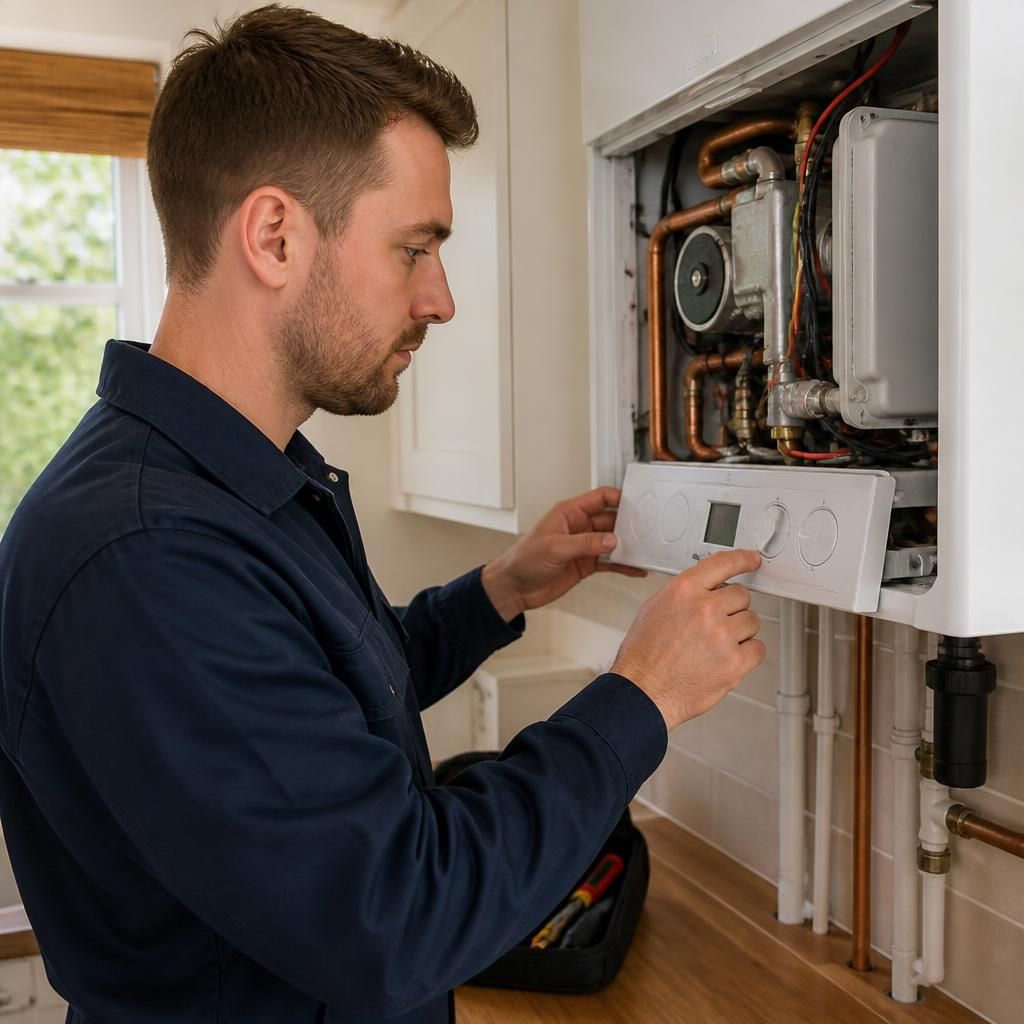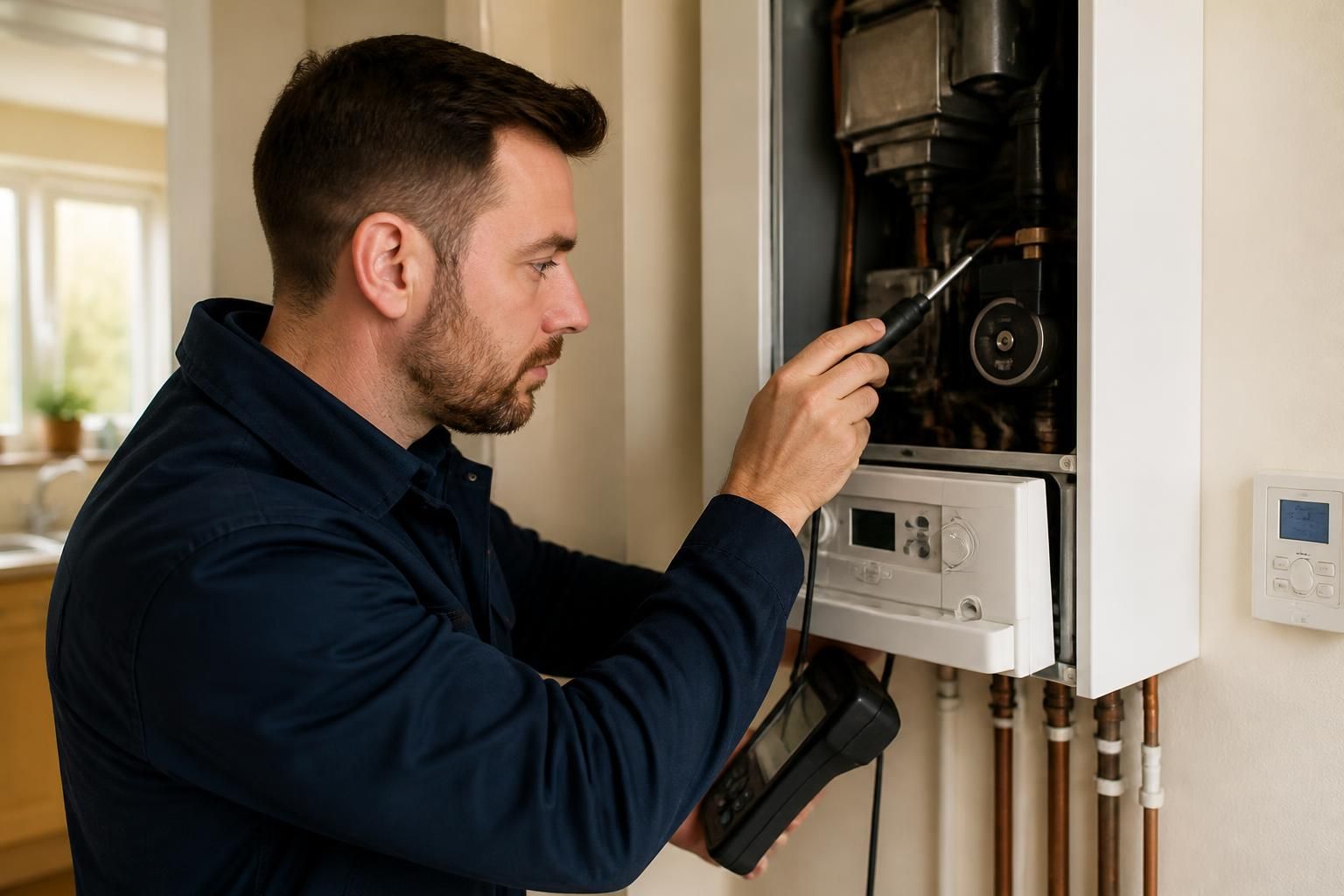
Yes. Boilers in rented properties can be inspected by a Gas Safe registered engineer, but the inspection must distinguish between the landlord’s legal gas safety responsibilities and any separate repair or servicing work. The engineer should be qualified for the type of gas appliance being examined and carry a Gas Safe ID card showing the relevant competencies.
For most rented homes, the landlord or managing agent is responsible for arranging a gas safety check at least every 12 months. This applies to gas boilers and other gas appliances and pipework provided for the tenant’s use. A tenant may report a concern or request that a check is considered, but should not arrange chargeable work without confirming who is responsible for the cost and authorising access where necessary.
A standard gas safety check is not always the same as a full boiler service. The engineer may assess points such as:
- whether the appliance is operating safely;
- the condition and effectiveness of the flue;
- ventilation and the surrounding installation;
- gas pressure and combustion where applicable;
- signs of leakage, damage or unsafe operation; and
- whether the appliance meets the relevant safety requirements.
A full service can involve additional cleaning, testing and maintenance recommended by the boiler manufacturer or the engineer. If the landlord has requested only a legal gas safety check, the tenant should ask what is included before further work is carried out.
Following the inspection, the landlord should receive a gas safety record showing the appliances checked, the results and any defects identified. In England, a copy must be provided to existing tenants within 28 days of the check and to new tenants before they move in. Landlords should retain the required records and arrange remedial work where the report identifies a problem.
If an engineer finds that a boiler or another gas appliance is unsafe, it may be necessary to stop using it until the defect is corrected. Depending on the risk, the engineer may isolate the appliance and explain the required repair. A tenant should not reconnect an appliance, alter gas pipework or attempt a boiler repair themselves. The landlord or managing agent should be informed promptly so that appropriate work can be authorised.
Access is an important practical part of a rented-property inspection. The landlord or agent should coordinate the appointment with the tenant and provide reasonable notice, except where a genuine emergency requires different arrangements. Tenants can help by ensuring the engineer can reach the boiler, controls, flue access points and any relevant gas appliances. Information about recurring faults, unusual smells, staining, unusual noises or changes in heating performance can also help the inspection.
For landlords, a written record of the inspection, reported faults and completed repairs helps demonstrate that gas safety duties are being managed properly. For tenants, the gas safety record provides useful confirmation of what was checked, but it does not replace reporting faults as they arise. An annual check cannot guarantee that a boiler will remain fault-free throughout the year.
A Birmingham-based plumbing company such as Ideal Plumbing Services can advise landlords, agents and tenants about boiler checks, safety concerns and related repair requirements across Birmingham and the wider West Midlands. The important first step is to explain whether the visit is for a landlord’s gas safety check, a boiler service, a fault diagnosis or a combination of these, so the inspection is arranged for the correct purpose.