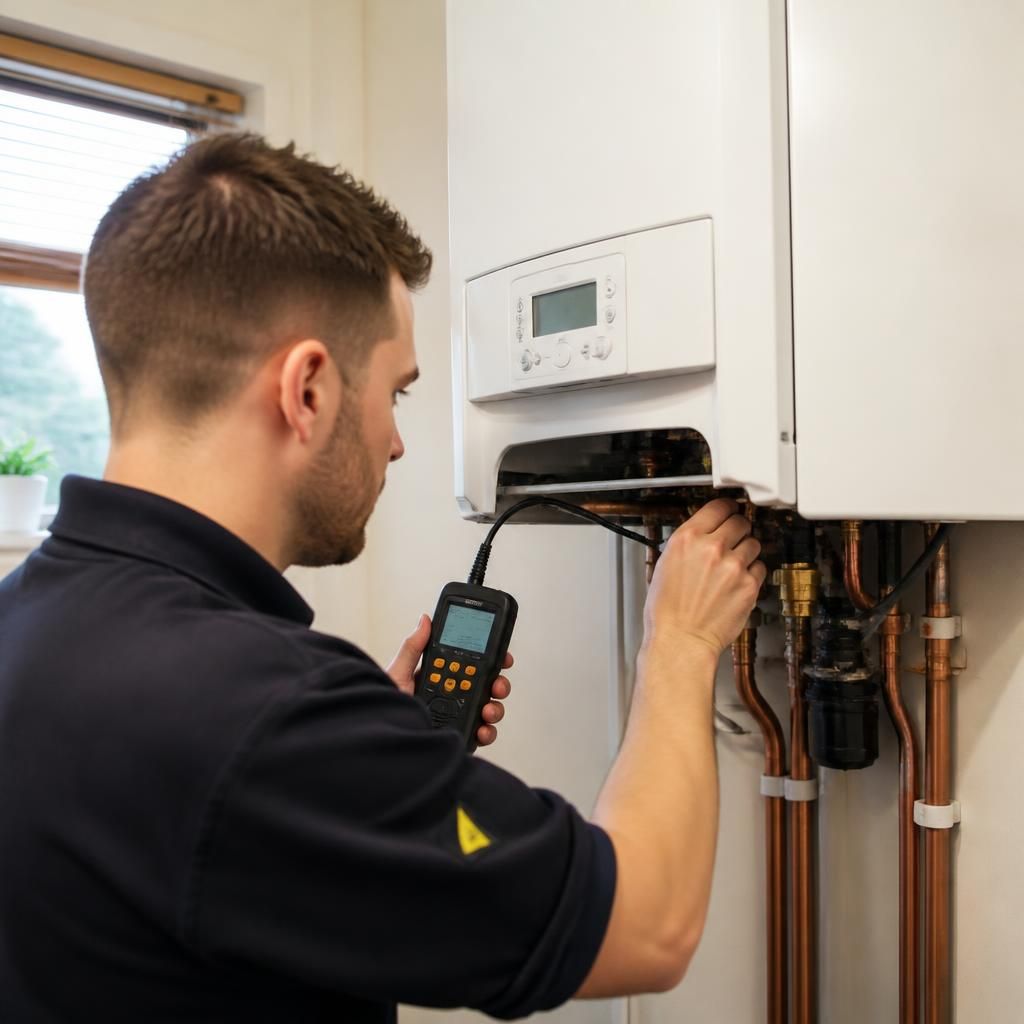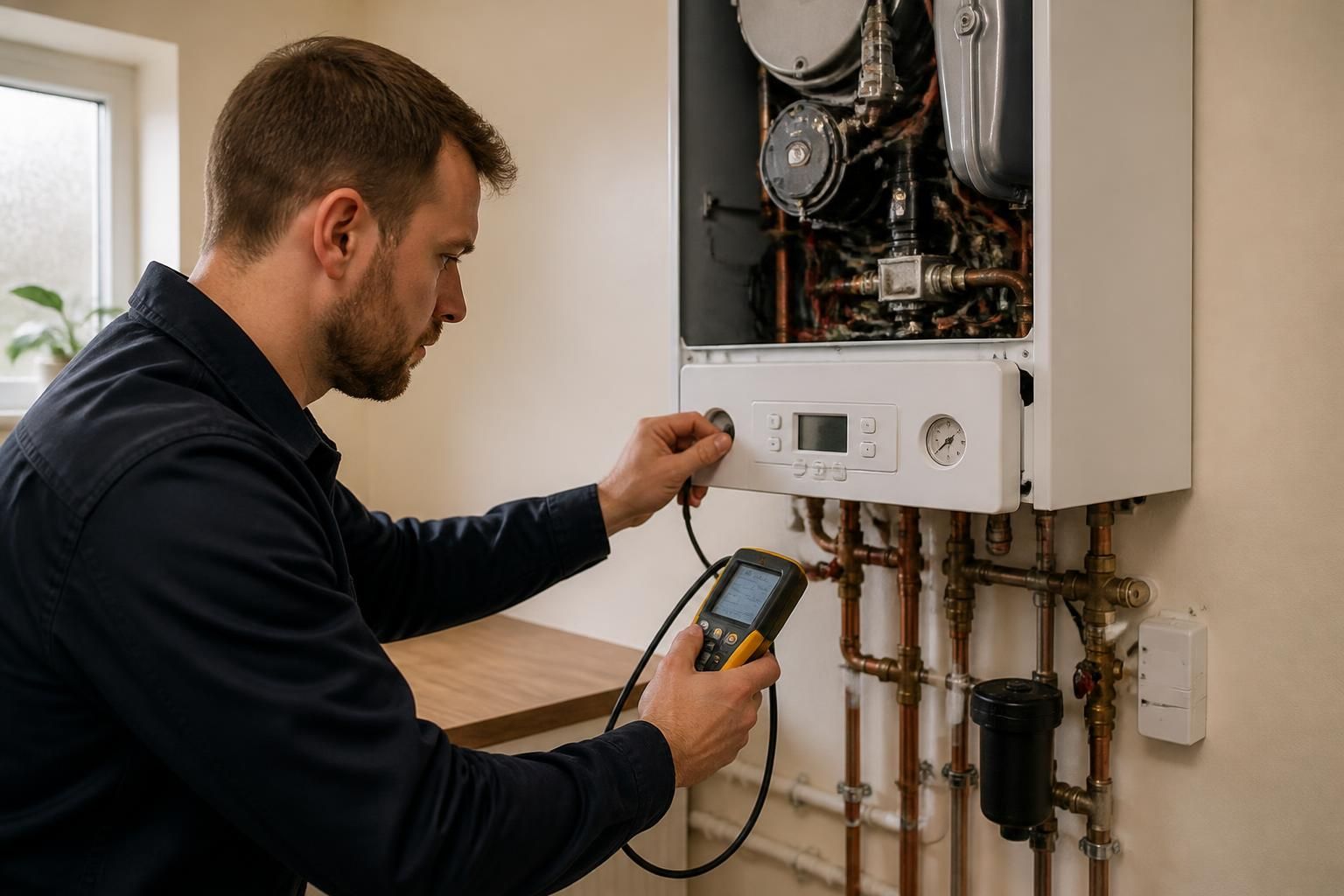
Disruption is minimised when a Gas Safe boiler engineer keeps the inspection organised, limits any necessary interruption to the boiler’s operation, and separates safety checks from repair work. The engineer should explain which parts of the system need to be examined, identify any point at which the boiler must be isolated, and return the system to its normal operating condition once the checks are complete.
A boiler inspection will usually involve more than looking at the appliance itself. Depending on the type of boiler and the reason for the visit, the engineer may assess:
- the boiler casing, visible pipework and connections;
- the flue route and terminal, where these are accessible;
- ventilation provisions and the condition of the installation;
- operating pressure, controls and safety devices;
- combustion performance using suitable testing equipment; and
- signs of leakage, corrosion, overheating or unsafe operation.
These checks can generally be carried out in a logical sequence rather than by repeatedly stopping and restarting the system. Testing is also targeted at the potential risks associated with the appliance, which avoids taking apart components that do not need to be examined. If a component does need to be removed, the engineer should explain why and ensure it is correctly refitted before the inspection is concluded.
Some tests require the boiler to be turned off or temporarily isolated. This is a normal safety measure, not necessarily an indication that the appliance has failed. The engineer should make the reason clear, advise the occupants before interrupting the heating or hot water, and check that the appliance is safe to operate afterwards. If the boiler cannot be safely returned to service, the engineer should explain the reason and set out the appropriate next step rather than leaving the issue unclear.
Good preparation by the engineer also reduces avoidable interruptions. Relevant installation records, previous service information and details of any symptoms can help direct the inspection towards the right areas. Where access to the boiler, controls, flue or related equipment is restricted, the engineer can explain what additional access is required instead of attempting an incomplete assessment. This is particularly relevant where a boiler is installed inside a cupboard or within a rented property.
An inspection should finish with a clear distinction between observations, safety concerns and recommended work. Minor findings may simply need recording for future reference, while defects affecting safe operation may require immediate attention. Any repair or replacement should be discussed separately, with the reason for the recommendation explained before work begins. This helps prevent an inspection from becoming an unexpected, open-ended job.
The engineer should also provide appropriate documentation, such as details of the checks carried out, identified defects and any safety action taken. Keeping this information gives the homeowner, landlord or tenant a useful record without requiring a further visit merely to clarify what was inspected. For landlords, it can also support the property’s gas safety records where the inspection forms part of their legal responsibilities.
For a Birmingham or West Midlands home, the practical signs of a well-managed inspection are straightforward: the scope is explained, access requirements are identified, interruptions are limited to necessary safety steps, and any further work is presented separately from the inspection itself. Choosing a qualified Gas Safe engineer helps ensure that efficiency does not take priority over safe testing and accurate reporting.