Boiler servicing should follow a planned, recurring schedule rather than being arranged only after a breakdown. The appropriate interval depends on the appliance manufacturer’s instructions, its age and condition, how heavily it is used, and any terms attached to its warranty or service agreement.
Factors that can affect the recommended interval include:
- Age and condition: An older boiler may need closer monitoring because seals, sensors, electrical components and other parts can deteriorate over time.
- Usage: A boiler supplying heating and hot water to a busy household may experience more operating cycles than one used less frequently.
- Previous faults: Repeated pressure loss, ignition problems, unusual noises or fault codes may indicate that servicing alone is not enough and that diagnostic work or a repair is required.
- Installation and environment: The condition of the flue, ventilation arrangements and surrounding components can affect safe operation and should be considered during an assessment.
- Warranty or maintenance conditions: Some agreements specify how servicing must be carried out and what records should be retained.
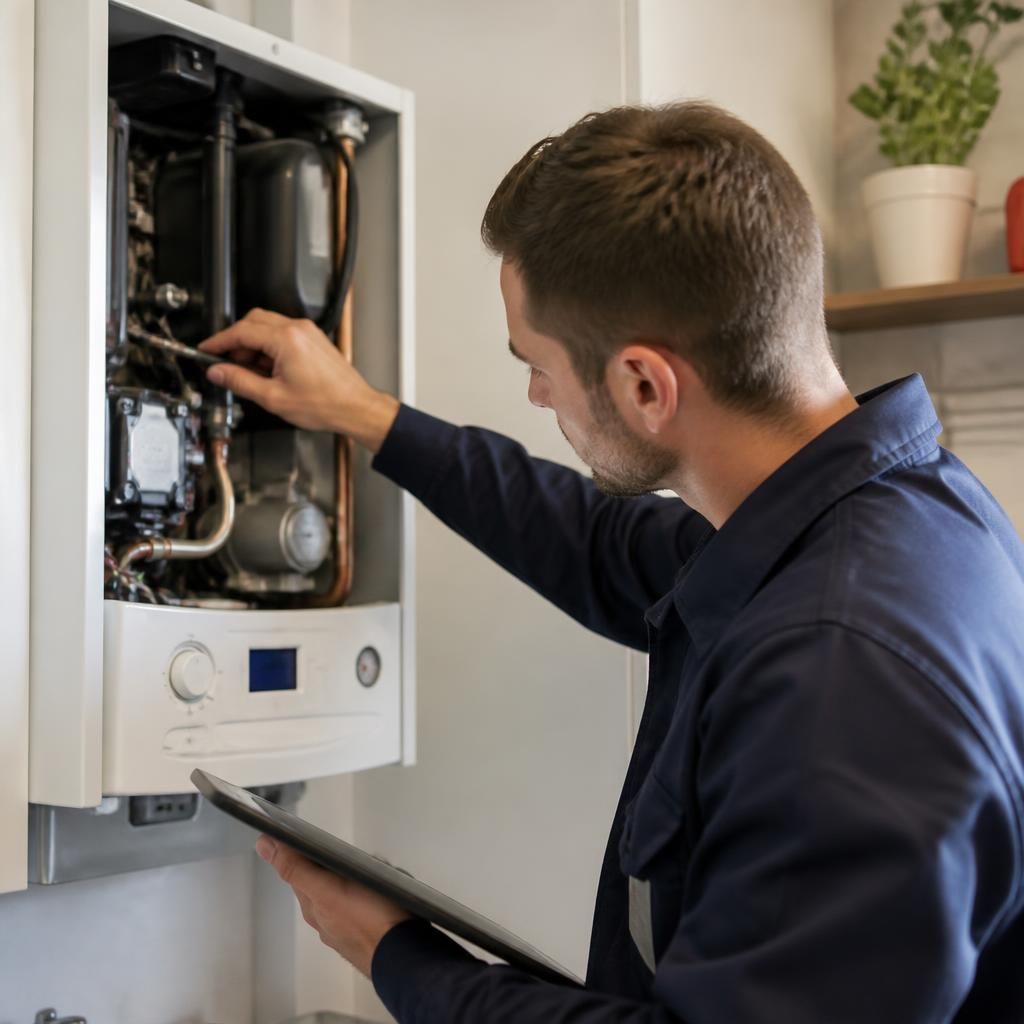
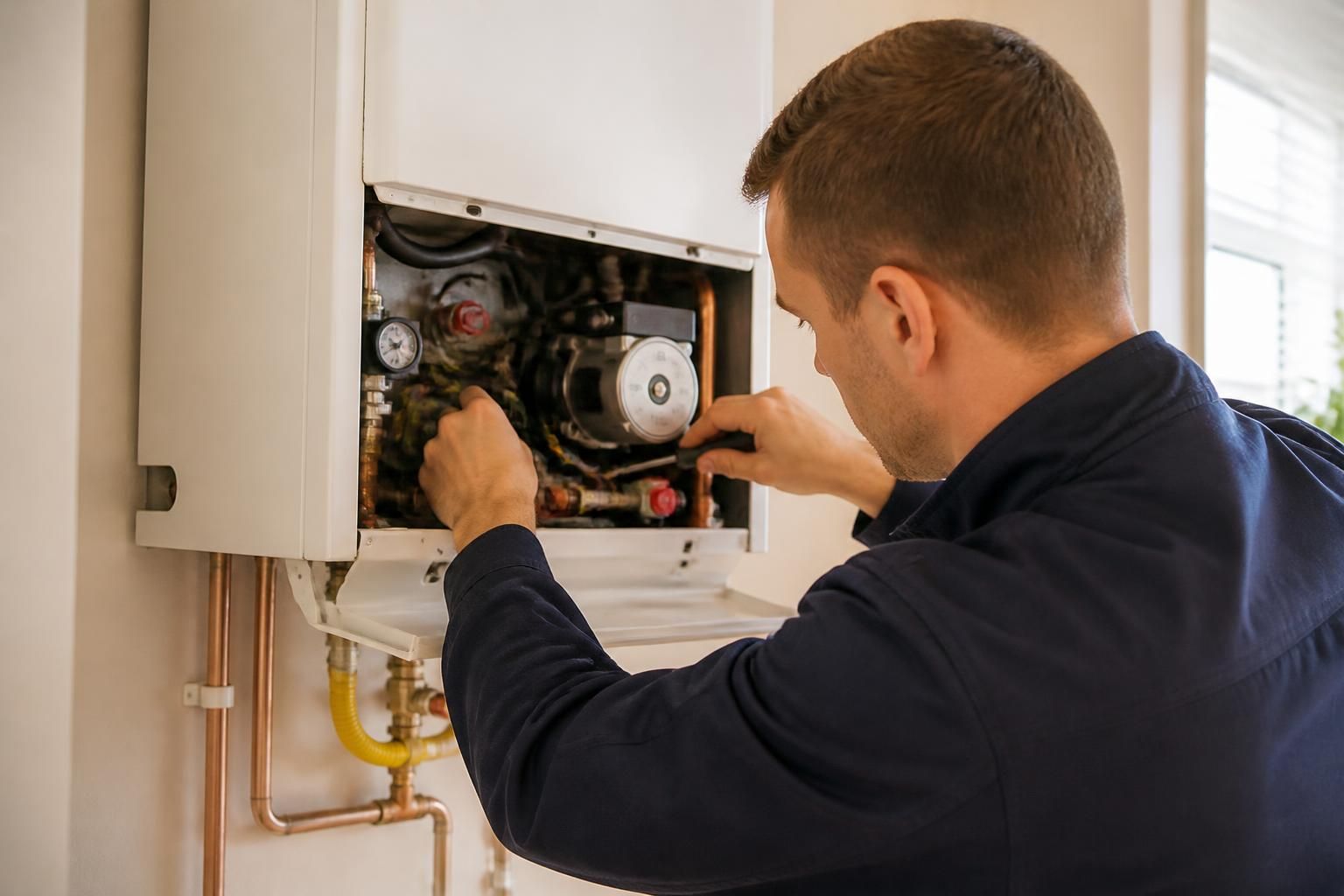
A service is a systematic inspection, cleaning and test of the boiler and its associated safety controls. Depending on the appliance, an engineer may examine the burner, heat exchanger, flue, seals, electrical connections, pressure, combustion performance and safety devices. The exact procedure varies between boiler types, so the engineer should work in line with the manufacturer’s instructions rather than applying the same checklist to every appliance.
Routine servicing helps identify developing defects before they cause a loss of heating or hot water. It also provides an opportunity to check that the appliance is operating efficiently and that combustion and safety controls are functioning as intended. Servicing cannot prevent every breakdown, and it should not be treated as a substitute for repairing a known fault.
Arrange an assessment sooner if you notice:
- unusual banging, kettling, whistling or vibrating sounds;
- frequent pressure changes or the need to repeatedly top up the system;
- radiators or hot water becoming inconsistent;
- repeated fault codes, ignition failures or unexpected shutdowns;
- visible leaks, corrosion or staining around the appliance; or
- a change in the boiler’s flame or other signs of abnormal operation.
These symptoms should be reported accurately to the engineer, including when they occur and whether resetting the boiler temporarily changes the problem. An engineer can then decide whether the appliance needs a repair, further testing or replacement rather than simply carrying out routine servicing.
After the work, keep the service record with the boiler’s other documents. It should identify the appliance, record the checks carried out, note any defects or recommendations, and confirm whether further work is needed. A clear record makes it easier to track recurring issues and demonstrate that planned maintenance has been considered.
For homeowners and landlords in Birmingham and across the West Midlands, Ideal Plumbing Services can advise on a suitable servicing programme as part of its boiler engineering and heating support. The most useful starting point is the boiler’s make and model, its previous service history, any warranty conditions and details of symptoms or repairs already carried out.