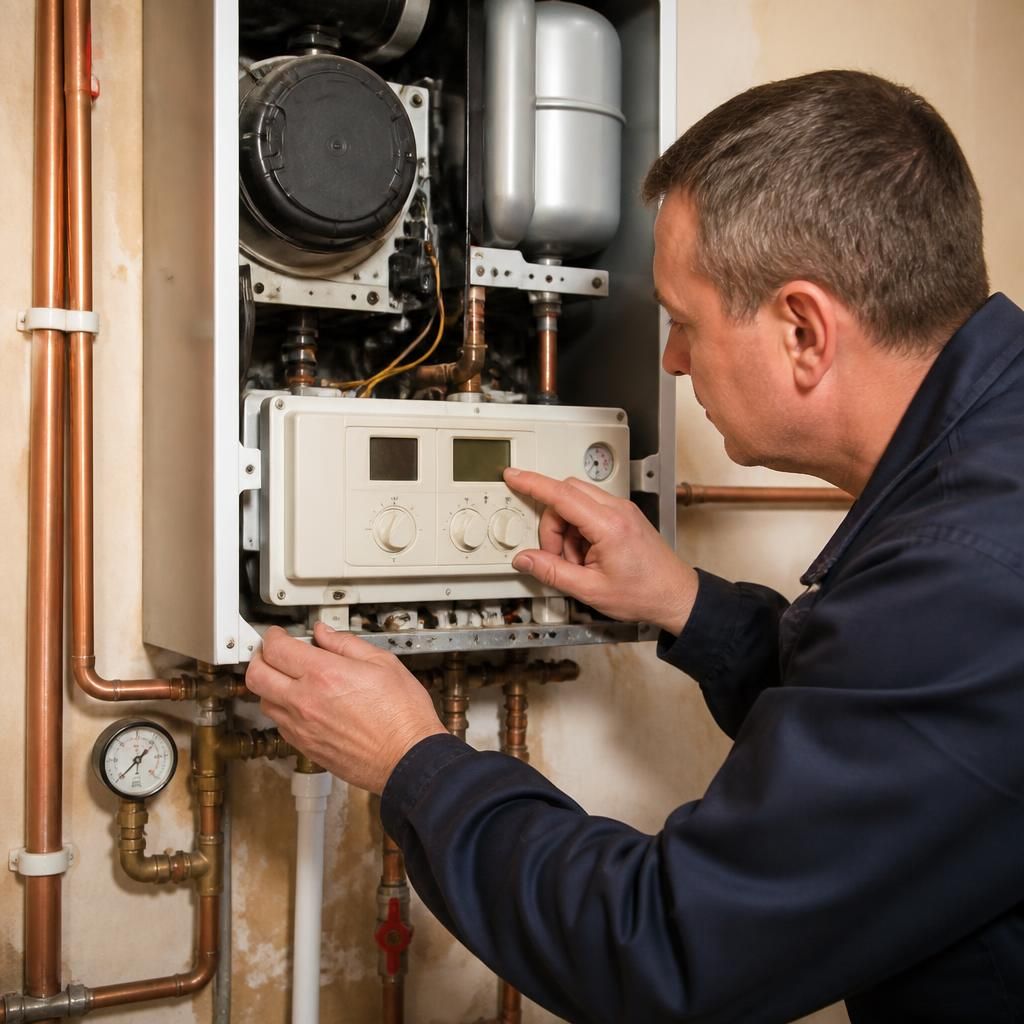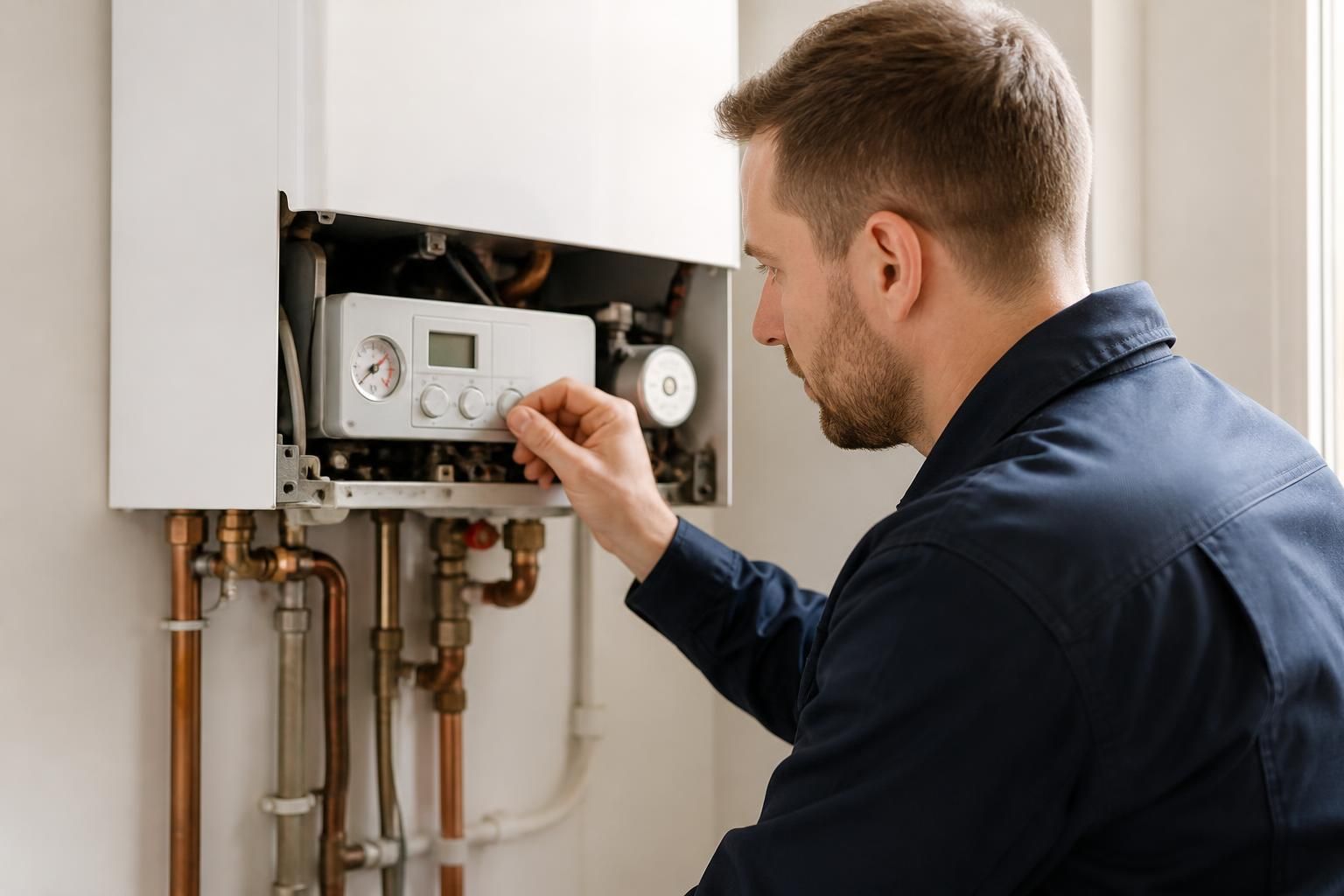
The recommendation should be based on a documented assessment of the boiler’s condition, the fault involved and the likely cost and reliability of the proposed work. A repair is generally the sensible option when the underlying appliance is in reasonable condition and the engineer can identify a specific defect with a realistic, technically sound remedy.
The first step is accurate diagnosis. A boiler should not be replaced simply because it has stopped working or displays a fault code. The engineer will usually examine the boiler’s operating symptoms, controls, pressure, electrical connections, pipework and relevant components before deciding what has failed. A clear diagnosis helps distinguish a replaceable part from a wider problem affecting the appliance.
Repair is more likely to be recommended where:
- the fault is confined to a component such as a sensor, pump, valve, fan, thermostat or ignition part;
- the boiler casing, heat exchanger and other major components remain in sound condition;
- replacement parts are available and suitable for the appliance;
- the repair can restore safe and dependable operation; and
- the expected repair cost is reasonable in relation to the boiler’s condition and remaining useful service.
The age of the boiler is relevant, but it should not be treated as the sole deciding factor. An older appliance that has been maintained properly and needs one straightforward part may be a better repair candidate than a newer boiler with a serious underlying defect. Conversely, a boiler that has developed several unrelated faults may be unsuitable for further expenditure even if it is not particularly old.
Cost must be assessed in context. An engineer should explain the likely labour and part costs, identify any uncertainty in the diagnosis and compare the repair with the practical implications of replacement. The cheapest immediate option is not always the most appropriate if the same problem is likely to recur or if other major components are showing signs of deterioration. Equally, replacement should not be recommended solely because it produces a larger installation job.
Replacement may be considered when the appliance has a history of repeated breakdowns, several expensive components have failed, parts are difficult or impossible to source, or the repair would leave the customer with an unreliable boiler. It may also be more appropriate where the appliance’s condition makes a safe repair impractical. In these circumstances, the engineer should explain the evidence behind the recommendation rather than presenting replacement as the only option without justification.
Safety takes priority over cost. If an inspection identifies unsafe combustion, a dangerous flue arrangement, a gas-related risk, serious internal damage or another condition that cannot be rectified reliably, the engineer may advise against continued use. Safety concerns should be explained clearly, along with any action needed before the boiler can be used again. A repair recommendation is only appropriate when the completed work can leave the appliance safe to operate.
Household requirements can also affect the decision. A repair may suit a property where the existing heating capacity remains adequate and the fault is isolated. Replacement might be discussed if the boiler no longer meets the property’s heating or hot-water demand, if its controls are no longer suitable, or if wider changes to the heating system are already being planned. These factors should support the technical assessment, not replace it.
Before approving either option, ask the engineer to set out:
- what has failed and how the diagnosis was reached;
- whether the boiler is safe to continue using before or after the proposed work;
- which parts and labour are included in the repair;
- whether other defects or signs of deterioration were found;
- the expected limitations or risks of repairing the appliance; and
- what paperwork or service records will be provided after the work.
A professional recommendation should therefore distinguish between a repair that addresses a defined, manageable fault and a repair that only postpones a broader replacement decision. If both options are technically viable, the engineer should explain the advantages, disadvantages and expected costs of each so the homeowner, landlord or tenant can make an informed decision.