The key issue for a flat is not the property type itself, but whether the proposed boiler and its associated pipework can be installed safely within the building’s construction and management requirements. A survey should establish how the existing heating system is arranged, where the boiler can be positioned, how the flue connects to the outside or a communal system, and whether the installation can be commissioned in accordance with current regulations.
Flats can present additional technical restrictions compared with houses. For example, the external wall may be shared, access to the outside may be limited, or the building may use a communal flue system. A new appliance cannot simply be connected to a communal flue without confirming that the flue design, appliance type and manufacturer’s requirements are compatible. In some buildings, the available flue route may mean that the replacement boiler needs to remain in the existing position or that an alternative heating arrangement must be considered.
The following points are normally checked before work is planned:
- Lease and building permissions: the lease may control alterations to external walls, service risers, communal flues, balconies and shared cupboards. Written approval from the freeholder, managing agent or landlord may be required before an installer can proceed.
- Gas and electrical supplies: the existing gas pipe, meter capacity, electrical connection and isolation points must be suitable for the new appliance. Alterations may be necessary where the current installation was designed for an older or smaller boiler.
- Heating system design: the installer will assess the radiators, controls, hot-water arrangement and system pressure. A combi boiler may suit a flat with suitable mains water pressure and a moderate hot-water demand, while a system or regular boiler may be more appropriate where hot-water storage or several simultaneous outlets are required.
- Condensate disposal: a condensing boiler produces acidic condensate that must discharge through an appropriate waste connection. In a flat, the nearest suitable waste pipe may be remote from the boiler, concealed within a service duct or controlled by the building’s plumbing layout.
- Access and working space: the installer needs safe access to the boiler, flue, isolation valves and serviceable components. Narrow hallways, lift restrictions, protected communal areas and limited cupboard space can affect the delivery and installation process.
- Noise and vibration: boiler operation, pumps and pipework should be considered where the appliance is close to bedrooms, neighbouring flats or lightweight partition walls. Pipe supports and the position of the appliance can help reduce transmitted vibration.
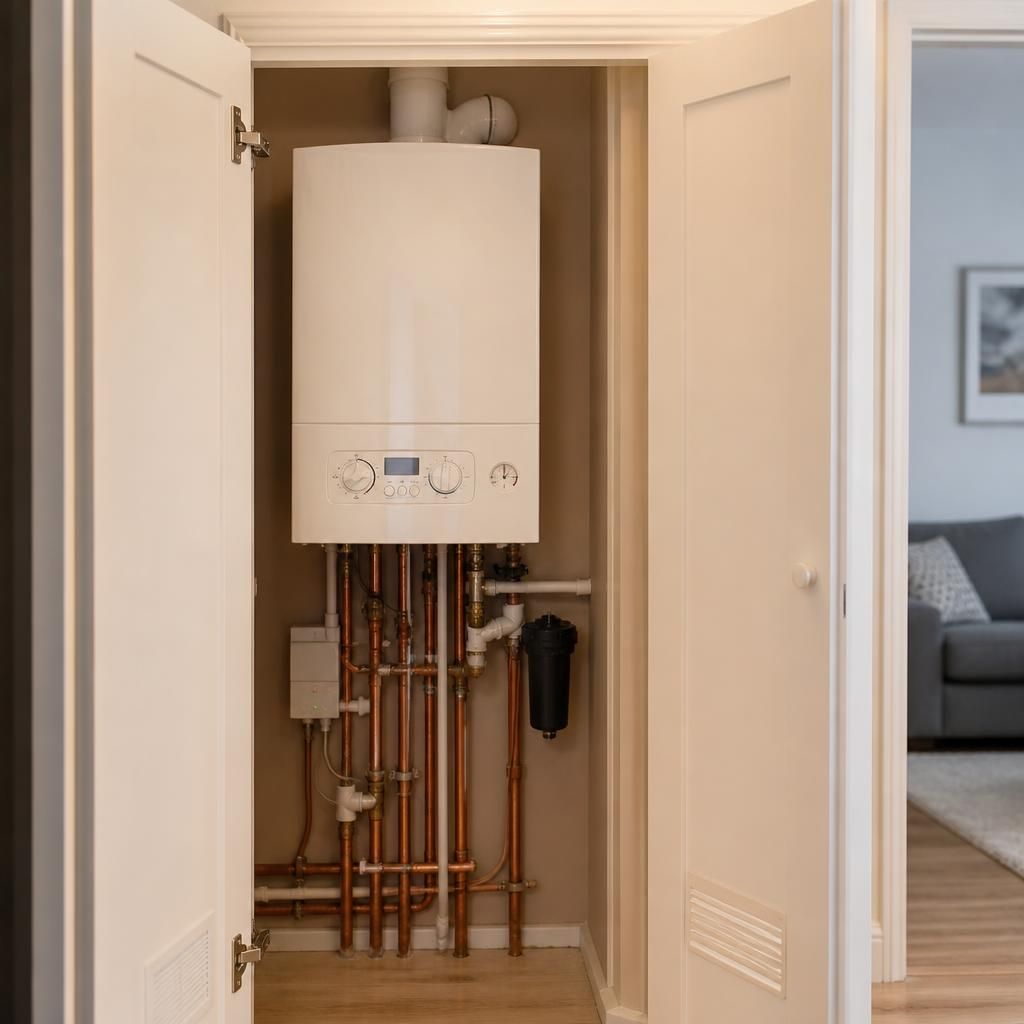
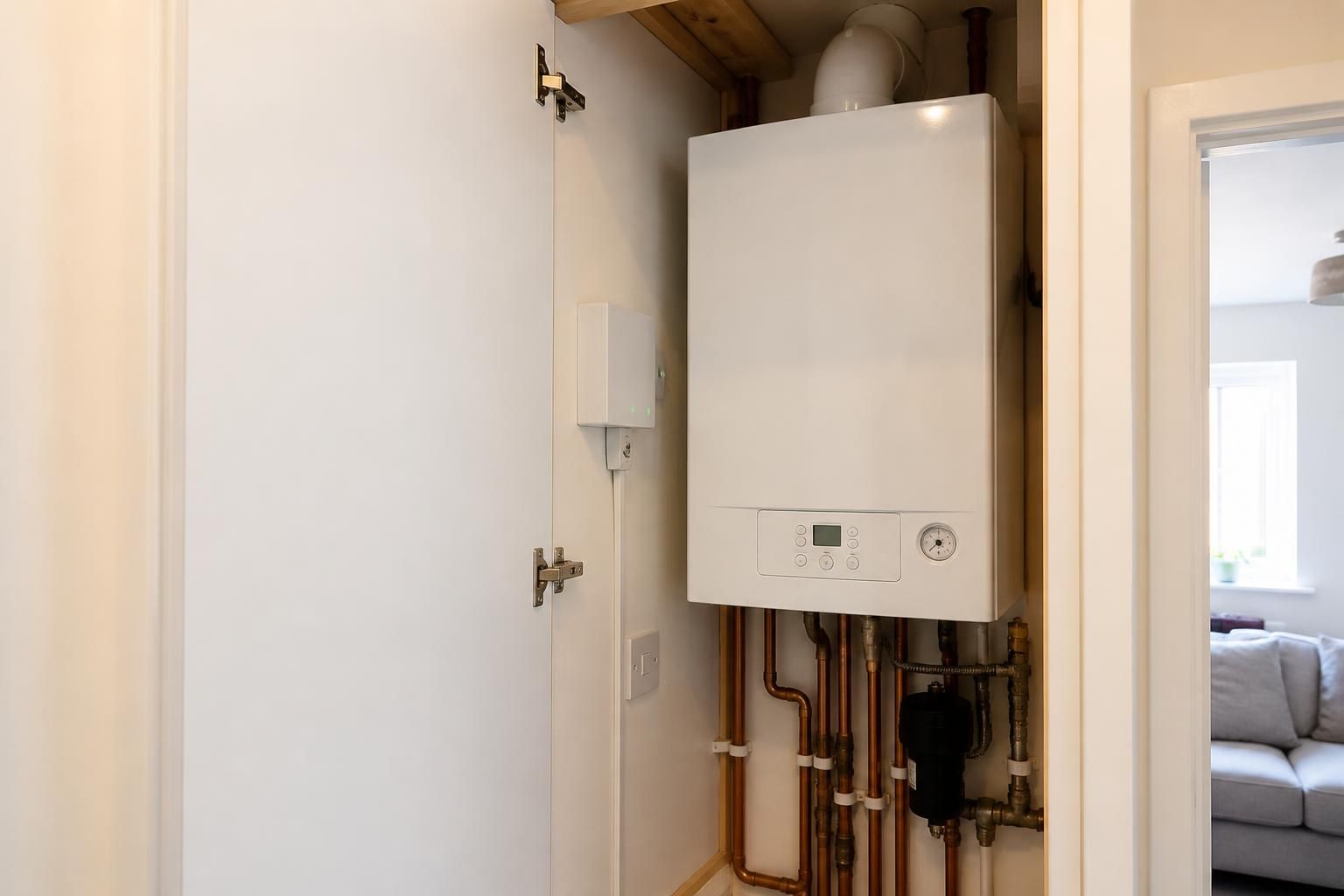
Where a boiler is installed in a cupboard, the enclosure must allow the appliance to be operated, inspected and maintained safely. The cupboard must not be used to conceal unsafe storage or obstruct service access. The installer will also check that any required air supply, clearances and access arrangements are appropriate for the specific appliance and installation design.
For a replacement, the existing flue cannot automatically be reused. Its condition, route, terminals and compatibility with the new boiler must be verified. A flue serving a flat may pass through another part of the building or connect to a shared system, so access and approval arrangements should be confirmed before the old appliance is removed.
Gas boiler work must be carried out by an appropriately registered gas engineer, with safety checks and commissioning completed after installation. The completed work may also need to be notified under the relevant building requirements, and the homeowner, landlord or managing agent should retain the installation and commissioning records. Landlords should ensure that any additional gas safety documentation required for a rented flat is dealt with separately.
A practical assessment is therefore important before choosing a replacement boiler. Ideal Plumbing Services can review the existing arrangement and explain whether the proposed installation is technically suitable, what permissions may be needed, and whether any pipework, flue or control changes should be included in the work specification.