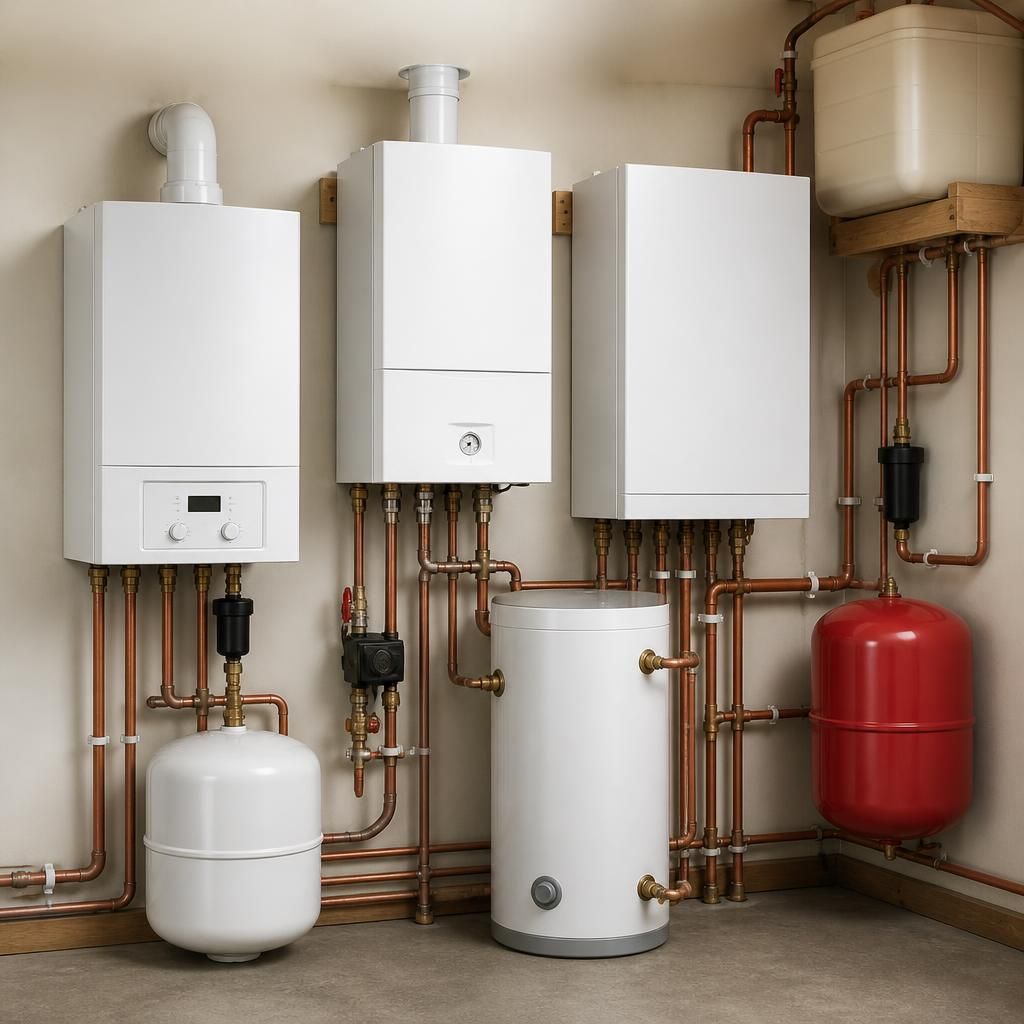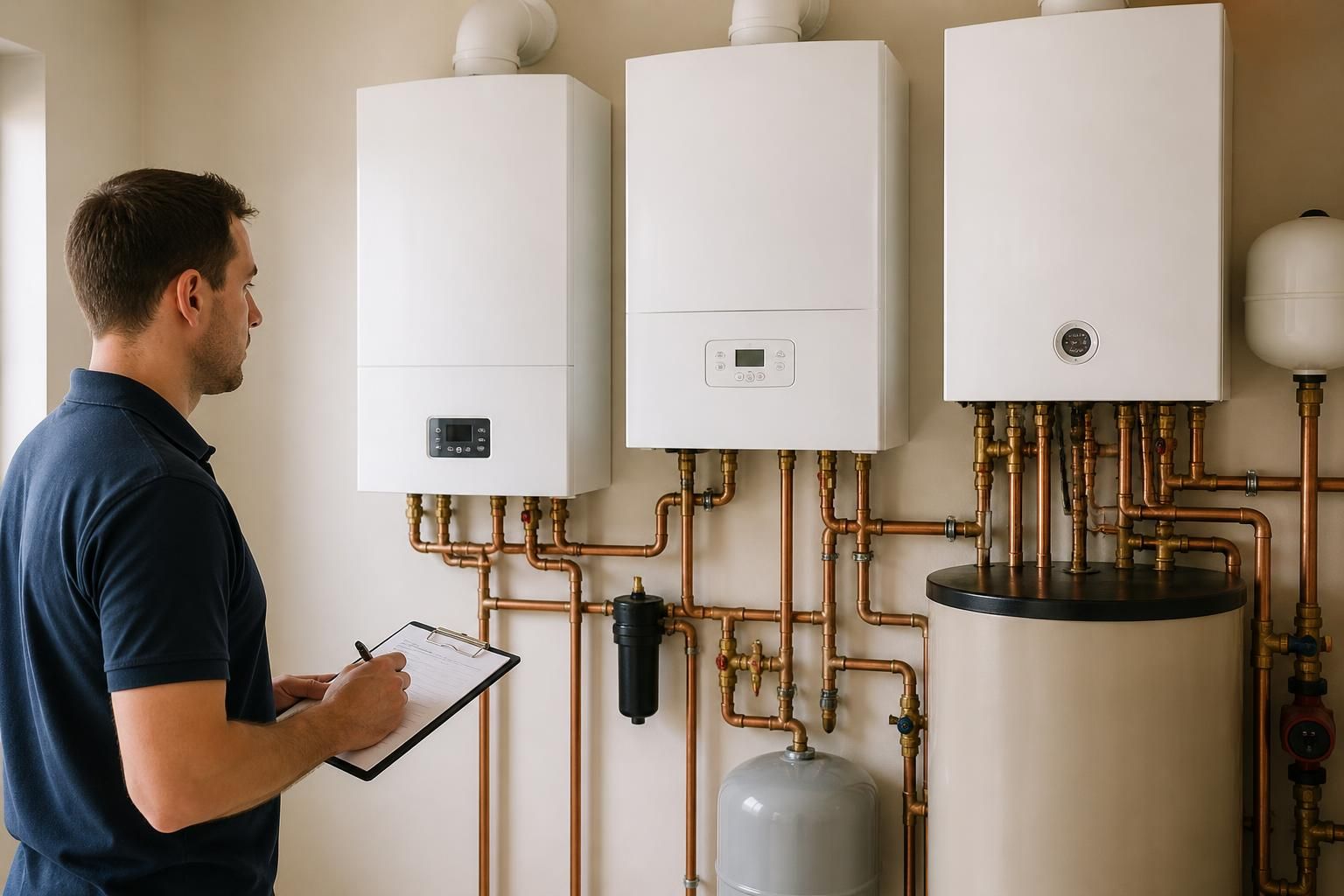
The most suitable boiler for a home is the one that matches its heating load, hot water system, water pressure, available installation space and household usage patterns. The correct choice should be based on a property assessment rather than boiler type alone, because an unsuitable system can lead to inconsistent hot water, unnecessary energy use or avoidable alterations to the existing pipework.
Combi boilers combine central heating and hot water production in one appliance. They take cold water from the mains and heat it when a tap or shower is used, so they do not require a separate hot water cylinder or cold-water storage tank. This can simplify the layout and release cupboard space. Their performance depends partly on the incoming mains flow and pressure, so these should be checked before installation. A combi may be less suitable where several outlets are regularly used at the same time, as the available hot water flow is shared between them.
System boilers work with a separate hot water cylinder, while many of the principal heating components are built into the boiler itself. This arrangement can provide a practical solution for homes that need stored hot water but have limited room for additional system components. The cylinder must be positioned in a suitable cupboard or airing space, and the property needs enough room for the associated pipework and controls. Stored hot water also needs to be planned around the household’s usual routines.
Conventional boilers, also called regular or heat-only boilers, operate with a hot water cylinder and a cold-water storage cistern. They can be appropriate where a home already has this type of system, particularly if the existing pipework, tanks and radiators are in good condition. Replacing like for like may reduce the amount of alteration required, although the condition and capacity of the existing components still need to be assessed. The storage tank also requires suitable space, commonly within the roof area, and its position must be checked for access, insulation and protection from freezing conditions.
Water pressure and flow are important when considering a combi boiler, but they also affect the wider design of any heating installation. A survey should establish whether the incoming supply can support the expected outlets and whether internal pipework is correctly sized. Where pressure or flow is limited, changing the boiler alone may not resolve poor shower or tap performance. An installer may instead need to discuss system design, stored water or improvements to the supply arrangement.
The existing heating system can influence the most practical replacement. A change from one boiler type to another may require alterations to pipework, electrical connections, flue arrangements, controls and condensate drainage. The position of the boiler also matters: the available wall construction, flue route, ventilation requirements and access for servicing all need checking. An installation that appears straightforward from the appliance specification may involve wider work once the property is inspected.
Boiler sizing should be calculated for the home rather than selected solely by comparing appliance outputs. A heat-loss assessment considers factors such as the building’s construction, insulation, glazing, room dimensions and radiator requirements. Oversizing can cause inefficient cycling and may increase installation costs, while undersizing can affect the system’s ability to maintain comfortable temperatures and produce hot water as intended.
When comparing options, consider:
- Whether hot water is needed from multiple outlets at the same time.
- Whether there is suitable space for a cylinder, storage cistern and related pipework.
- The property’s incoming mains pressure and flow rate.
- The condition and layout of existing radiators, pipes and controls.
- The available route for the boiler flue and condensate pipe.
- Whether the household’s hot water usage is likely to change in the future.
- How much alteration to walls, cupboards, ceilings or flooring would be acceptable.
A qualified heating professional should inspect the property before a final recommendation is made. The assessment should cover the boiler position, flue route, ventilation, gas or electrical supply, condensate discharge, system controls and any safety issues. It should also identify whether older components need replacing rather than connecting a new boiler to unsuitable or deteriorated parts.
In general, a combi is considered where mains water performance and simultaneous usage are suitable; a system boiler is considered where stored hot water is needed without a separate cold-water storage tank; and a conventional boiler is often considered when an established cylinder-and-cistern arrangement is being retained. The best choice is therefore the option that fits the property’s technical requirements and the household’s actual pattern of use, not simply the appliance with the lowest purchase price.
Ideal Plumbing Services can assess the existing arrangement and explain the practical implications of each suitable boiler type before domestic boiler installation is planned. This helps homeowners, landlords and tenants understand the work involved and choose a system based on compatibility, safety and long-term usability.