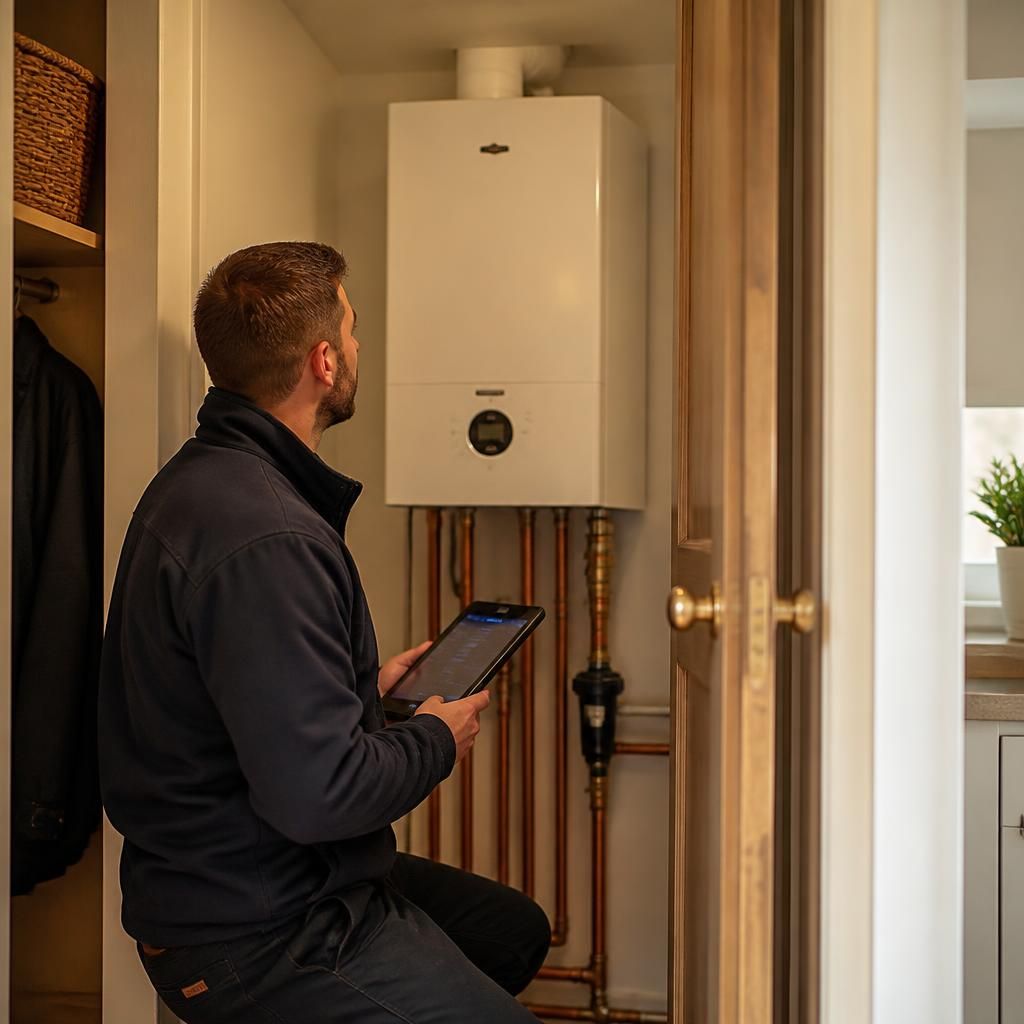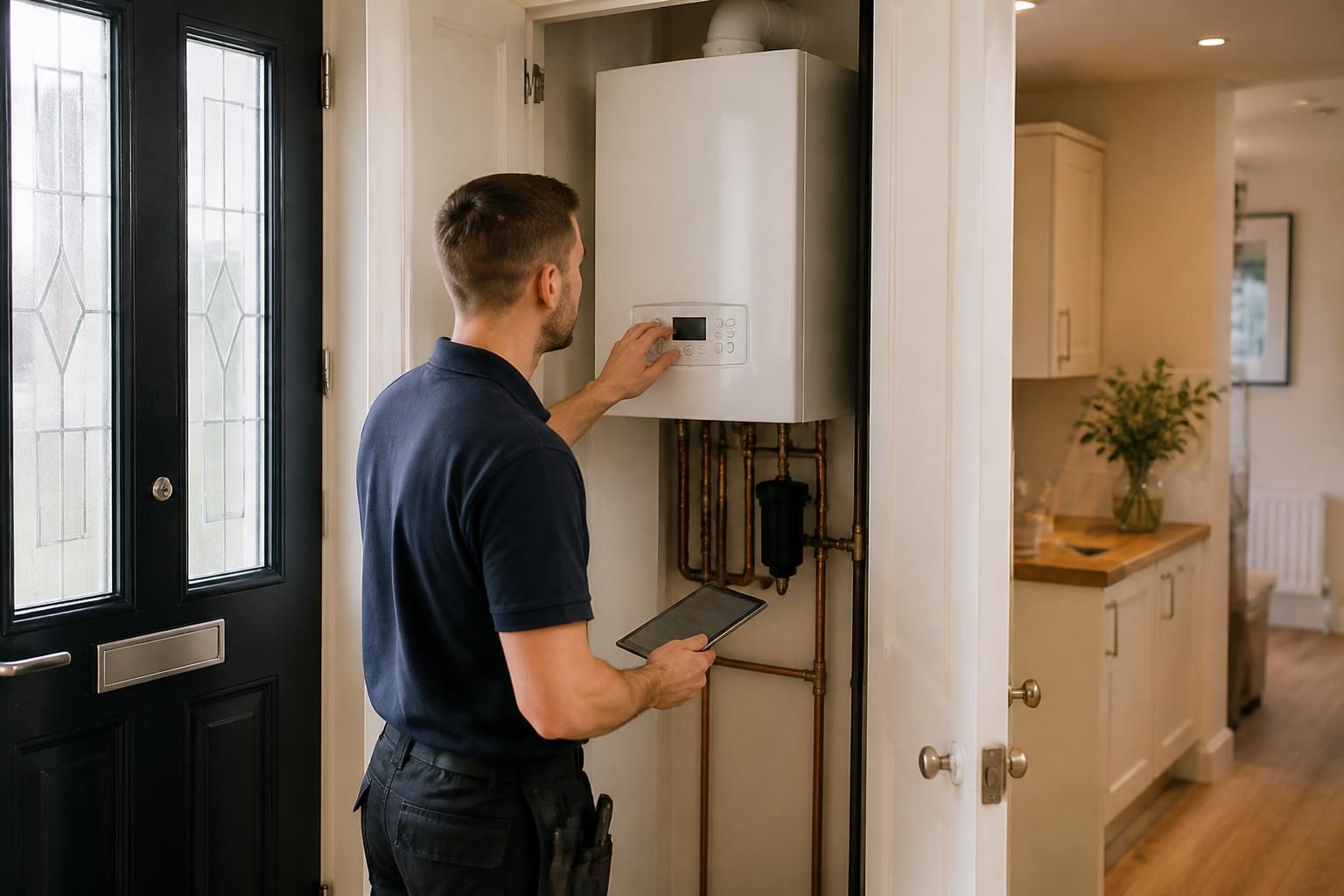
The key issue is not whether a property is a house, flat or rental, but whether the building can safely accommodate the proposed boiler, its connections and its exhaust system. A new installation may be straightforward in one property and require permissions or additional work in another.
Detached, semi-detached and terraced houses: These properties usually offer more flexibility because there may be several possible locations for the boiler, flue and condensate pipe. The installer can assess whether the existing position is suitable or whether relocating the boiler would improve access, servicing and the use of available space. The condition of the gas supply, electrical connection, radiators and pipework also affects the installation plan.
Flats and maisonettes: A replacement can be possible, but the options may be restricted by the position of the external wall, shared structures, communal flues or limited cupboard space. Leaseholders and tenants may need written permission from a freeholder, managing agent or landlord before work begins. In a block with a communal heating system, an individual boiler may not be permitted or may not be the appropriate solution.
Older and period properties: Older buildings can often receive a modern boiler, although the existing heating system may need closer inspection. Narrow flues, ageing pipework, unusual chimney arrangements, limited ventilation and non-standard room layouts can affect the design. Where a property is listed or in a conservation area, changes to the exterior, including a new flue terminal, may require consent. Planning restrictions should be checked before committing to an installation.
Rental properties: Landlords can arrange a new boiler installation, but the work must meet the relevant safety and building requirements. The chosen system should also be appropriate for the property’s occupancy, hot water demand and future maintenance needs. Tenants should obtain the landlord’s approval rather than arranging a replacement independently, unless their tenancy agreement provides otherwise.
Properties without a mains gas supply: A gas boiler is not automatically suitable where a building uses oil, LPG, solid fuel or electricity. The available fuel source, storage arrangements and existing distribution system must be considered. Depending on the property, the practical choice may involve replacing a like-for-like boiler or reviewing a different heating technology altogether.
The existing boiler arrangement is another important consideration. A combi boiler heats water directly as it is needed, whereas a system or regular boiler works with stored hot water and may be better suited to a property with several bathrooms or higher simultaneous demand. Changing from one type to another can involve alterations to cylinders, tanks, controls and pipework, so it is not simply a matter of exchanging the appliance.
Before installation, a qualified heating engineer should check:
- the building’s heat requirement and hot water demand;
- the proposed boiler position and access for servicing;
- the route and termination point for the flue;
- the condensate discharge arrangement;
- the condition and size of existing gas, water and heating pipework;
- ventilation and combustion-air requirements where applicable;
- the electrical supply, controls and thermostat location; and
- any permissions, planning considerations or communal-system restrictions.
Some properties therefore need more than a standard replacement. The work may include upgrading pipework, adapting the flue, installing new controls, improving ventilation, removing redundant tanks or making good the area around the old appliance. These requirements should be identified in the survey so that the quotation reflects the actual installation rather than just the cost of the boiler.
Gas boiler work must be completed by an appropriately registered engineer, and the completed installation must comply with applicable safety and building requirements. For a rented home, the landlord should retain the relevant documentation. A detailed property assessment is the reliable way to establish which boiler type, location and installation method are suitable for a particular building.