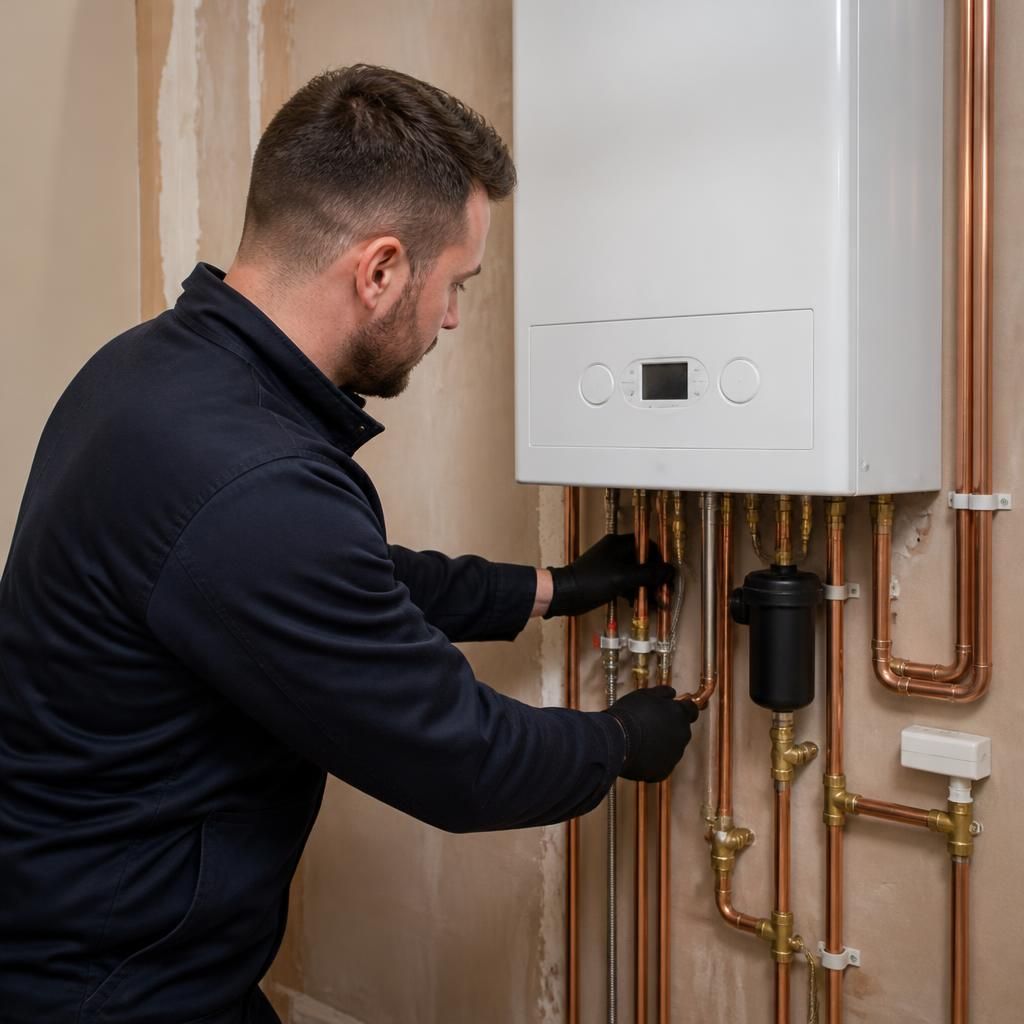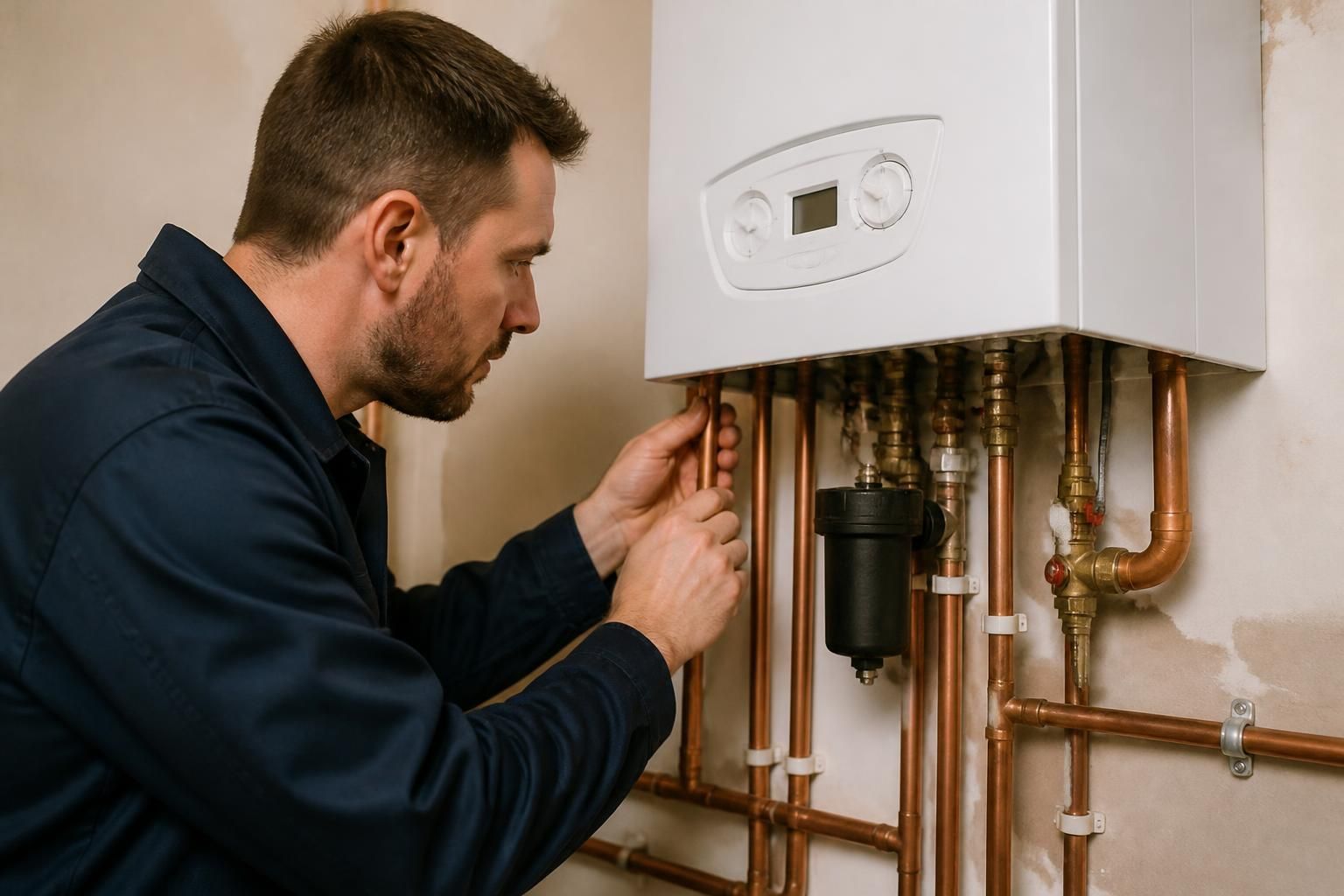
The installation period is determined by the condition of the existing heating system, the position of the replacement boiler and the amount of associated work required. A simple boiler exchange follows a relatively direct process, while alterations to pipework, controls, the flue, condensate drainage or other heating components add stages that must be completed and checked properly.
What happens during a boiler installation?
- Pre-installation checks: The installer confirms the boiler position, assesses the existing connections and checks whether the proposed flue and condensate route are suitable.
- Isolation and removal: The heating and water systems are made safe, drained where necessary and the old boiler is disconnected and removed.
- Installation: The new boiler is secured in position and connected to the gas, water, heating, electrical and condensate systems. The flue is fitted in accordance with the manufacturer’s instructions and applicable regulations.
- System alterations: Pipework may need adapting, or heating controls, pumps, valves, a hot water cylinder or other components may need replacing or repositioning. These tasks can extend the work beyond a direct boiler exchange.
- Testing and commissioning: The system is refilled, checked for leaks, tested for safe operation and balanced where required. The installer should explain the controls and provide the relevant commissioning information.
Factors that can affect the duration
- The type and location of the existing boiler and the proposed replacement.
- Whether the new boiler can use the existing flue route and condensate connection.
- The condition, size and accessibility of the current pipework.
- Whether the heating system needs cleaning, flushing, balancing or repairs before commissioning.
- Changes to heating controls, radiators, pumps, valves or hot water storage arrangements.
- Any requirements relating to the property layout, ventilation, electrical supply or safe flue termination.
- Unexpected issues found after the old boiler or surrounding connections have been removed.
A replacement should not be considered complete when the boiler is merely mounted and connected. Proper commissioning is essential: combustion and safety checks, system pressure, controls and heating performance all need to be verified. Skipping these checks can leave faults that affect efficiency, reliability or safe operation.
Before work begins, ask for the expected installation duration and a clear description of what it includes. It is useful to confirm whether removal of the old boiler, disposal, alterations to controls or pipework, system cleaning, commissioning and any remedial work are included in the proposal. If the survey identifies a possible complication, the installer should explain how it could affect the programme rather than treating the initial estimate as fixed.
For homeowners, landlords and tenants, the most useful preparation is to provide details of previous heating problems, existing controls and any areas where the system has performed poorly. Photographs of the boiler, flue and controls can help with an initial assessment, but the final duration should be based on an inspection of the installation itself. Ideal Plumbing Services provides boiler installation and heating support for residential properties in Birmingham and across the West Midlands, with the installation plan agreed according to the property and system requirements.