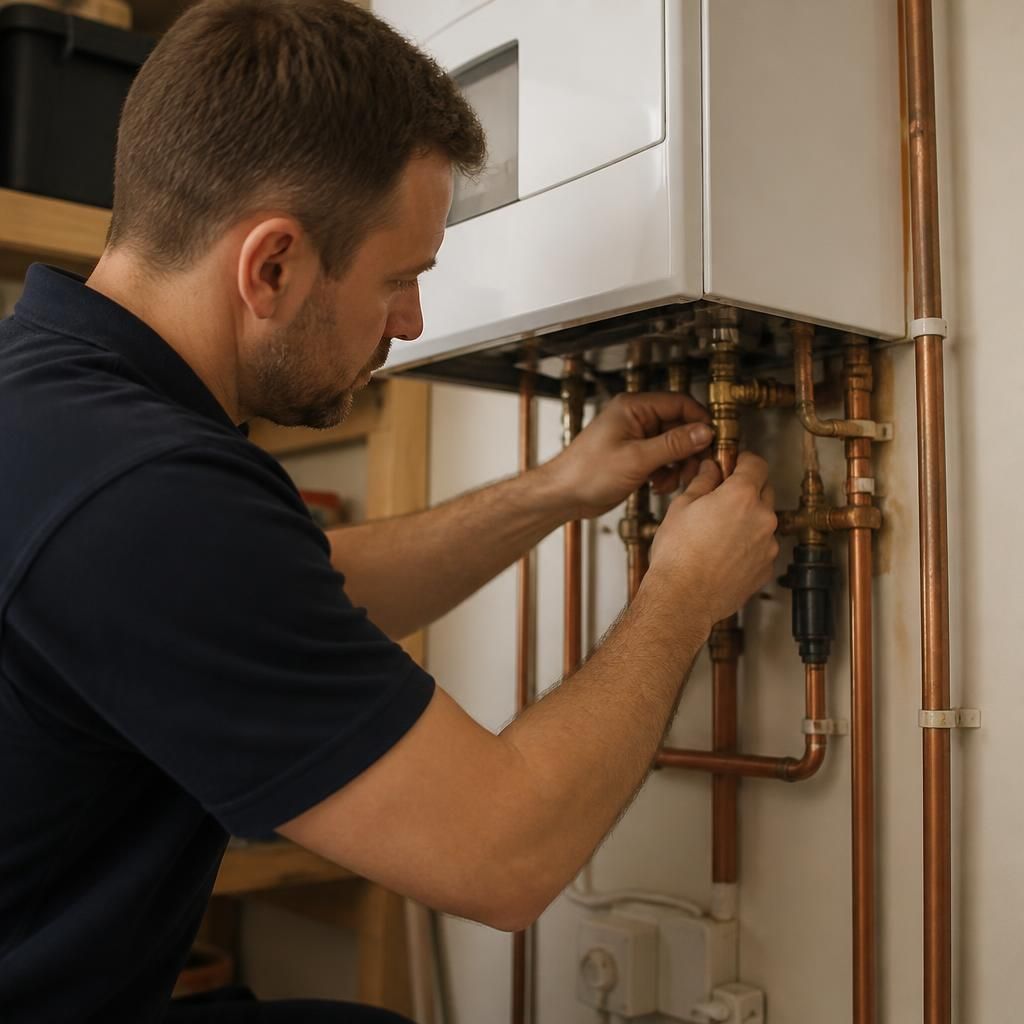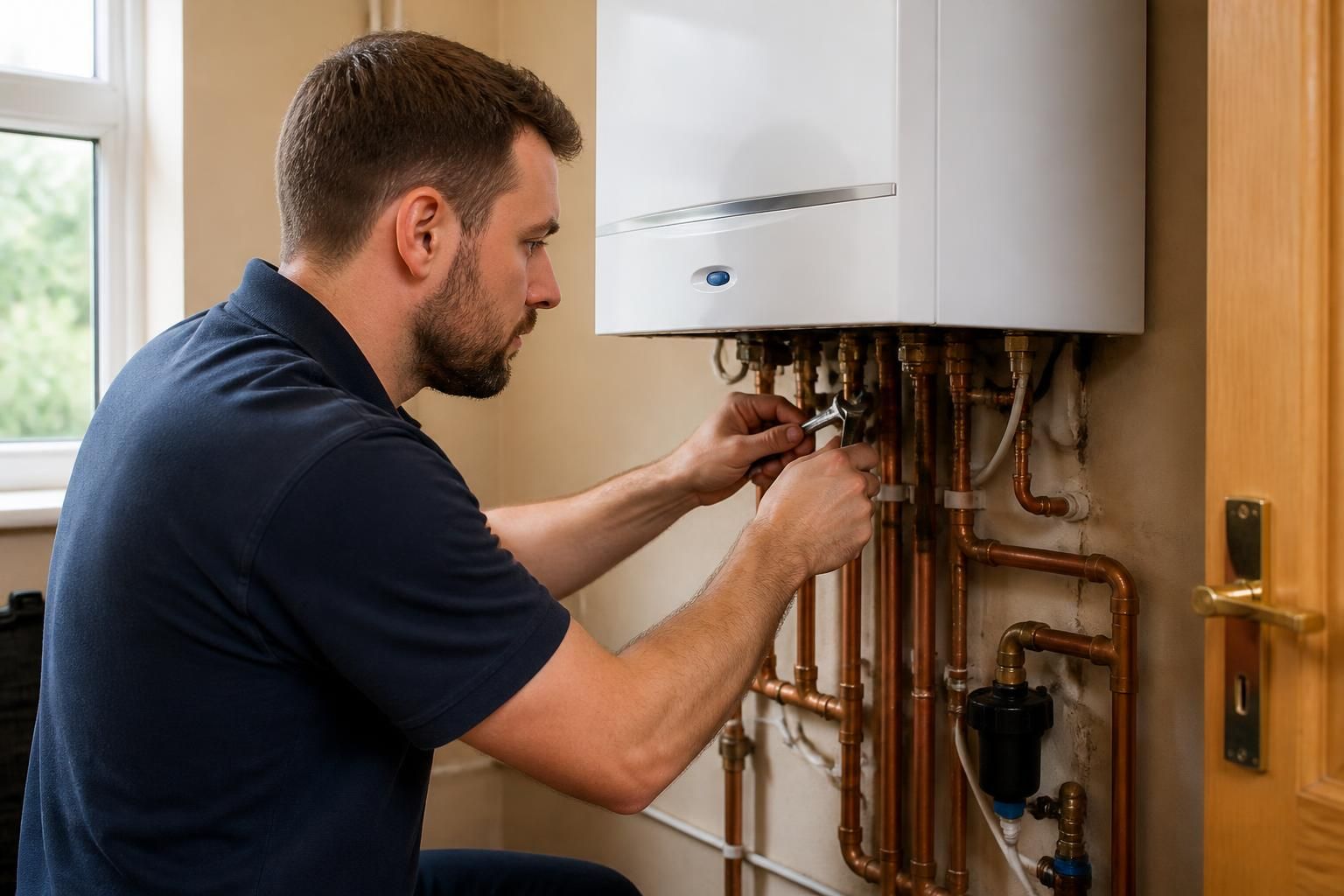
A new boiler installation is usually a temporary household disruption rather than a whole-property upheaval. The main inconveniences are the loss of heating and hot water while the system is being worked on, access needed around the installation area, and some noise, dust or minor making-good. The extent depends on how much of the existing heating arrangement can be retained.
The least disruptive replacement is generally a boiler change in the same location, using compatible connections and controls. In this situation, the work may be concentrated in one cupboard, utility area or section of the kitchen, with limited access needed elsewhere. The installer still needs room to isolate the system, remove the old appliance, connect the replacement and carry out safety checks.
More disruption is possible when the installation involves a change in boiler type or a different system layout. For example, replacing a conventional boiler may involve alterations to components such as:
- the hot water cylinder;
- cold-water storage or feed-and-expansion tanks;
- heating and hot-water pipework;
- the condensate connection;
- the flue route and external terminal;
- room thermostats, programmers or other heating controls.
These changes can extend the working area beyond the boiler cupboard. A redundant tank or cylinder may need to be disconnected and removed, while new pipework or controls may require access through cupboards, ceilings, floors or walls. The installer should explain any proposed access points before work starts, including whether surfaces may need to be opened and how they will be finished afterwards.
Loss of heating and hot water is often the most noticeable part of the installation. The existing appliance must be isolated before it is disconnected, so normal heating and hot-water use cannot continue during the relevant stages. Plan bathing, washing-up and other hot-water-dependent tasks around the work, particularly if several people share the property. If the boiler supplies radiators, rooms may also become cooler while the system is unavailable.
Noise and dust vary according to the property and the work required. Removing fixings, drilling for brackets, adjusting pipework and creating a route for a flue or condensate pipe can cause intermittent noise. Cutting or lifting sections of flooring, boxing-in or accessing a wall may create dust. Protective sheeting and sensible preparation can reduce the spread of debris, but they cannot eliminate every trace where building fabric has to be disturbed.
Access can be more challenging in apartments, compact kitchens, loft spaces and properties with restricted parking or narrow staircases. The installer may need a clear route from the entrance to the work area and enough space to handle the appliance and associated materials safely. Items stored in front of the boiler, beneath a sink or around a cylinder should be moved before the installation begins. If the boiler is in a loft or high cupboard, safe access and adequate working space are particularly important.
To make the process more manageable:
- clear the boiler area and the route leading to it;
- remove fragile or valuable items from nearby surfaces;
- tell the installer about concealed pipes, wiring, flooring or access restrictions;
- identify where the main water, gas and electrical controls are located;
- keep children and pets away from the working area;
- agree how removed equipment, packaging and waste will be handled;
- ask which walls, floors, cupboards or ceilings may require access.
After the physical installation, the disruption is not finished immediately. The system needs to be filled or adjusted as appropriate, checked for leaks, tested for safe operation and commissioned. Heating controls may need to be programmed, radiators may require attention if air has entered the system, and the installer should explain how to operate the new boiler. Allowing time for these checks is important because an appliance should not simply be switched on and left without being properly tested.
Some minor finishing work may remain, especially where the new equipment has different connection points or where old brackets and pipework have been removed. This might include filling fixing holes, touching up a surface or fitting a neat cover around exposed services. Larger decorative repairs are not automatically part of a boiler installation, so the expected finish should be clarified in advance.
For a household, the practical impact is usually reduced when the scope is confirmed before the appointment. A survey or detailed discussion should establish the boiler position, access requirements, likely system alterations, control changes and any work outside the immediate installation area. Ideal Plumbing Services provides boiler installation and plumbing support for homeowners, landlords and tenants in Birmingham and across the West Midlands, with the work planned around the property’s existing arrangement and the requirements of the replacement system.