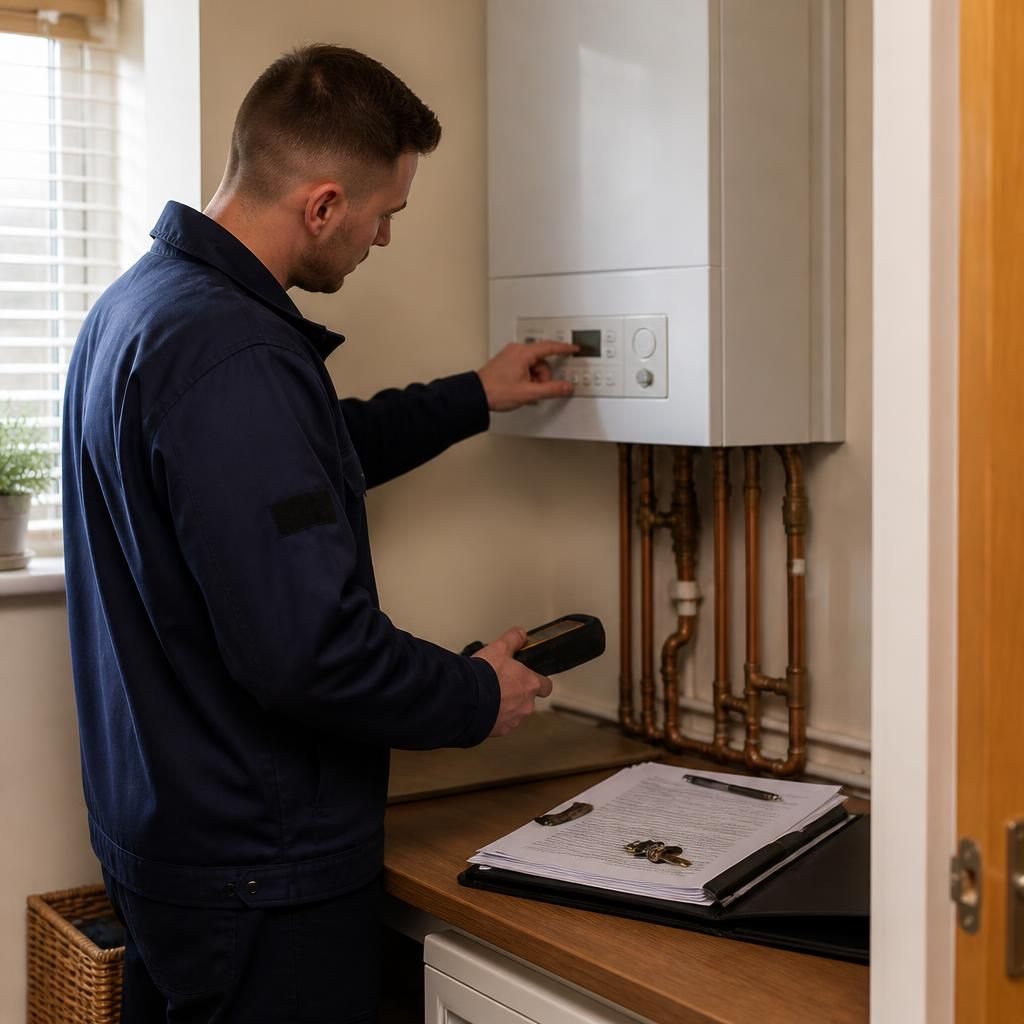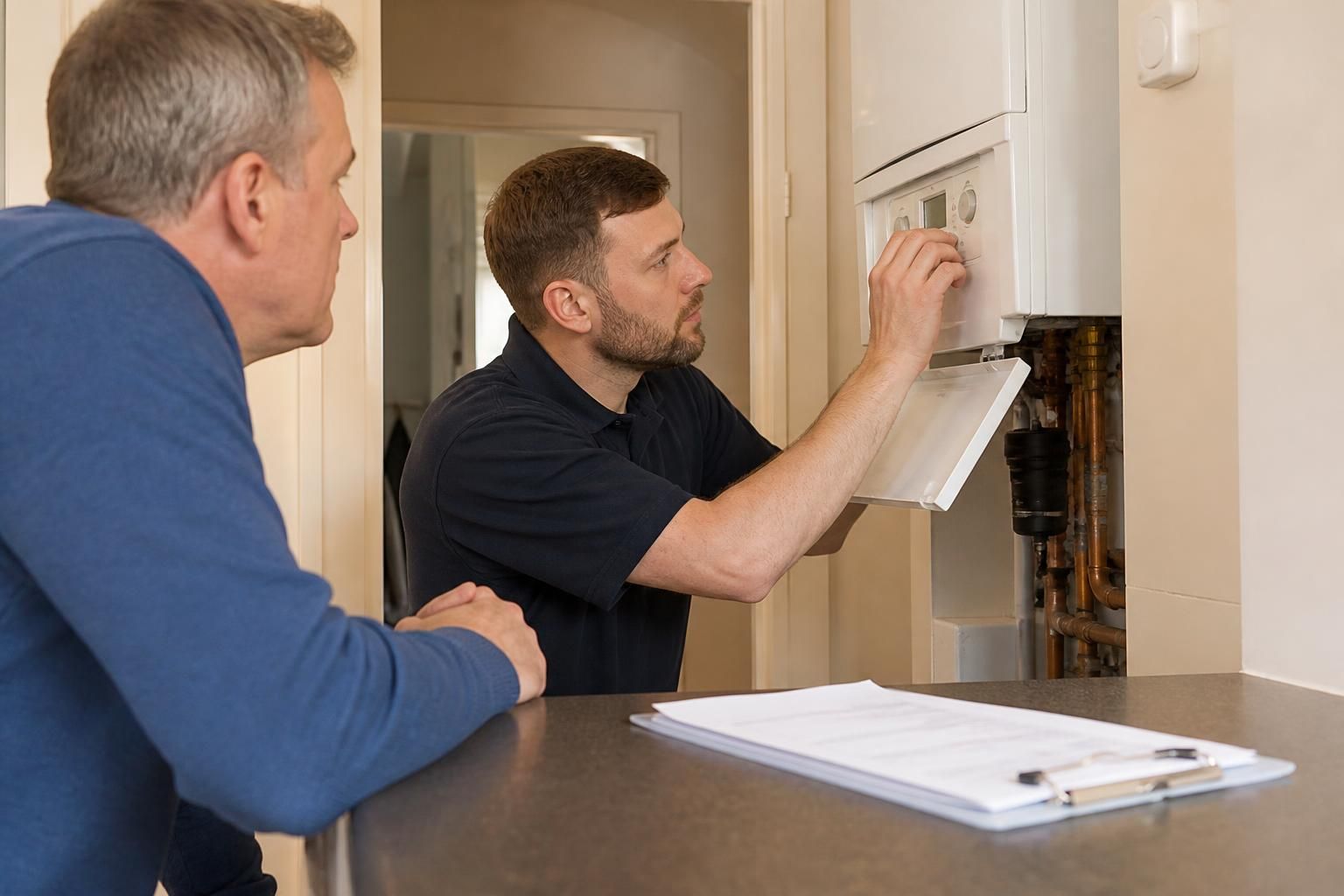
Landlords can request boiler fault repairs for rented properties and remain responsible for arranging appropriate remedial work when a boiler stops operating correctly. The repair process normally involves assessing the reported symptoms, identifying the underlying fault, making the system safe and completing or recommending suitable corrective work.
A landlord, letting agent or property manager can usually make the request on behalf of the occupants. Useful information to provide includes the property address, the tenant’s contact details, the boiler location, any displayed fault code and what the boiler is doing. For example, explain whether it is failing to ignite, losing pressure, making unusual noises, leaking, or providing no heating or hot water. Accurate information helps the engineer prepare for the assessment, although the reported symptom does not always identify the failed component.
Once the engineer attends, the first stage is to inspect the boiler and connected controls, consider the reported symptoms and establish whether the problem is isolated to the boiler or linked to the wider heating system. The engineer should explain the diagnosis in clear terms, identify any safety concerns and distinguish between:
- a straightforward repair to a faulty component or connection;
- a fault affecting controls, pressure, circulation or ignition;
- a wider system problem requiring additional investigation; or
- a repair that may not be appropriate because of the boiler’s condition, age or the availability of suitable parts.
Landlords should authorise work with the property’s longer-term use in mind. A temporary adjustment may not resolve the underlying problem, while replacing a component may restore safe operation without the need for more extensive work. If repair is not recommended, the engineer should explain why and set out the practical options rather than proceeding without approval.
Where the property is occupied, the landlord should coordinate access with the tenant and provide the engineer with accurate instructions about entry, parking, keys and any vulnerable occupants or pets. Tenants should not be expected to remove boiler covers, interfere with gas connections or attempt technical repairs themselves. They can provide helpful information about when the fault occurs, but the landlord or authorised contractor should arrange the investigation and repair.
Gas-related work must be carried out by an appropriately registered and competent engineer. Electrical isolation, combustion, ventilation and flue-related issues also require careful handling. If there is a smell of gas, suspected carbon monoxide, scorching, unusual fumes or an unsafe flue, the occupants should stop using the appliance, follow the relevant safety procedure and inform the landlord or managing agent immediately.
Landlords should keep a written record of the reported fault, inspection findings, work authorised, parts replaced and any advice given about future maintenance. This creates a clear maintenance history and can help identify recurring faults. It is also sensible to retain invoices and service documentation alongside the property’s other compliance records.
Before work begins, confirm what the quoted or agreed charge includes, whether diagnosis is separate from repair, and whether further authorisation is needed if additional faults are found. Ideal Plumbing Services provides landlords with professional boiler fault assessments and repair support, with clear communication intended to help property owners make informed decisions for their rented homes.