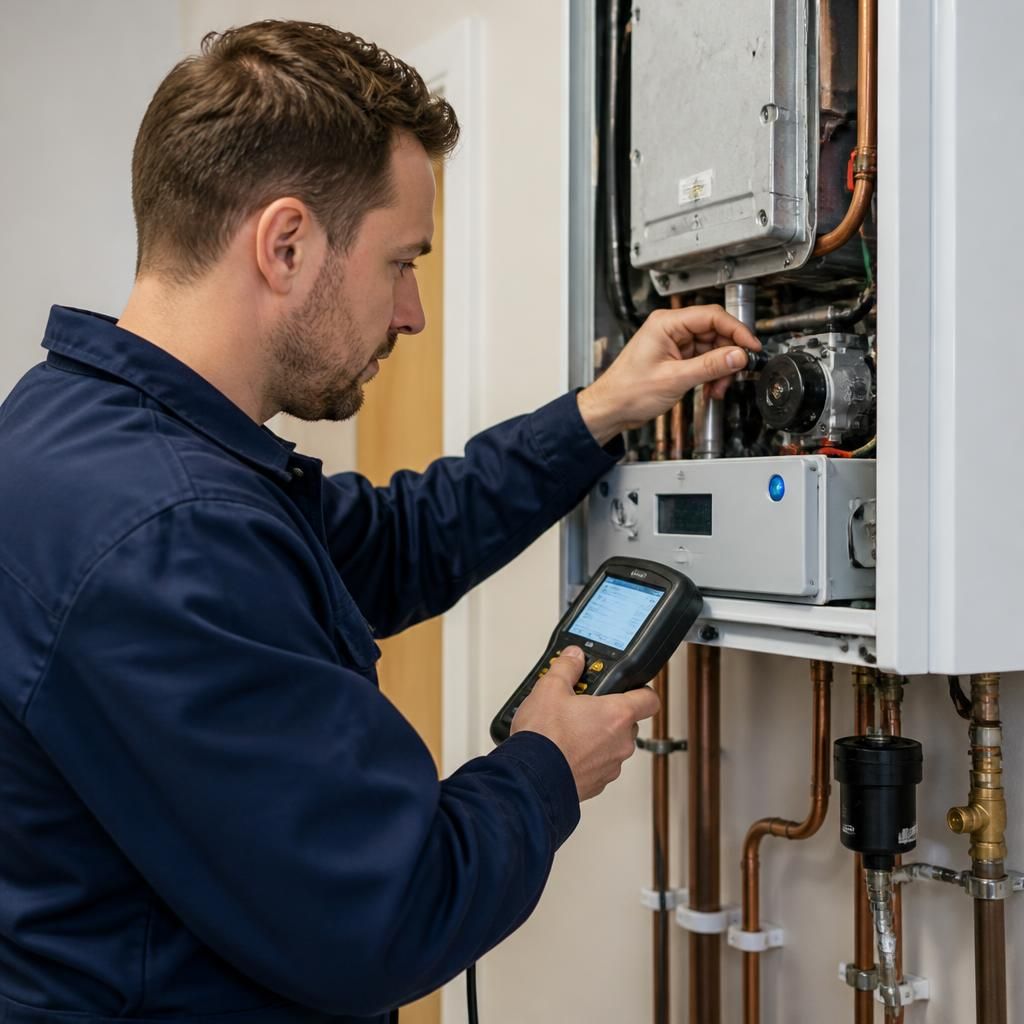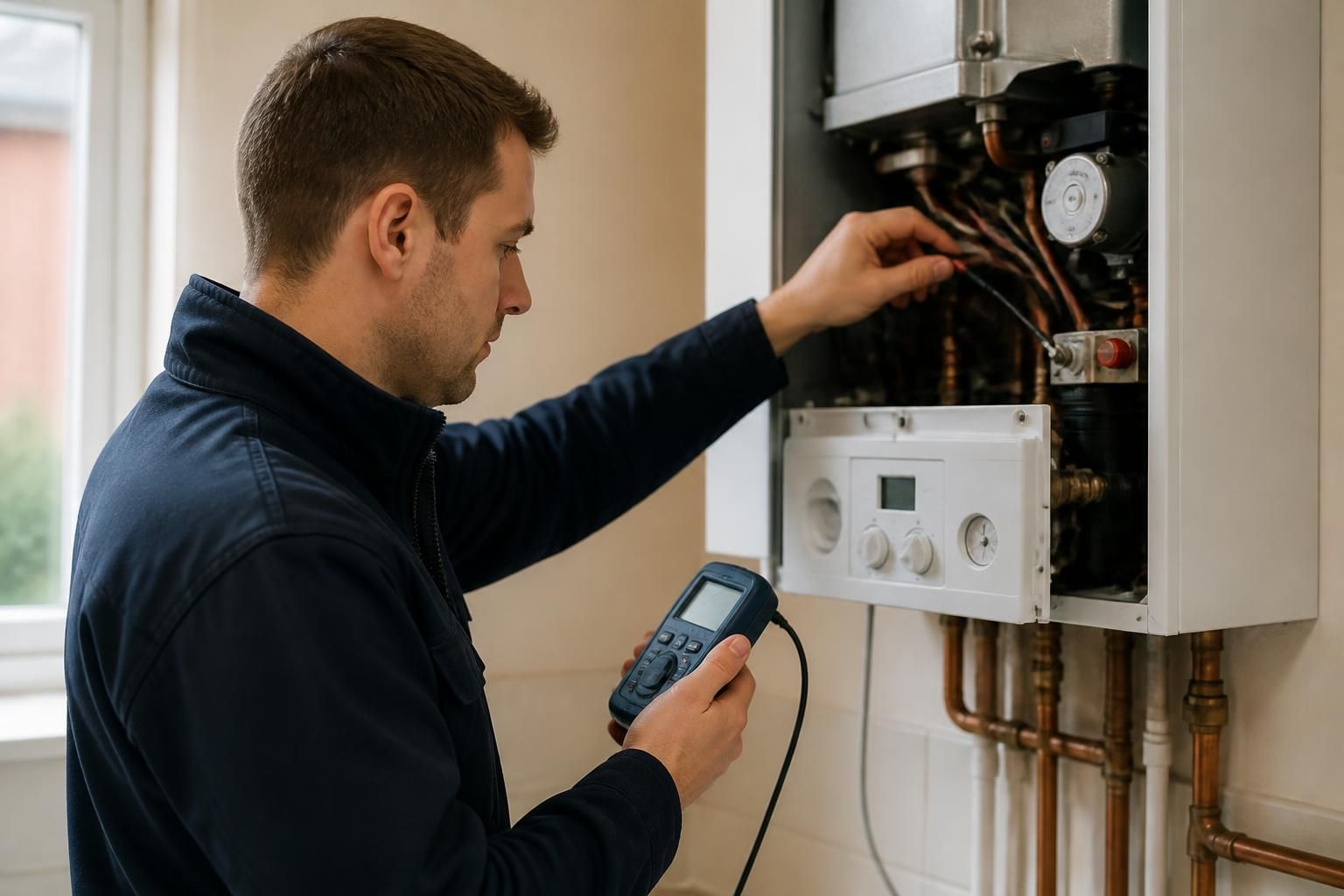
Boiler fault repair costs are mainly determined by the type of failure, the parts required and the labour involved. A fault-code display or symptom can indicate where the problem lies, but a heating engineer normally needs to inspect and test the boiler before confirming the repair price.
What is included in the cost?
- Diagnosis: The engineer may need to check the boiler controls, electrical components, pressure, safety devices, pipework and combustion-related components to identify the underlying fault.
- Labour: The time required depends on how accessible the failed component is and whether further testing is needed after the repair.
- Replacement parts: Some faults involve a small component, while others require a more complex or higher-value part. The exact make, model and age of the boiler can affect parts availability and price.
- Additional work: A repair may reveal a related issue, such as damaged wiring, a persistent pressure problem or a fault elsewhere in the heating system. Any additional work should be explained before it is carried out.
Why prices differ between boiler faults
A boiler that is losing pressure may need a different repair from one that is failing to ignite, overheating or producing an inconsistent supply of hot water. Some problems can be resolved by replacing one accessible component. Others require more detailed testing or several connected parts to be checked.
The boiler’s age and condition are also relevant. If a model is older, discontinued parts may be difficult to source, and repeated failures can make continued repairs less practical. A newer boiler may still be economical to repair, particularly where the fault is limited to one replaceable component. The engineer should explain the available options rather than assuming that replacement is necessary.
Repair or boiler replacement?
A repair is generally considered first when the fault is identifiable, the required part is available and the boiler remains suitable for continued use. Replacement may be discussed where the boiler has several faults, parts are unavailable, repair costs are disproportionate to its condition, or the appliance no longer meets the household’s heating and hot-water requirements.
The cost of a replacement boiler is separate from the cost of repairing an existing fault and may include installation, system alterations and controls. These options should be compared on the basis of the boiler’s condition and the work involved, not just the initial price.
How to obtain an accurate repair price
- Provide the boiler make and model, if known.
- Describe the symptoms, including whether the boiler is making unusual noises, losing pressure, displaying a fault code or failing to provide heating or hot water.
- Tell the engineer whether the problem is intermittent or constant and whether any recent work has been carried out.
- Ask for the diagnosis, recommended repair, parts and labour to be set out clearly.
- Confirm whether further work would require your approval before it is undertaken.
Online price guides can help with general budgeting, but they cannot account for the exact fault, boiler model or site conditions. A written explanation following an inspection gives a more reliable basis for deciding whether to proceed.
Ideal Plumbing Services assesses boiler faults, explains the recommended repair and provides clear pricing before work goes ahead. If the boiler is unsafe, do not continue using it simply to avoid repair costs; follow the relevant safety guidance and arrange an inspection by a suitably qualified heating professional.