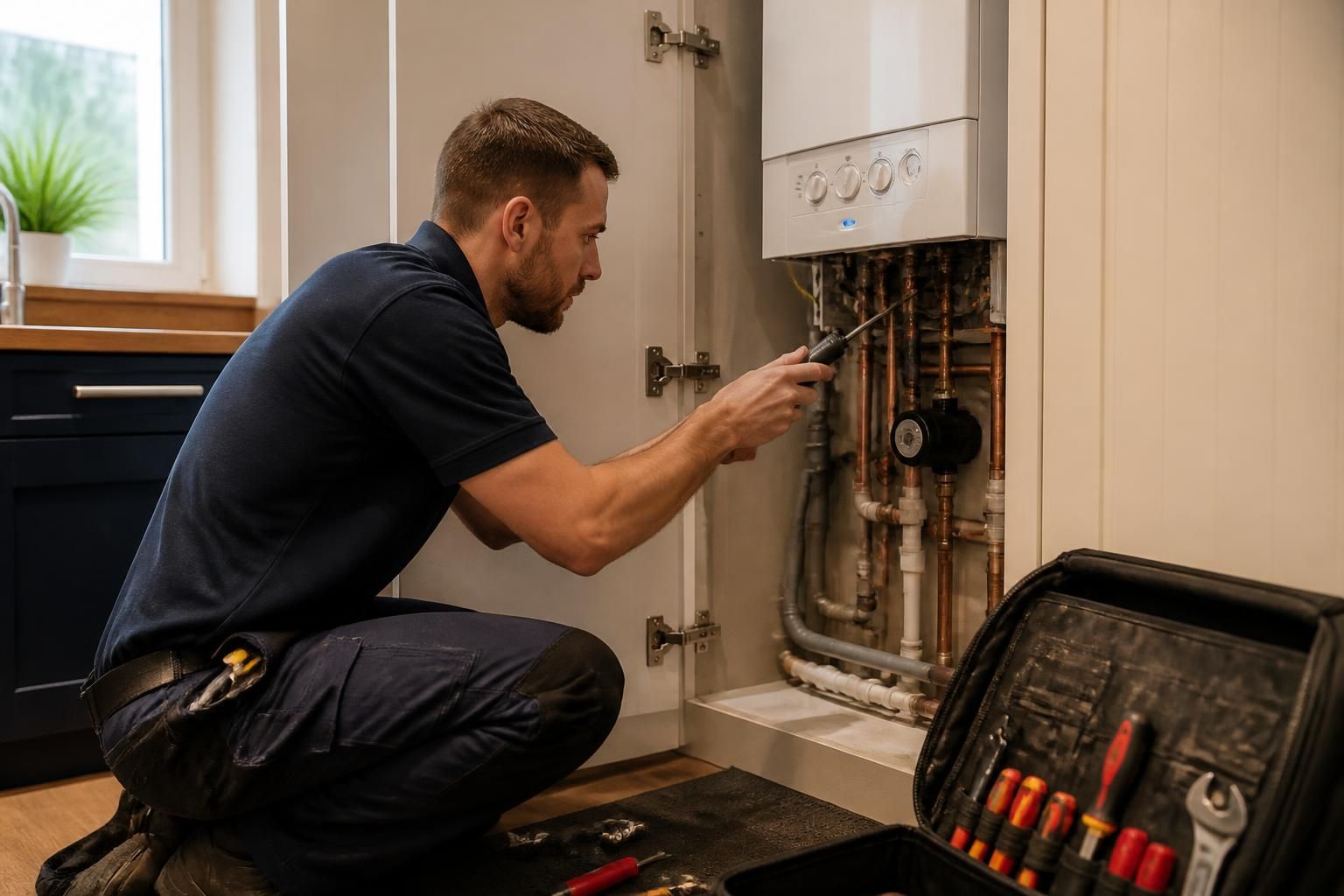
Most boiler fault repairs create practical inconvenience rather than major disruption. The main effects are usually temporary loss of heating or hot water, restricted access to the boiler and some noise or activity while the fault is investigated. A straightforward repair is generally less intrusive than work involving concealed pipework, electrical controls, the flue or a component that needs to be sourced.
The amount of disruption depends on several factors:
- The location of the boiler: A boiler in an open utility area is easier to inspect than one inside a cupboard, loft space or tightly fitted kitchen unit. The engineer may need clear access to the appliance and nearby isolation valves.
- The type of fault: A control, ignition or pressure problem may require work at the appliance itself. A leak, blocked condensate pipe or issue affecting connected pipework can involve a wider inspection.
- Parts availability: If the required component is available, the repair can be dealt with as part of the planned work. If a specific part has to be obtained, the boiler may need to remain isolated until it is fitted.
- The condition of surrounding fittings: Older or corroded connections can require extra care, particularly where disturbing one component could affect adjacent pipework.
During the repair, heating and hot water may need to be switched off. In some cases, the boiler can be isolated while other parts of the home remain usable. Where the fault involves gas, electricity, water or combustion products, it is important not to keep operating the appliance simply to avoid inconvenience. An engineer will assess whether it is safe to leave the system running or whether it should remain switched off pending repair.
Access is one of the simplest ways to reduce unnecessary interruption. Before the appointment, clear items from in front of the boiler, remove anything stored in its cupboard and make the controls, radiators and visible pipework accessible. If the boiler is in a loft or another difficult-to-reach location, ensure the route is free from obstacles and that stored belongings do not have to be moved while the work is under way.
It is also useful to note when the problem occurs and what the controls display. Information such as an error code, unusual noise, leaking water, repeated pressure loss or intermittent heating can help focus the inspection. Do not remove the boiler casing or attempt to repair internal components yourself, as this can create safety risks and may make the original fault harder to diagnose.
For most repairs, the work is confined to the boiler and its immediate connections. The engineer may use tools, test instruments and replacement components, so there can be some short-term noise and movement around the appliance. Protective coverings should be used where the work takes place near flooring, cupboards or worktops, and the area should be left clear enough for the repaired system to be checked properly.
More disruption is possible when the fault is not limited to the boiler. For example, a concealed leak, damaged pipework or a problem with the flue may require access to additional areas. If opening a panel, lifting flooring or removing part of a cupboard is considered necessary, this should be explained before that extra work begins. A repair involving extensive building access is different from a standard boiler component replacement and may require a separate arrangement for making good the affected area.
After the repair, allow time for the system to be checked and for the heating or hot water to operate correctly. The engineer may inspect for leaks, confirm that controls respond as expected and verify that the appliance is functioning safely. Ask what was found, which component was repaired or replaced and whether any further maintenance is recommended. This information is particularly useful for landlords and tenants who need a clear record of work carried out.
In summary, disruption is normally limited when the boiler is accessible, the fault is isolated to a replaceable component and the necessary part is available. Delays or wider disturbance are more likely where the fault affects hidden pipework, requires additional access or cannot be completed until a replacement component has been obtained.